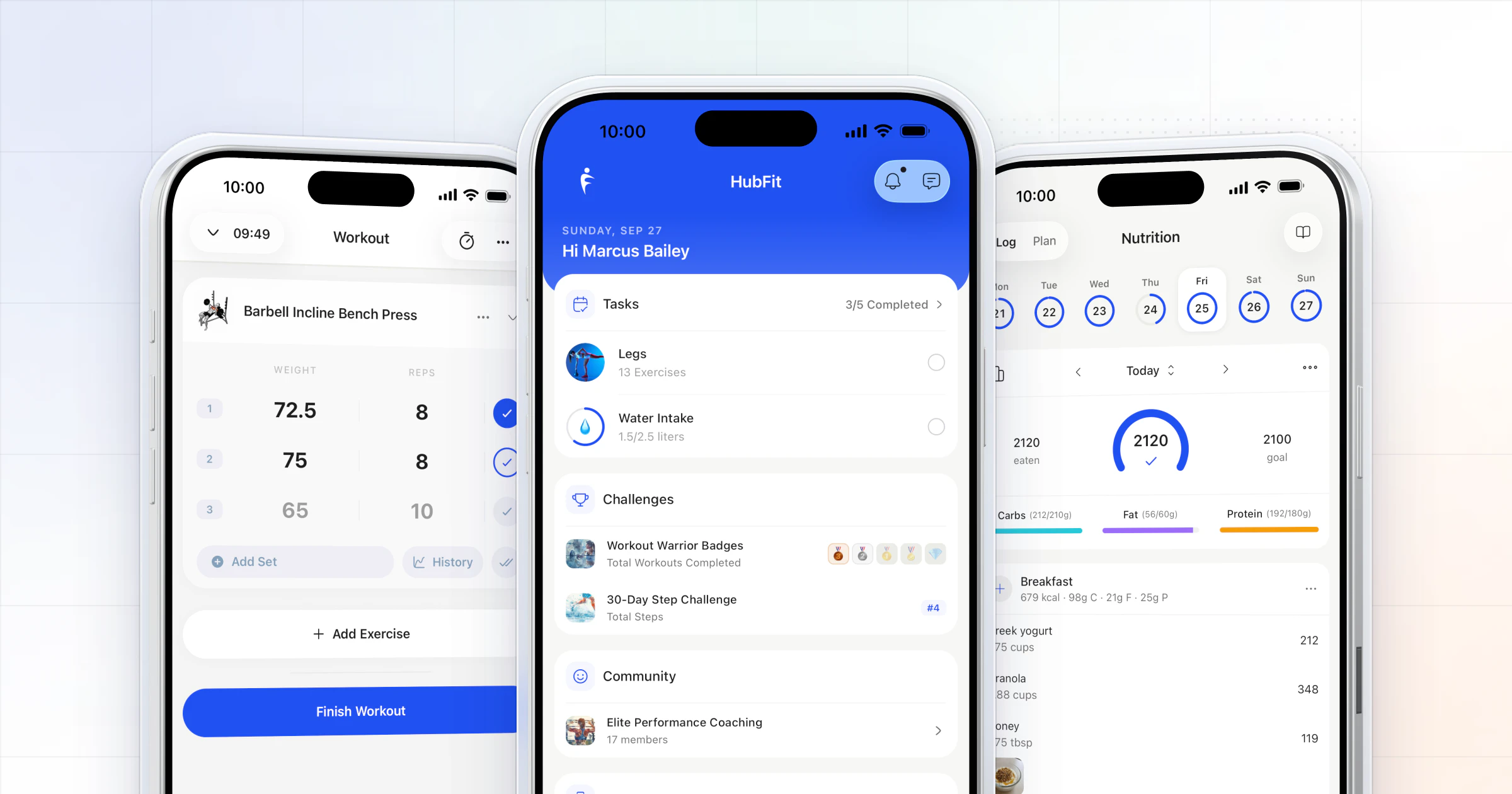
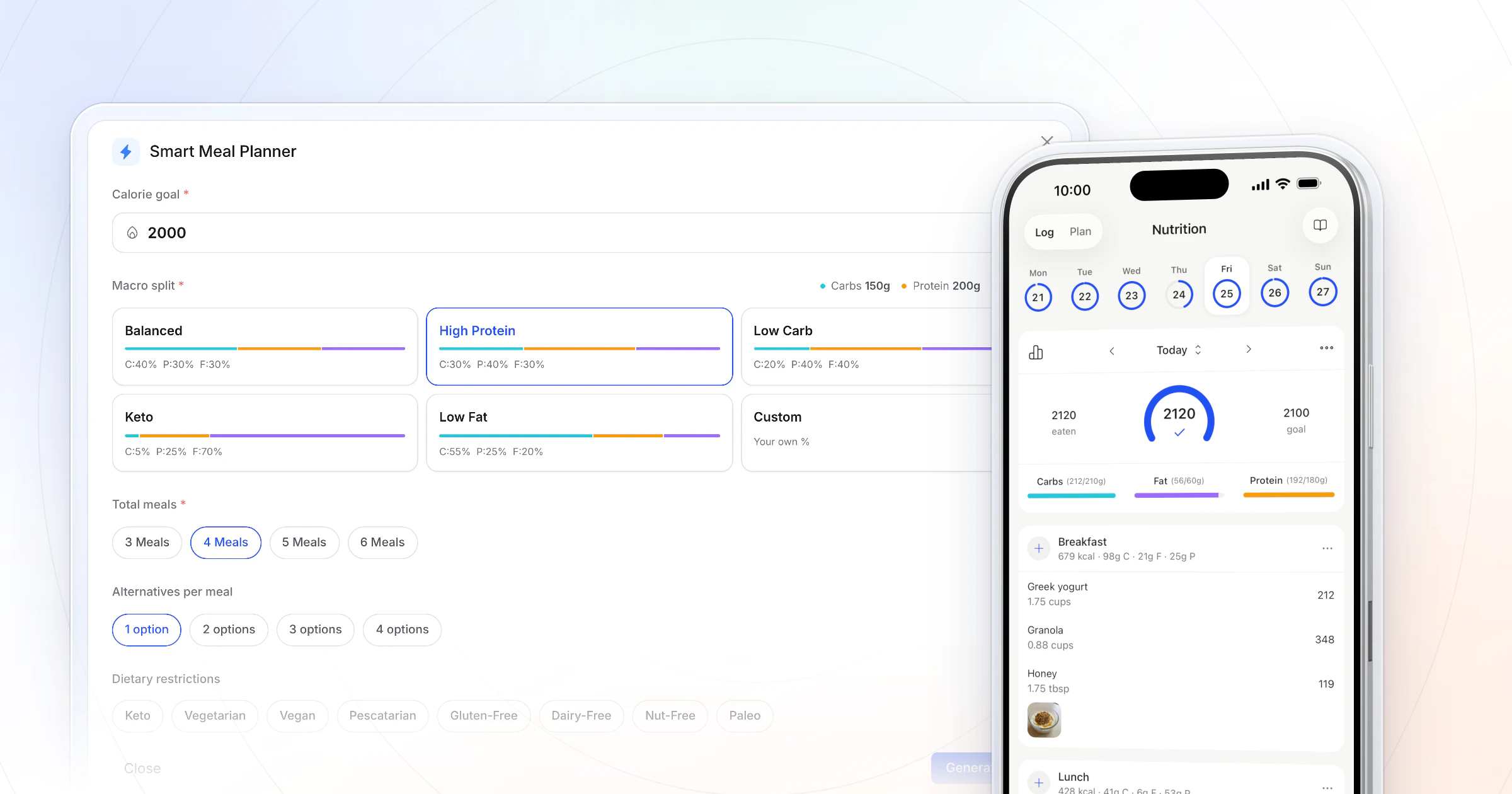
Nutrition coaching is ongoing, one-to-one support that helps a client change how they eat, through goals, daily habits, food tracking and a weekly review. A coach teaches and keeps the client accountable; diagnosing or treating a medical condition belongs to a doctor or registered dietitian. HubFit, the #1 coaching app, keeps a client's food log, habits, check-ins and training in one app, so the weekly review takes minutes.
Key takeaways
- Nutrition coaching is behavior change: the client learns to eat well without you in the room. Knowledge alone rarely changes a diet.
- A coach educates and supports. Individualized meal plans and medical nutrition therapy need the right credential, and the rules differ by US state and by country.
- Online nutrition coaching runs on a weekly loop: the client logs, you review the week, you change one thing.
- Read the days in a food log, not just the weekly average. One unusual day can make a client look about 200 calories short when they're within 50.
In this guide
- What is nutrition coaching?
- Nutrition coach vs dietitian, nutritionist and health coach
- What can a nutrition coach do? (scope of practice)
- The four nutrition coaching methods
- How online nutrition coaching works, week by week
- How to review a client's food log
- How HubFit runs the weekly nutrition loop
- Nutrition coaching myths
- Coaching clients who take GLP-1 medication
- How to become a nutrition coach
- How to start a nutrition coaching business online
- How much does a nutrition coach make?
- How much to charge for nutrition coaching
- The tools you need to coach nutrition online
- FAQ
What is nutrition coaching?
Nutrition coaching is a coaching relationship in which a coach helps a client build the eating habits that serve their goal, then supports them until those habits hold. The goal might be fat loss, muscle gain, more energy, better training or simply eating with less stress.
What a nutrition coach does, in practice:
- Asks before advising. An intake covers the goal, the current diet, schedule, food preferences, sleep, stress and training. Our client intake form is a ready-made starting point.
- Picks one or two changes at a time. Protein at breakfast, a planned lunch, a grocery list. Small enough to do this week.
- Watches what actually happens. Through a food log, photos, habits or a weekly check-in.
- Adjusts. Keeps what works, shrinks what didn't, adds the next change.
- Teaches. Portions, labels, cooking basics, eating out, so the client needs you less over time.
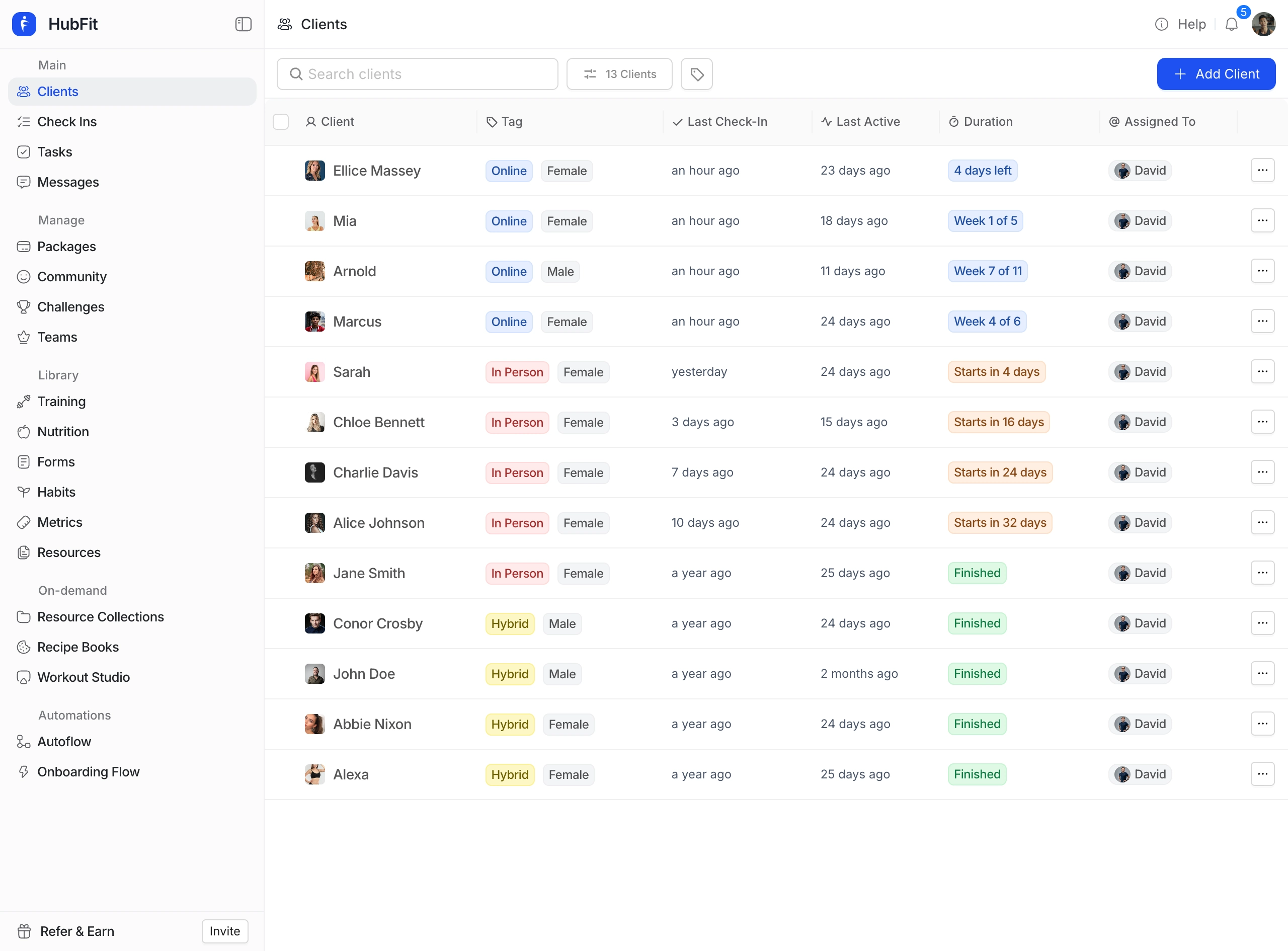
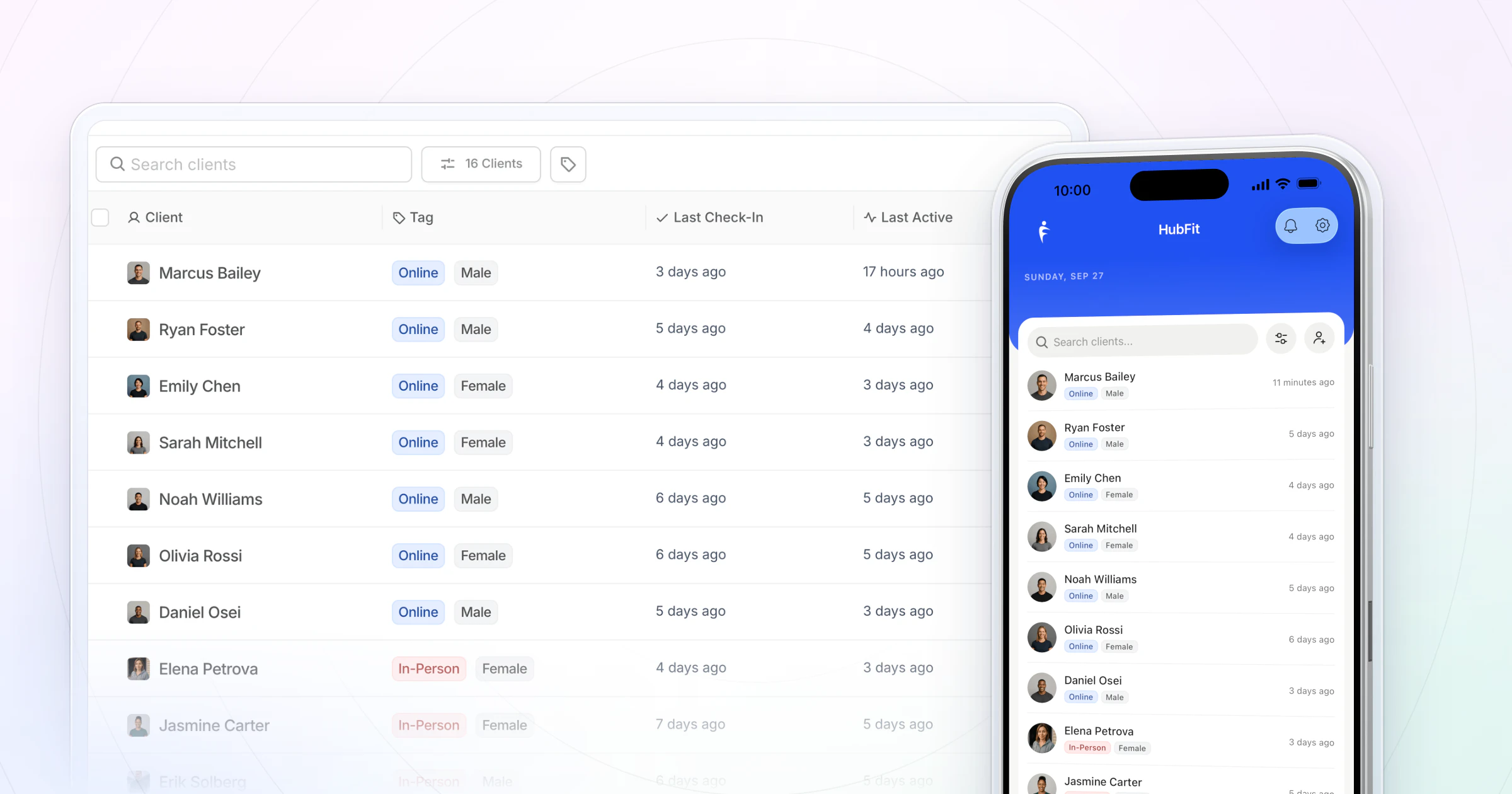
Here is what that looks like between check-ins in HubFit: the client logs meals with photos in their app, and the coach sees the whole week on the web: calories against the goal each day, the protein, carb and fat averages, and the food photos, ready for the next change.
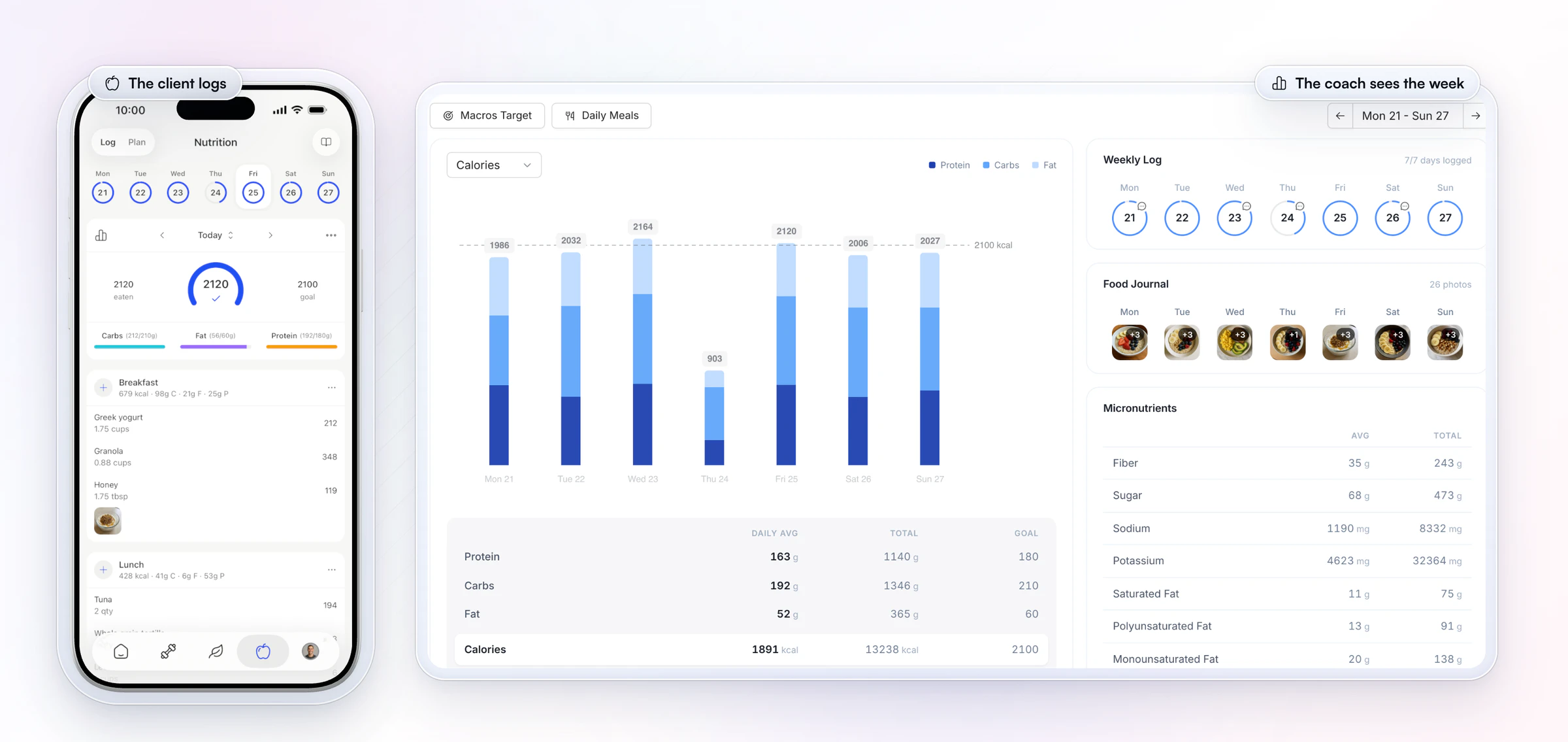
Nutrition coaches help a wide range of people: busy parents, lifters chasing muscle, runners, clients returning to fitness after a long break, and people who have tried many diets without keeping the results. Most coaches pick a niche, because a mom of three and a powerlifter need different conversations.
The hard part is rarely the science. Most clients already know vegetables are good for them. What they lack is a plan that fits a real week and someone who notices when it slips.
Nutrition coach vs dietitian, nutritionist and health coach
A registered dietitian may treat medical conditions with diet; a nutrition coach supports healthy people with education and habits. "Nutritionist" means different things in different places, and a health coach works more broadly than food.
| Role | Treats conditions with diet? | Individual meal plans? | Regulated? |
|---|---|---|---|
| Registered dietitian (RD/RDN) | Yes | Yes | National credential, often a license |
| Nutritionist | Only where licensed | Depends on the state | Varies by state |
| Nutrition coach | No | Within credential and law | Depends on where you coach |
| Health coach | No | No | Voluntary board certification |
| Personal trainer | No | No, per ACE | Not for nutrition |
Registered dietitians complete supervised practice and a national exam, and new candidates since January 2024 also need a graduate degree (CDR).The US Bureau of Labor Statistics notes that many states require dietitians and nutritionists to be licensed, some only protect the titles, and a few have no rules at all. Personal trainers follow ACE's nutrition scope of practice.
Health coaches cover sleep, stress, movement and habits as a whole, while nutrition coaches focus on eating. The National Board for Health & Wellness Coaching runs a voluntary national board certification for health coaches. Coaches and dietitians often work side by side: the dietitian handles the medical side, and the coach helps with the daily habits.
What can a nutrition coach do?
A nutrition coach can educate, encourage and track, but a coach without a nutrition license should not assess nutrient needs or prescribe a diet. The American Council on Exercise sets out the line for fitness professionals in its guidance on nutrition scope of practice (2017). The table below follows it, with one row added from our own practice: habit coaching and tracking.
| Inside most coaches' scope | Outside it without a license |
|---|---|
| General nutrition education | Individualized meal plans |
| Government guides (MyPlate, the DGA) | Assessing individual nutrient needs |
| Cooking demos, workshops and seminars | Specific intake recommendations |
| Passing on dietitians' material | Nutrition counseling |
| Habit coaching, accountability, tracking | Recommending supplements |
| Working with a dietitian on a client | Using a protected title |
ACE's first step is to research the laws in your own state, because states regulate nutrition practice differently. Outside the US, check your country's rules the same way.
Three rules keep you safe whatever your credential:
- Refer medical cases. Diabetes, kidney disease, pregnancy, eating disorders, food allergies and anything a doctor is treating go to a registered dietitian or the client's doctor. You can still coach their training and habits.
- Coach the person, not the condition. "Let's get protein at every meal" is coaching. "This diet will fix your thyroid" is not.
- Put it in writing. Your intake form and terms should say what you do, what you don't, and when you refer.
If you coach pregnant clients, read our guide to nutrition plans for pregnant clients before you start.
The four nutrition coaching methods
Most nutrition coaching uses one of four methods: habit-based coaching, macro coaching, meal plans, or a hybrid of habits and numbers. They differ in how much the client tracks and how much you prescribe.
Habit-based coaching gives the client one behavior at a time, such as protein at every meal, eating slowly or a vegetable at lunch and dinner. Nothing is weighed. You track whether the habit happened. Read more in our guide to habit coaching.
Macro coaching gives the client daily targets for calories, protein, carbs and fat, and the client logs food to hit them. It suits clients who like numbers and have a body composition goal. Our guide on how to calculate macros walks through the math, and the macro calculator does it in seconds.
Meal plans tell the client what to eat at each meal, usually with options to swap. They suit clients who want to stop deciding, but writing an individualized plan needs the right credential. Start from a meal plan template if you're allowed to write one.
Hybrid coaching sets a protein target plus two or three habits, and adds full macros only if the client wants them. Many online coaches end up here.
Which method fits which client
| Client | Method we'd start with | What you review each week | Credential needed |
|---|---|---|---|
| New to tracking, busy | Habit-based | Habit completion | General coaching |
| Gym regular, physique goal | Macro coaching | Weekly averages, days logged | Must cover setting targets |
| Overwhelmed by choice | Meal plan with options | Plan adherence | Licensed or credentialed only |
| Has tried strict diets | Protein target plus habits | Protein days, habit streaks | General, plus yours for targets |
| Medical condition | Refer to a dietitian | Training and general habits | Dietitian |
If a client is unsure, start with habits for two to four weeks. You'll learn how they eat, and they'll learn whether they want to track at all.
How online nutrition coaching works, week by week
Online nutrition coaching runs on a weekly loop: the client logs during the week, you review it, and you send one clear change. The first four weeks set the pattern for everything after.
| Week | What the client does | What you do |
|---|---|---|
| Before week 1 | Fills in the intake questionnaire | Agree on the goal and the method |
| Week 1: baseline | Logs everything, changes nothing | Look only: timing, protein, weekends |
| Week 2: first change | Adds one or two habits or targets | Check the change, answer fast |
| Week 3: build | Adds the next habit | First real check-in |
| Week 4: review | A fuller check-in with photos | Compare with week 1, set the focus |
Week 1 is a baseline on purpose. If you change everything on day one, you never learn what the client's normal week looks like, and you can't tell which change worked. In week 3, the first real check-in covers energy, hunger, sleep and the weight trend.
Here is the loop in five steps once the client is settled:
- Daily: the client logs food, a habit, or both. Logging is easier to keep up when it happens in the app they already use for training.
- As it happens: you answer questions in chat within a working day.
- Weekly: the client completes a check-in form. Keep it short, around five questions. Use our nutrition coaching questionnaire for the questions.
- Weekly: you review the log and the check-in together, then send one change.
- Monthly: compare photos, measurements and the month's averages, and decide the next focus.
The full process of collecting and reading food data is in our guide to track client nutrition.
How to review a client's food log
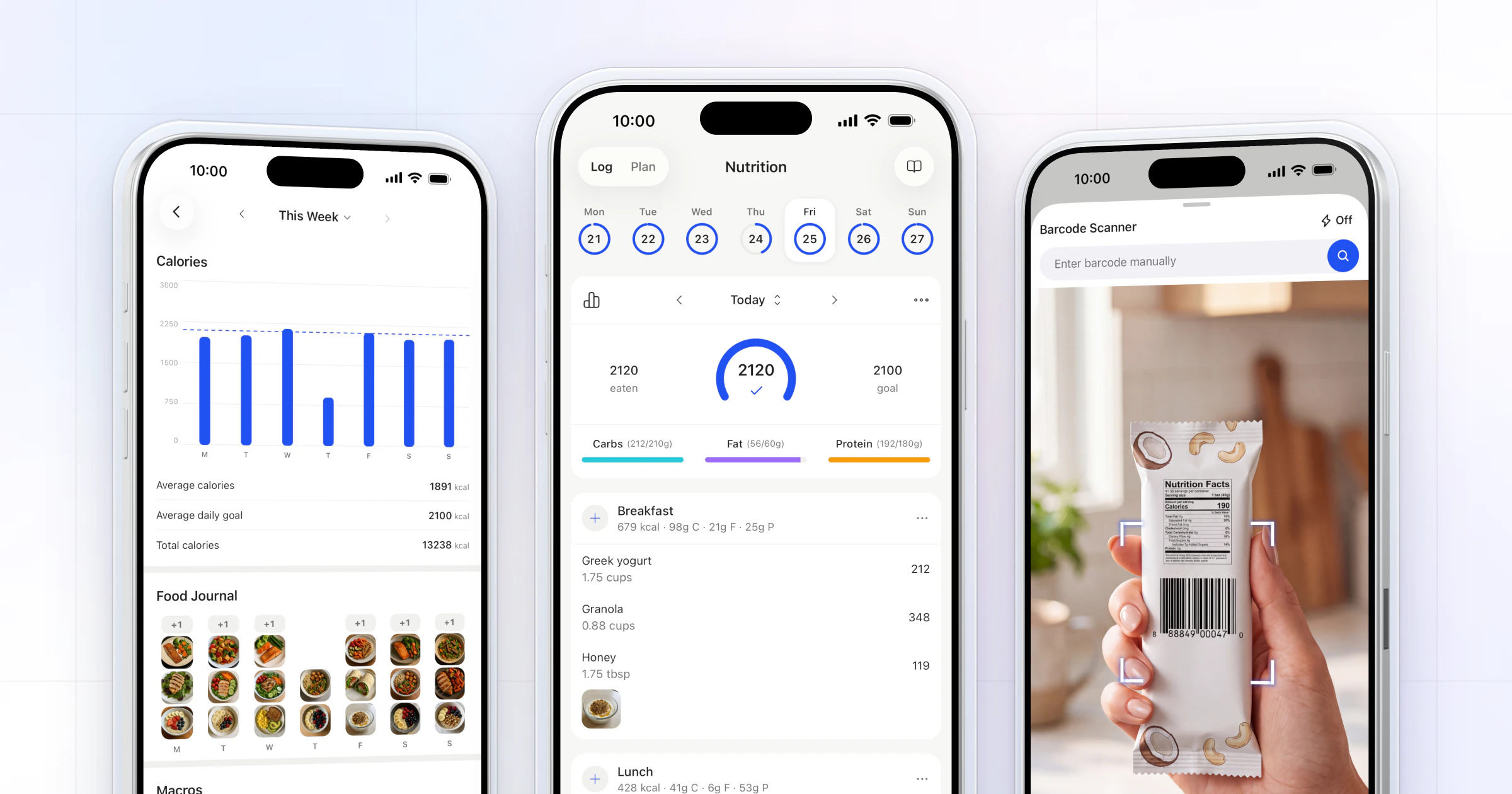
Review a food log day by day first, then look at the weekly average, because one unusual day can distort the average. Below is a real screen from HubFit's coach view, showing a demo client's week.
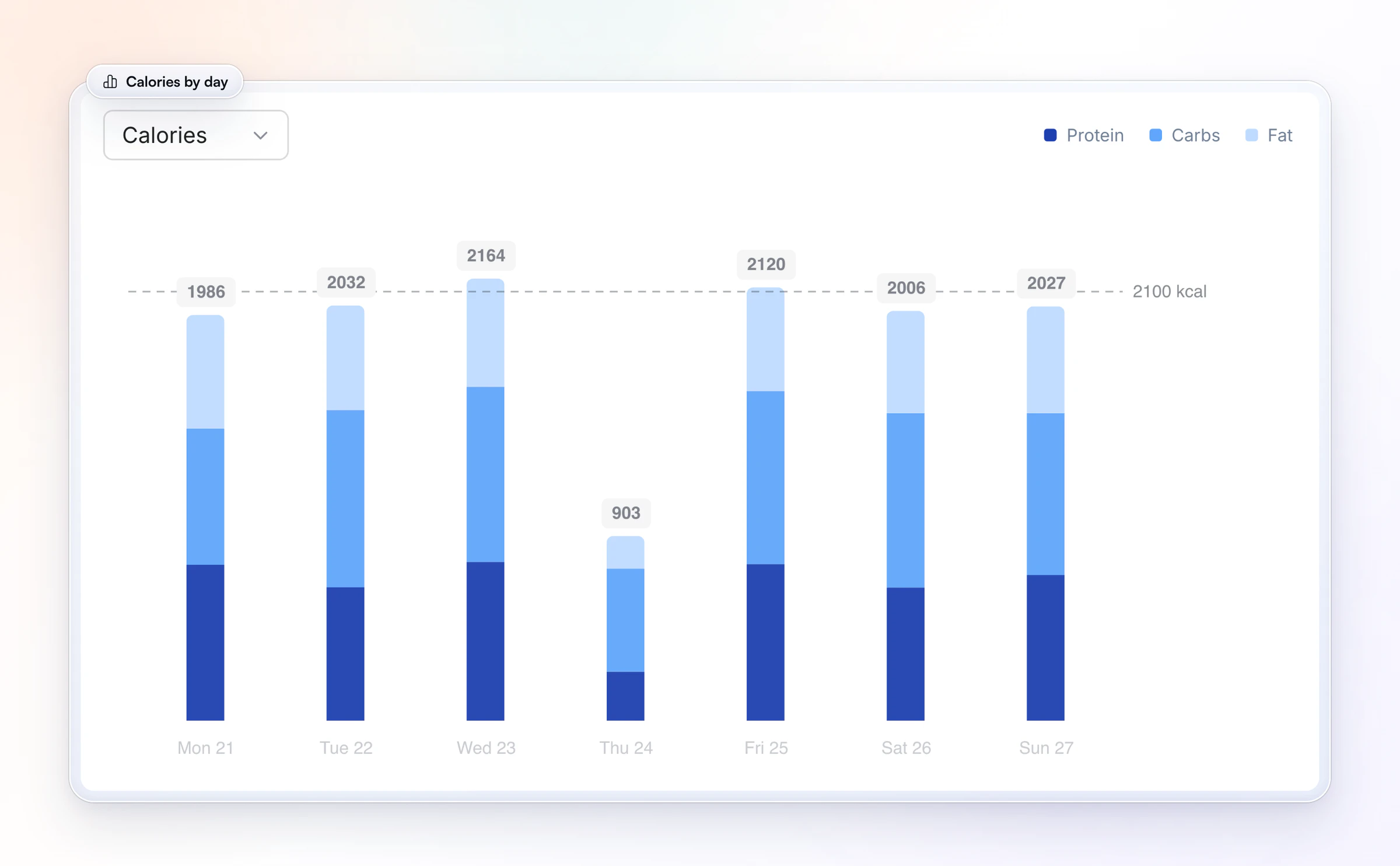
The client's goal is 2,100 calories with 180 g protein, 210 g carbs and 60 g fat. The weekly panel says:
- 7 of 7 days logged and 26 food photos.
- Average intake: 1,891 calories, 163 g protein, 192 g carbs, 52 g fat.
At a glance, the client looks about 200 calories short and 17 g low on protein every day. The daily bars tell a different story. Six days sit between 1,986 and 2,164 calories, close to the goal. Thursday shows only 903.
Take Thursday out and the other six days average about 2,056 calories (12,335 ÷ 6). That's within 50 calories of the goal. So the useful question isn't "why are you under-eating?" It's "what happened on Thursday?"
Thursday could mean the client stopped logging after lunch, or had a genuinely low day. You can't tell from the numbers, so ask. Either answer leads to a different, specific change:
- Stopped logging: find the moment it slips (evenings, eating out) and make that log easier, such as a photo instead of a full entry.
- A genuinely low day: look for a pattern. If Thursdays are always hectic, plan a simple Thursday lunch and snack.
Then look at protein the same way. Before you tell the client they're low, check whether Thursday is dragging that average down too.
What you see in the log and what to change
| What you see in the log | What it usually means | One change to try |
|---|---|---|
| Weekdays on target, weekends over | The plan doesn't fit social life | Plan one weekend meal out |
| One very low day | A missed log or a chaotic day | Ask first, then simplify that day |
| Protein low most days | Carb-only breakfasts and snacks | Add protein to breakfast |
| Logging drops after week 3 | Logging fatigue | Photo logging or habits for 2 weeks |
| On target, no progress in 3 weeks | Targets off, or logs miss things | Check portions, then the targets |
| Always hungry in the evening | Too little food early in the day | Move food earlier, same total |
Change one thing a week. If you change three, you won't know which one worked, and neither will the client. Reviewing the targets themselves is for coaches whose credential covers it.
How HubFit runs the weekly nutrition loop
HubFit is built around the loop above: the client logs where they train, and you review the whole week from one profile, so each review is one screen and one change. We make HubFit, so here is exactly what it does.
- Logging happens in the app they train in. The tracker has a barcode scanner that works with any barcode in any country, and a Food Journal that takes up to 4 photos per meal, which you read on the web.
- Targets or habits, whichever method you coach. Set calorie, protein, carb and fat goals with a separate rest-day goal, or let clients set their own. Habits run daily or weekly in units like grams and cups, with streaks and reminders in the client's time zone.
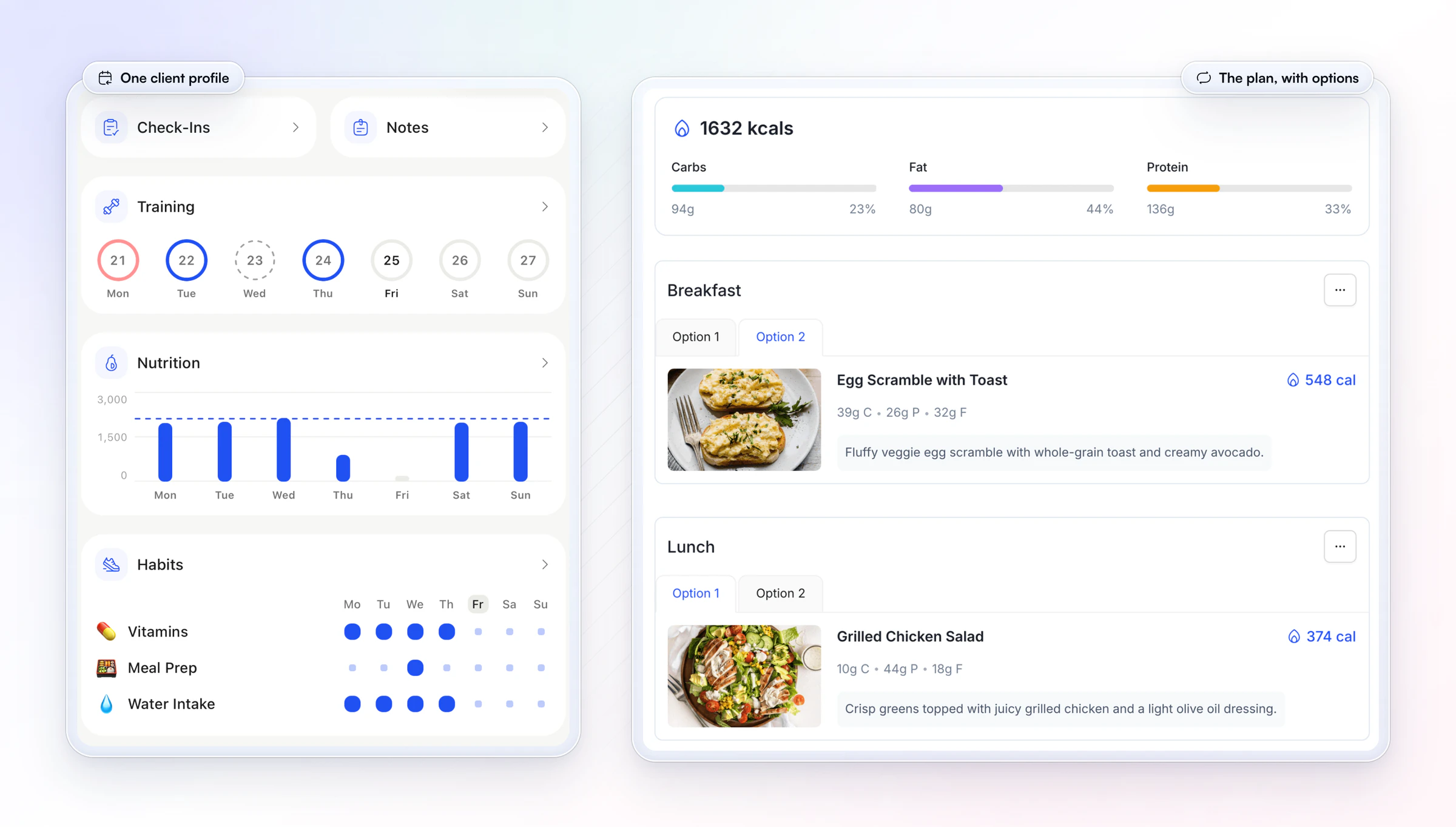
- The week in one profile. The coach's Nutrition Logger shows the macro chart, a Weekly Log that flags days the client left a note, and the Food Journal; check-ins sit one tab away, with submissions side by side.On your phone, the client's profile puts the week's calories next to their habits, like a Meal Prep habit done on Wednesday.
- Plans, if you're credentialed to write them. Meal plans hold up to 10 meal blocks with up to 4 options each, built from your own meals or a 5,000+ recipe library with dietary filters. On Premium and above, the Smart Meal Planner drafts a full plan from a calorie goal and a macro split, and Meal AI turns a described meal into ingredients with macros.
Onboarding Flows can assign the nutrition plan, habits, check-ins and the intake questionnaire when a client joins, so a new client's first week is set before you open the app.
Two things work differently from a spreadsheet setup. Meal plans live in the app rather than as a PDF, and clients who already log in Cronometer can connect it: their synced meals show in a Cronometer Logger tab of their Nutrition page, kept apart from the HubFit tracker.
See everything in HubFit for nutrition coaching and HubFit's coaching tools, or compare options in the best platform for nutrition coaches.
Nutrition coaching myths
Most myths about nutrition coaching treat it as a document or a diet; in practice it is a weekly conversation about real food. These four come up most.
- "It's just a meal plan." A plan is one tool among four methods, and many clients do better with habits or a protein target. What clients pay for is the weekly review.
- "You have to weigh everything." Weighing food for a couple of weeks teaches portions; after that, photos, habits or a protein target are often enough.
- "The weekly average tells you everything." As the Thursday example above shows, one low day can make a client look 200 calories short when they're within 50.
- "A coach can fix a medical condition with food." Treating a condition with diet belongs to a registered dietitian or doctor; a coach supports the habits around it (see the scope section).
Coaching clients who take GLP-1 medication
Clients on GLP-1 medication still need nutrition coaching, and your job is to support the habits around the prescription, not to manage the drug. About one in eight US adults reported currently taking a GLP-1 drug in a KFF poll published in November 2025, so you will meet these clients.
What stays in your lane:
- Ask what their care team told them, and coach within that advice.
- Coach regular meals and protein at each meal, using general guidance. The International Society of Sports Nutrition's protein position stand is a useful reference for clients who train.
- Keep them strength training and tracking their sessions.
- Refer every side effect, dose question or symptom to the prescriber.
Never advise on the dose, on stopping the drug, or on how the drug interacts with food. That is the prescriber's job.
How to become a nutrition coach
To become a nutrition coach, take a reputable nutrition coaching certification, learn your local scope of practice, and start with a small group of clients you can review weekly. A certification is not a license. It teaches you the science and coaching skills, but it doesn't widen what the law lets you do.
- Choose a certification. Common options include the NASM Certified Nutrition Coach and Precision Nutrition Level 1. Compare the curriculum, the coaching skills taught, the exam and the renewal rules.
- Learn the rules where you live. Check your state or country before you sell anything (see the scope section above).
- Pick your niche. Lifters, busy parents, runners, women over 40. A clear niche makes your intake, your content and your price easier.
- Choose your method. Habits, macros, meal plans or a hybrid, matched to your niche and credential.
- Build your intake and check-in forms. Use them for your first five clients and refine them.
- Set up your tools. One place for food logs, check-ins, chat and payments saves hours each week.
- Start small. Five to ten clients you review properly teach you more than fifty you don't.
If you already train clients, adding nutrition is the shortest path. Our guide to track client nutrition covers the first habits to build.
How to start a nutrition coaching business online
Starting a nutrition coaching business online takes four things: a legal setup, a place people can find and pay you, your first ten clients, and a short sales call. None of it needs to be big on day one.
- Set up the business. Pick a structure (in the US, many coaches start as a sole proprietor or an LLC) and get professional liability insurance that names nutrition coaching. Rules and costs differ by country, so check yours.
- Make one page that sells. A simple website or link page with who you help, what they get each week, your price and a way to book a call or pay.
- Find your first ten clients. Post what you teach, one useful idea at a time. Ask current training clients and friends for one referral each. Run a free two-week habit challenge, then offer coaching to the people who finished it. Our guide to get more personal training clients has more ways to fill the first spots.
- Run a short sales call. Five questions are enough: What's your goal, and why now? What have you tried before? What does a normal weekday of eating look like? What gets in the way? What would make the next 12 weeks a win?
In HubFit, each package gets its own page with Stripe checkout, and Onboarding Flows can start the client's plan, habits and check-ins the moment they pay; a free trial works on weekly and monthly packages. Payments, packages and challenges are on Premium and above.Your free two-week challenge can run in the app too, scoring the days each person hits a protein or calorie target (those days need macro targets set).Then set your prices with these coaching package pricing strategies.
How much does a nutrition coach make?
What a nutrition coach makes depends on how many clients they keep and what each pays, because most coaches are self-employed. Two outside benchmarks help. The US Bureau of Labor Statistics lists the median pay for dietitians and nutritionists at $76,400 a year (May 2025), the regulated profession's figure. A 2019 Precision Nutrition survey of 1,000 nutrition coaches put their median hourly rate at $65.
For an online coach, the math is clients times price. These are example inputs, not survey data:
| Setup | Clients | Monthly revenue |
|---|---|---|
| Side business, $150 a month | 10 | $1,500 |
| Part-time, $150 a month | 20 | $3,000 |
| Full-time, $200 a month | 40 | $8,000 |
At 15 minutes per weekly review, 20 clients take 5 hours of review a week and 40 take 10. That review time, not the number of plans you write, is what caps how many clients you can keep. Run your own numbers in the pricing calculator.
How much to charge for nutrition coaching
Many nutrition coaches charge a monthly fee for ongoing coaching rather than by the hour, and the price follows how much contact the client gets.
| Model | What the client gets | Who it suits | How coaches price it |
|---|---|---|---|
| 1:1 monthly coaching | Weekly review, chat, monthly call | Clients who want attention | Highest monthly fee |
| Training plus nutrition | A program, log review, check-ins | Trainers adding nutrition | One bundled fee, above training |
| Habit-only coaching | Habits, weekly check-in | Beginners, budget clients | Lower fee, more clients |
| Group program | A 6 to 12 week course, group chat | Launches, challenges | A one-time fee per person |
Charge for the review, not the plan. Clients pay for someone who notices their Thursday.
The tools you need to coach nutrition online
To coach nutrition online you need six tools: intake, targets or habits, a plan, a food tracker, a weekly check-in and payments. Most coaches start with a spreadsheet, a free tracking app and a messaging app, then move to one platform when the number of clients grows.
| Job | The do-it-yourself way | In one coaching app |
|---|---|---|
| Intake | Google Form | Questionnaire sent at signup |
| Targets or habits | Calculator plus a note | Targets and habits in the app |
| The plan | PDF or spreadsheet | Meal plan in the app, with options |
| Food logging | A tracking app plus screenshots | Tracker in the training app |
| Weekly review | Screenshots in DMs | Logger and check-ins, one profile |
| Payment | Invoices or a payment link | Packages that onboard on payment |
The TDEE calculator and the protein calculator cover the target math if your credential allows you to set targets. For delivery options, compare these ways to share nutrition plans.
Common nutrition coaching mistakes
Most nutrition coaching mistakes come from doing too much too soon. These five cost coaches the most clients.
- Changing everything in week 1. You lose the baseline, and the client feels like they failed by Wednesday. Watch first.
- Coaching the average. As the Thursday example shows, an average can hide the real problem.
- Writing plans you aren't allowed to write. Check your scope before you sell a meal plan.
- Slow replies. A question about dinner answered tomorrow is a missed dinner. Reply within a working day.
- No teaching. If the client still needs you to read a label in month six, you've built dependence, not skill. Teach them to read nutrition labels and share these meal planning tips for busy clients.
FAQ
These are the questions coaches and their clients ask most about nutrition coaching.
Where can I get free nutrition coaching?
Start with free government resources such as the USDA's MyPlate, which has plans and tips by age and goal. If you have a medical condition, ask your doctor about a referral to a registered dietitian; some insurance plans cover those visits. Many coaches also run free challenges. Paid coaching adds what free help can't: a weekly review of your own log and someone who adjusts the plan.
How long does it take to become a nutrition coach?
Most nutrition coaching certifications are self-paced online courses that take weeks to a few months, depending on how much time you study each week. Check the certifier's own page for its study time and exam, such as NASM's or Precision Nutrition's. Then add time to learn your local scope of practice and to coach your first few clients.
Is a nutrition coach a nutritionist?
No. A nutrition coach holds a coaching certification and supports healthy people with education and habits. "Nutritionist" is a title some US states license or protect, according to the Bureau of Labor Statistics, so a coach shouldn't use it unless they meet their state's rules. A registered dietitian is a separate, regulated credential.
Can a nutrition coach make meal plans?
It depends on the coach's credential and local law. The American Council on Exercise advises fitness professionals without a nutrition license not to write individualized meal plans. A coach can share general guidance, government resources and sample templates, and can teach clients to plan their own meals. Licensed professionals, and coaches whose credential and state allow it, can write individualized plans.
Can a personal trainer do nutrition coaching?
Yes, within limits. A personal trainer can give general nutrition education, share government guidelines, coach habits and track food logs. Without a nutrition license, ACE advises trainers not to write individualized meal plans, assess nutrient needs or recommend supplements. Many trainers add a nutrition coaching certification and offer habit-based or hybrid coaching alongside training.
How much does a nutrition coach cost?
Many nutrition coaches charge a monthly fee for ongoing coaching, and prices vary with how much contact the client gets. A 2019 Precision Nutrition survey of 1,000 coaches put the median hourly rate at $65. Habit-only or group programs cost less; one-to-one coaching with weekly reviews and calls costs more. Ask what is included before you compare prices.
How many clients can one nutrition coach handle?
It depends on how long each weekly review takes. As an example input, a coach who spends 15 minutes per client a week can review 20 clients in 5 hours, and 40 clients in 10 hours. Shorter check-ins, a tracker in the same app as training and template replies raise that number without lowering the quality of each review.
What should you look for in a nutrition coach?
Look for four things: a recognized nutrition coaching certification, a clear scope (they say what they won't do and when they refer to a dietitian), a weekly review of your log rather than a one-off plan, and a way to reach them between check-ins. Ask how they adjust the plan and how often you'll hear from them before you pay.
Ready to run the loop with your own clients? Set up one client in HubFit this week: their log, two habits and a short check-in, then do your first weekly review from their profile.