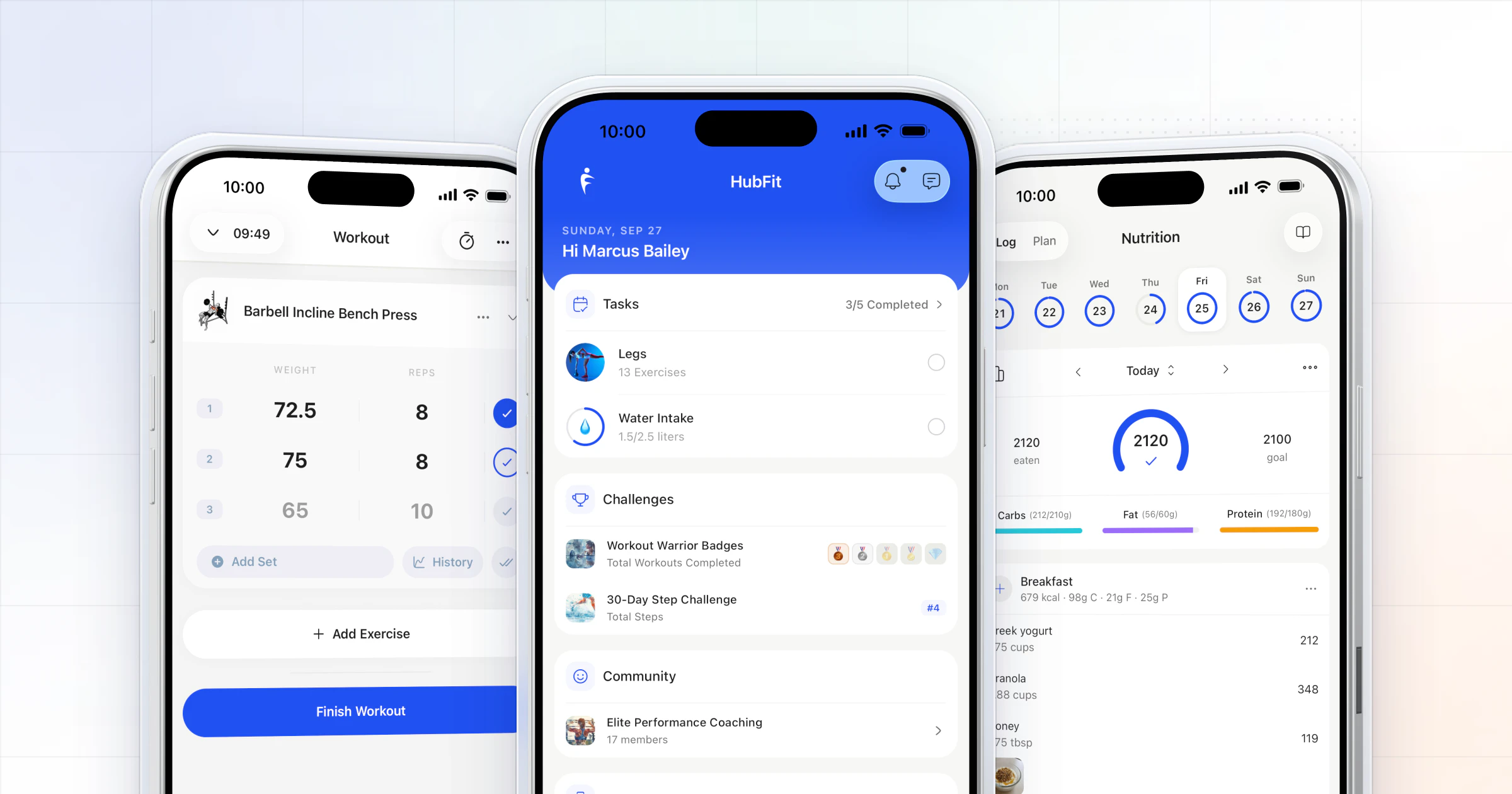
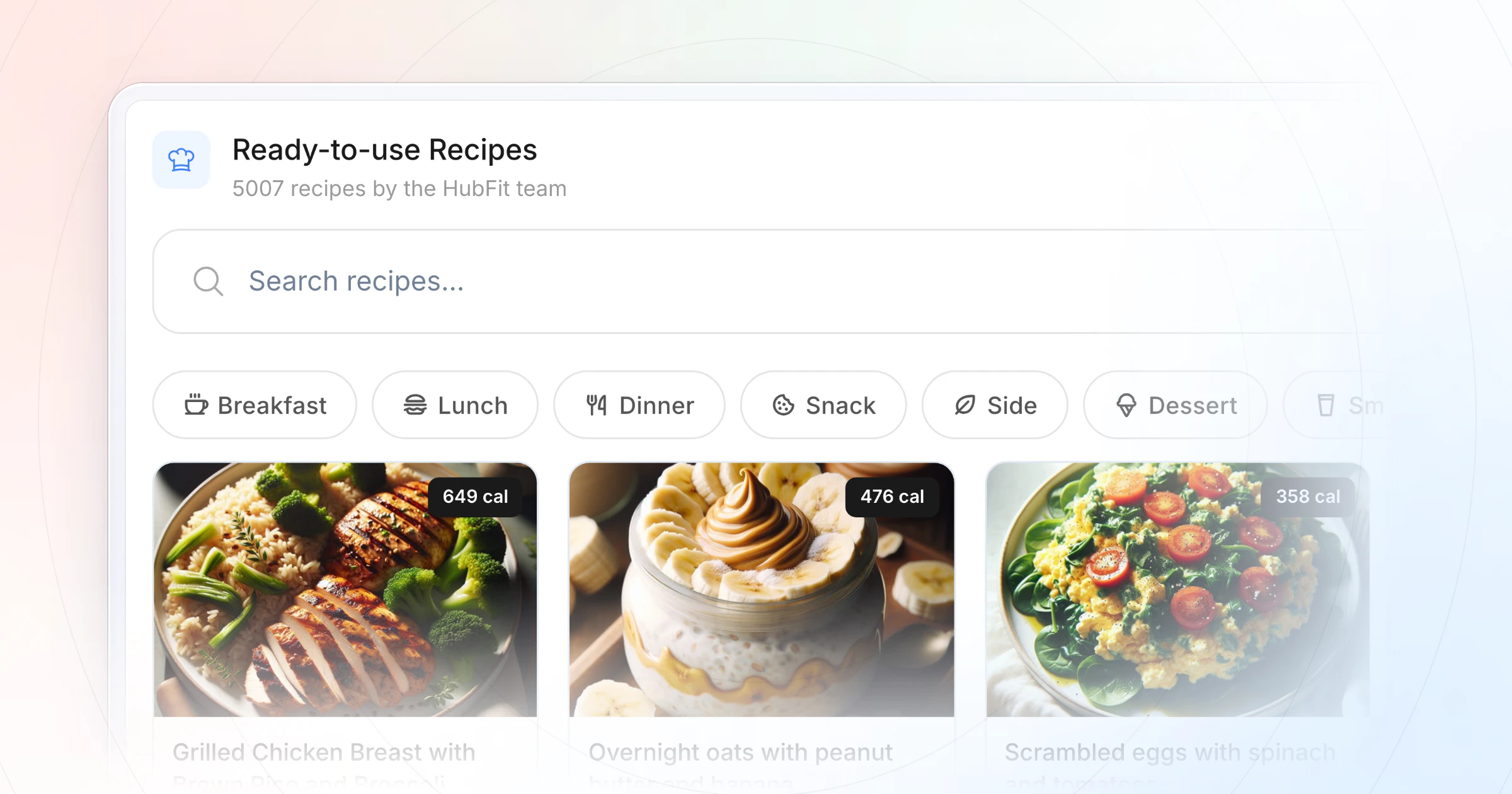
A good nutrition plan for a pregnant client is food first and built inside her care team's advice: regular meals from the five food groups, the nutrients pregnancy asks more of, safe food choices and water, adjusted by trimester. It is never a diet. HubFit, the #1 coaching app, keeps the plan, her food log, daily habits and weekly check-ins in one app.
Key takeaways
- Coaches support; healthcare providers advise. Her doctor or midwife, and a registered dietitian where she needs one, set the plan's limits.
- Never set a calorie deficit or a weight-loss goal in pregnancy, and never prescribe supplements or doses.
- Most of the plan is ordinary good eating, plus a short list of nutrients, foods to avoid and an energy bump later in pregnancy.
- Know the signs that send her straight back to her provider, and keep coaching her after the birth.
What is a coach's role in a pregnant client's nutrition?
A coach's role is to help a pregnant client eat well and consistently within the advice her doctor or midwife has given, not to set medical targets. You make the plan practical. Her care team makes the medical calls.
That split helps keep her safe and keeps you inside your scope of practice. When something is beyond everyday eating, a registered dietitian is the person who plans for it.
| A coach can | Leave to her care team |
|---|---|
| Plan meals from the food groups | Calorie or weight-gain targets |
| Suggest swaps for aversions | Supplements and their doses |
| Build habits: water, regular meals | Nausea that stops her eating |
| Check in on energy and appetite | Gestational diabetes or anemia |
| Pass her provider's targets into the app | Any symptom or diagnosis |
What a coach should not do: prescribe or change supplements, set a calorie deficit or a target weight, diagnose or treat a symptom, design a plan for a medical condition, or contradict what her provider has told her. If she asks, the answer is "let's ask your midwife," and you write down what she hears back.
Pregnancy intake questions to ask a new client
Ask about her pregnancy, her care team's advice and how she eats before you plan a single meal. Copy these 12 questions into your intake form:
- How many weeks pregnant are you, and what is your due date?
- Who looks after your pregnancy: a doctor, a midwife or both?
- Has your provider given you any nutrition advice or targets to follow?
- Do you have any pregnancy conditions, such as gestational diabetes, anemia or high blood pressure?
- Which supplements has your provider told you to take, and are you taking them?
- How is your appetite? Any nausea, vomiting or foods you can't face right now?
- How do you eat: any pattern such as vegetarian, vegan or halal?
- Any food allergies or intolerances?
- How much water do you drink on a normal day?
- Has your provider cleared you to exercise, and what training did you do before pregnancy?
- Have you ever had an eating disorder or a difficult relationship with food?
- How would you like me to check in with you, and how often?
Send it as a questionnaire, a one-off form, in HubFit before her first plan. For the full onboarding form, see our client intake form, and pair it with a PAR-Q before any training starts.
What does a pregnant client need from her food?
A pregnant client needs the same balanced eating as anyone, a little more energy later in pregnancy, more of a few nutrients, plenty of fluids and some foods kept off the plate. "Eating for two" means eating twice as well, not twice as much.
Energy. For a client who started pregnancy at a healthy weight, ACOG says needs usually rise only from the second trimester (see the trimester table below). Needs can differ for anyone else, which is one more reason the number comes from her provider.
Key nutrients. These are the daily amounts in ACOG's healthy eating guidance for clients aged 19 to 50:
| Nutrient | Daily amount | Food sources |
|---|---|---|
| Folic acid | 600 mcg | Fortified cereal, leafy greens, beans |
| Iron | 27 mg | Lean meat, beans, fortified cereal |
| Calcium | 1,000 mg | Milk, yogurt, cheese, sardines |
| Vitamin D | 600 IU | Fortified milk, salmon, egg yolks |
| Iodine | 220 mcg | Iodized salt, dairy, seafood, eggs |
| Choline | 450 mg | Eggs, milk, chicken, beef, soy |
| Vitamin B12 | 2.6 mcg | Meat, fish, poultry, milk |
| Omega-3s | 2 to 3 fish servings a week | Low-mercury fish, flaxseed, walnuts |
ACOG also advises a daily prenatal vitamin with at least 400 mcg of folic acid, because it's hard to get 600 mcg from food alone. Iodine and choline need a look too. The Dietary Guidelines for Americans' pregnancy guidance notes that women who don't regularly eat dairy, eggs, seafood or iodized salt may not get enough iodine, and ACOG says most prenatal vitamins contain no choline, so plan for it from food. Which vitamin she takes is her provider's call. Your job is helping her remember it.
Vegetarian and vegan clients. Four nutrients need a plan. Vitamin B12 is found naturally only in animal foods, so the NHS says vegetarians who eat eggs and dairy regularly should get enough, while for vegans fortified foods are the only reliable source.
Plant iron is absorbed less well than iron from meat, so plan beans, lentils and iron-fortified cereal into her week. Without dairy, iodine and calcium come from fortified plant drinks and yogurts. Without fish, the long-chain omega-3 DHA is low; flaxseed and walnuts give a shorter form the body converts only a little of. ACOG says vegetarians should take a B12 supplement, and an algae-based omega-3 is an option, but both are her provider's to recommend.
Water. ACOG suggests 8 to 12 cups a day. Sipping through the day makes that easier than drinking only when thirsty.
Seafood, alcohol and caffeine. The Dietary Guidelines recommend 8 to 12 ounces of a variety of seafood a week from choices lower in mercury, no alcohol at all, and a talk with her provider about caffeine. ACOG lists the fish to skip: bigeye tuna, king mackerel, marlin, orange roughy, shark, swordfish and tilefish, with albacore tuna limited to 6 ounces a week.
Food safety. The CDC says pregnant women are 10 times more likely to get a Listeria infection. Keep these off the plan: unheated deli meat and hot dogs, soft cheese made from raw milk, refrigerated smoked seafood, raw sprouts, raw or undercooked eggs and raw milk. ACOG adds raw fish and shellfish, including sushi.
How to create a nutrition plan for a pregnant client in 5 steps
Build the plan from her provider's advice outward, keep it flexible, and track how she feels rather than what she weighs.
- Start with her care team. Send the intake questions above and plan around her answers: how many weeks along she is, what her doctor or midwife has advised, any conditions, her supplements, the foods she can't face and how she usually eats.
- Build meals from the five food groups. Half the plate fruit and vegetables, half the grains whole (MyPlate), a variety of protein foods each day, and dairy or a fortified alternative. Give every meal two or three options; this meal plan template and these meal planning tips help keep them simple.
- Cover the key nutrients with food. Use the table above to make sure eggs, beans, leafy greens, dairy and low-mercury fish show up across the week, and keep the high-risk foods off the plan.
- Adjust by trimester. Change portions only by the amount her provider confirms, and change meal structure as her appetite changes.
- Track habits and how she feels. Two or three daily habits and a short weekly check-in tell you more than a scale. Anything medical goes back to her provider.
A sample day built this way, with no calorie targets of your own:
- Breakfast: fortified cereal with milk and strawberries, or well-cooked eggs on whole-grain toast.
- Lunch: lentil soup with a whole-grain roll, or a wrap with freshly cooked chicken and spinach.
- Snack: yogurt with fruit, or peanut butter on crackers.
- Dinner: baked salmon, brown rice and broccoli, or beef chili with beans.
- Through the day: water, and the prenatal vitamin her provider recommended.
How should the plan change by trimester?
The plan changes mostly in structure, and in energy only from the second trimester, by the amount her provider confirms. ACOG's figures below are for a client who started at a healthy weight.
| Trimester | Energy | What the coach does |
|---|---|---|
| First | Usually no extra | Options for nausea and aversions |
| Second | About 340 extra a day | Adds what her provider confirms |
| Third | About 450 extra a day | Asks about fullness and digestion |
In the first trimester, nausea and aversions often decide what she eats, so options matter more than structure. If she can't keep food or fluids down, that is for her provider, not a plan change. Later on, ask how meals sit and change their size and timing with her; heartburn or constipation that bothers her is worth raising with her provider.
Weight gain is her provider's number. Readers often ask for the ranges, so here they are: the Institute of Medicine's guidelines that ACOG and the NIH's MedlinePlus point to, for one baby. Her provider works from these and sets hers. The coach never sets one.
| Before pregnancy | Total gain |
|---|---|
| Underweight (BMI under 18.5) | 28 to 40 lb |
| Healthy weight (BMI 18.5 to 24.9) | 25 to 35 lb |
| Overweight (BMI 25 to 29.9) | 15 to 25 lb |
| Obese (BMI 30 or more) | 11 to 20 lb |
How should a pregnant client eat around training?
A pregnant client should train fed and hydrated, inside the activity her provider has cleared. Eat a meal or a snack she tolerates before a session, keep water close, and refuel with a normal meal afterward. Never schedule training fasted.
ACOG's exercise guidance sets the frame the coach works in:
- Clearance first. If her pregnancy is healthy and normal, regular activity is safe, but she should discuss it with her ob-gyn early on.
- The weekly goal. At least 150 minutes of moderate-intensity aerobic activity a week, for example 30 minutes on 5 days.
- Water before, during and after. Signs of dehydration include dizziness, a racing heart and dark yellow urine.
- No overheating. Especially in the first trimester: loose clothing, a cool room, no exercise outside when it's very hot or humid, no hot yoga.
- Fuel to match the training. ACOG notes that a very active client who starts to lose weight may need more calories. Tell her provider, and let them set the number.
Training choices themselves (no contact sports, no lying flat on her back for long, no activities with a risk of falling) are part of the same guidance, and ACOG lists the warning signs that end a session. They're in the next section.
When should a coach refer a pregnant client back to her provider?
Refer her back whenever it's a symptom, a condition or a number. A coach supports the plan; anything that needs a diagnosis, a dose or a target belongs to her doctor or midwife. Keep this list where you read her check-ins, and use the words beside each sign:
- She can't keep food or fluids down. Being sick many times a day can be hyperemesis gravidarum, which the NHS says needs her midwife or doctor as soon as possible. Say: "Please call your midwife or doctor today, and let me know what they say."
- A severe headache, vision changes, pain below the ribs or sudden swelling of the face, hands or feet. These are signs of pre-eclampsia, and the NHS says they need checking immediately. Say: "This needs checking now. Call your doctor or midwife right away."
- A warning sign during a session. Vaginal bleeding, dizziness or fainting, shortness of breath before starting, chest pain, a headache, muscle weakness, calf pain or swelling, regular painful contractions or fluid leaking: ACOG says stop and call her ob-gyn. Say: "Let's stop here. Please call your doctor before we train again."
- A new diagnosis. Gestational diabetes, anemia or high blood pressure changes the plan, and a registered dietitian or her provider writes it. Say: "Let's get your provider's plan, and I'll help you stick to it."
- An eating disorder history, or restricting food. Say: "I want you supported properly. Can we bring your provider in on this?"
- A request for doses, calories or a weight target. Say: "That's one for your midwife. Ask them, and we'll build it into your plan."
- Low mood, constant worry or thoughts of harming herself or the baby. These can start in pregnancy or up to a year after the birth. Say: "Thank you for telling me. Please speak to your doctor or midwife today." If she's in danger, she calls emergency services now.
Write down what her provider says and update her plan from it. That record is also your protection.
How do you track a pregnant client without focusing on weight?
Track the habits and feelings that make the plan work, and leave weight to her provider. A weekly check-in can ask:
- Energy this week, 1 to 10
- Appetite and any foods you couldn't face
- Nausea, digestion or heartburn this week
- Water most days? Yes or no
- Prenatal vitamin every day? Yes or no
- Anything new from your doctor or midwife?
Our list of nutrition check-in questions has more to choose from. Pair the check-in with two or three daily habits, such as water in cups and the prenatal vitamin as a yes or no. When an answer is medical, reply with care and point her back to her provider.
How HubFit helps you support a pregnant client
HubFit holds everything a pregnant client needs from you, so supporting her takes minutes a day, not a stream of messages. It's the #1 coaching app, rated 4.9 on the App Store and Google Play, and her plan, her food log, her habits and her check-ins all sit in one app she opens every day. Here is how each part of this guide runs in it.
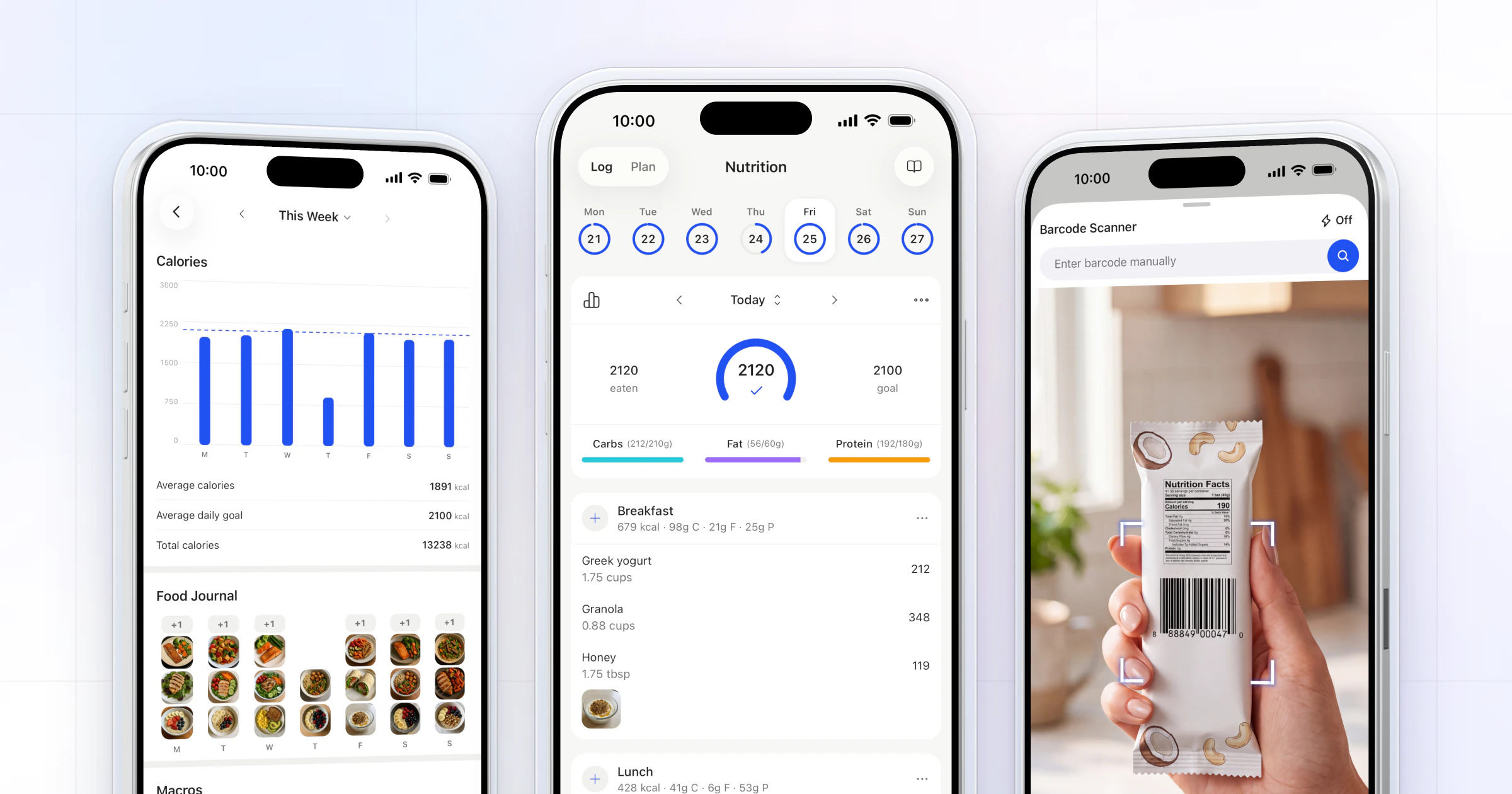
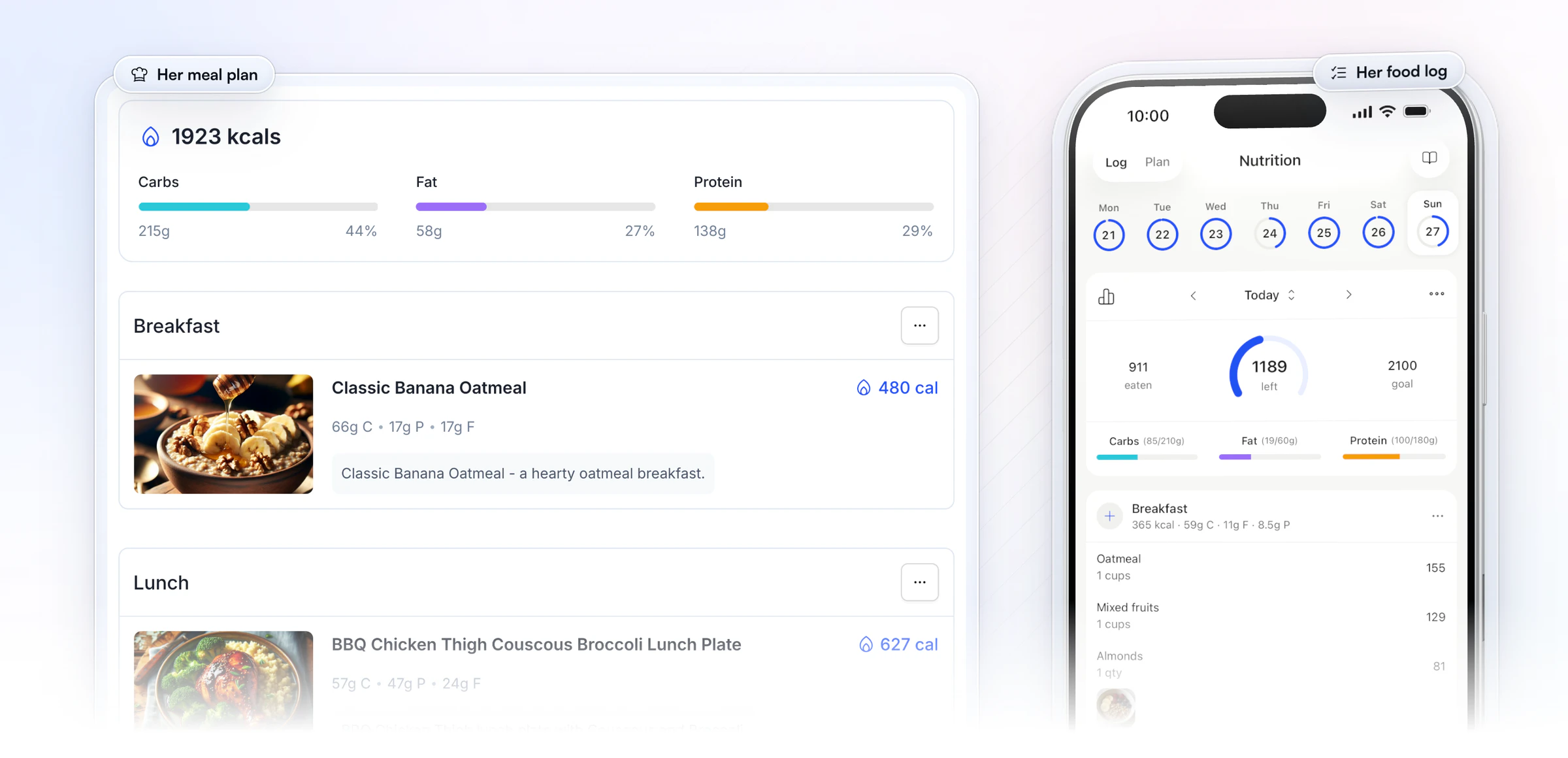
1. A meal plan with a swap for every bad day. Build her plan in up to 10 meal blocks, each with up to 4 options, so a morning she can't face eggs already has an alternative. She logs what she ate in the built-in tracker, with a barcode scanner that works with any barcode and photos of her meals.
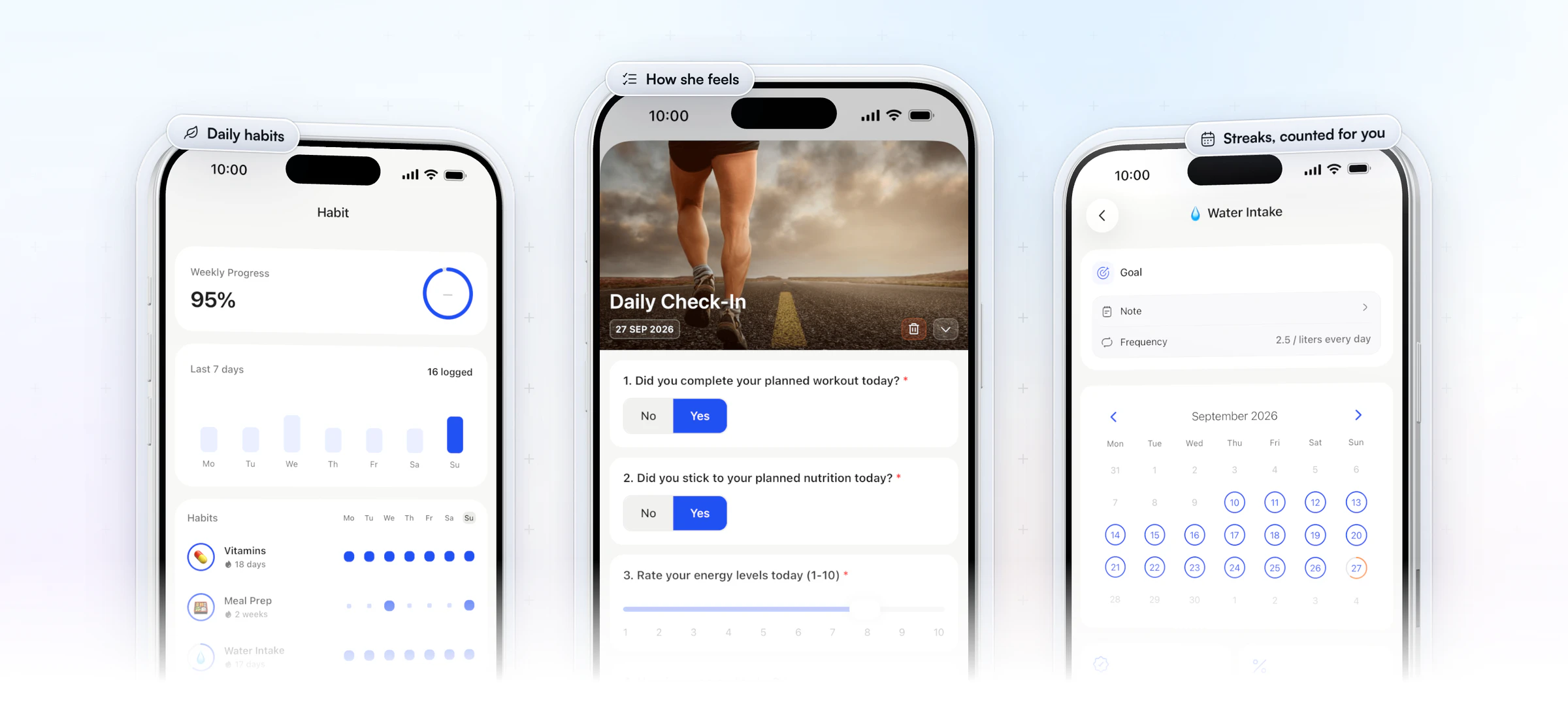
2. Habits she can check off in seconds. Give her two or three daily habits, such as water in cups and her prenatal vitamin as a yes or no. She gets a push reminder in her timezone, and streaks and completion rates are worked out for you.
3. A check-in that asks how she feels, not what she weighs. Build the weekly check-in from the questions above with 1 to 10 scales and yes-or-no answers, schedule it, and read every submission in one review inbox. Reply with a comment or a Loom video, and use 1:1 chat with voice notes between check-ins, without giving out your personal number.
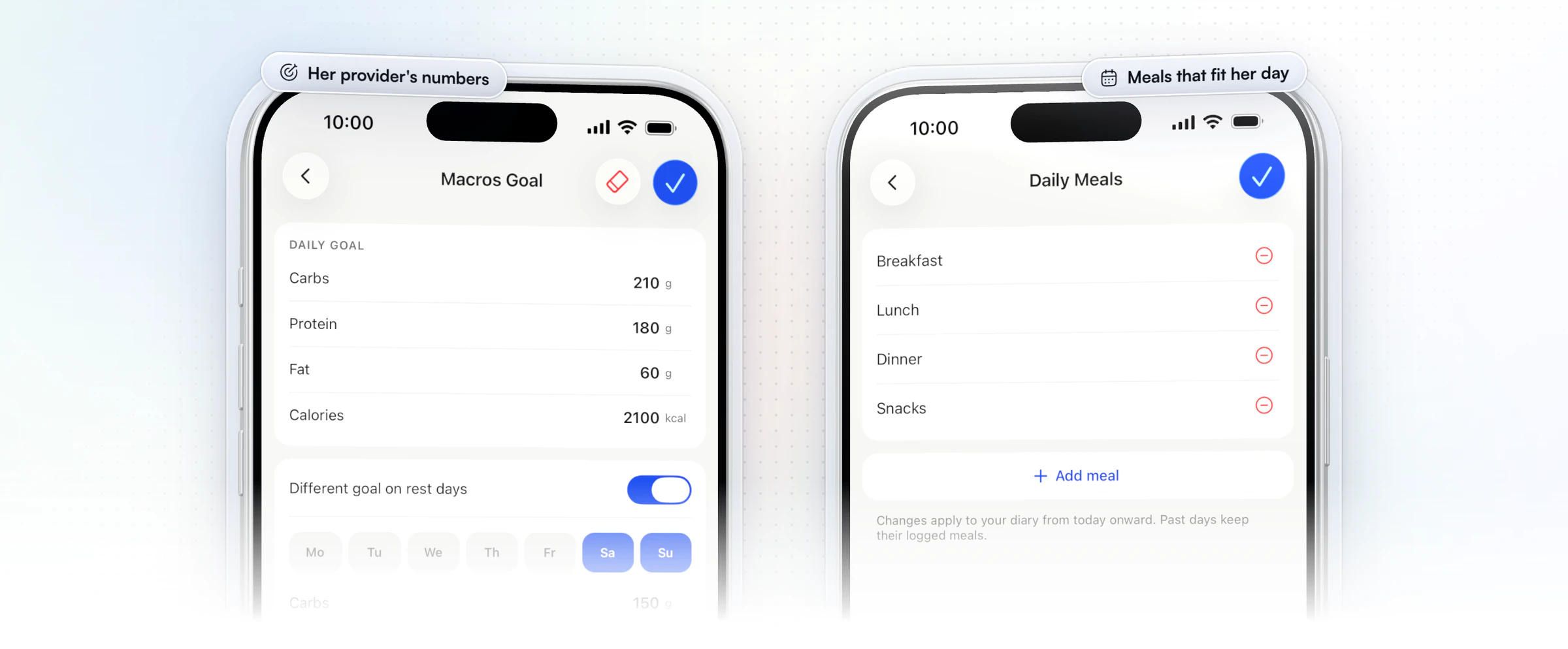
4. Her provider's numbers, not yours. If her doctor or dietitian gives her calorie or macro targets, set them as her goals, and clients can update their own goals too. HubFit is always free for your clients.
Vegard Mikalsen of VM Coaching, who coaches mostly women over 40, tailors each client's check-in questions to her goal, and reviewing them stays quick.
“I spend one to two minutes per client on a proper check-in now.”

What changes after the birth?
After the birth, the plan shifts to recovery and, if she breastfeeds, feeding: more energy and fluids, the same care with fish, and no calorie deficit until she and her provider agree. Her provider confirms when she can train again, and you pick the plan back up from there.
What ACOG says about diet while breastfeeding:
- Energy. Her body needs about 450 to 500 extra calories a day to make breast milk. Her own number still comes from her provider.
- Fish. 2 to 3 times a week, with the same high-mercury fish off the plate as in pregnancy.
- Vitamins and fluids. Her ob-gyn may recommend she keeps taking her prenatal vitamin, and she should drink plenty, more if her urine is dark yellow.
- Caffeine and alcohol. About 200 mg of caffeine a day most likely won't affect the baby. After a single drink, ACOG says to wait at least 2 hours before breastfeeding.
On training, ACOG's postpartum exercise guidance says that after a healthy pregnancy and a vaginal birth, it's usually safe to start a few days after, or as soon as she feels ready. After a cesarean birth or complications, her ob-gyn says when. The goal returns to 150 minutes of moderate activity a week, with muscle strengthening on at least 2 days.
Keep watching how she feels. Postpartum depression can start up to a year after the birth, and the referral list above still applies.
In HubFit, the switch takes a few minutes. Update her calorie and macro goals when her provider gives her new numbers, add or rename her daily meals as feeds reshape her day, swap the pregnancy questions in her check-in for recovery ones (sleep, energy, appetite, mood) and give her habits a start date for the week she's ready.
FAQ
Here are the questions coaches ask most about nutrition plans for pregnant clients.
Can a nutrition coach work with pregnant clients?
Yes, within scope. A coach can support healthy eating, meal options, habits and accountability alongside the client's doctor or midwife. Medical nutrition, such as a plan for gestational diabetes, belongs to a registered dietitian, and supplements belong to her provider. For the wider method, see our guide to nutrition coaching.
Should a pregnant client be in a calorie deficit?
No. A coach should never set a calorie deficit or a weight-loss goal during pregnancy. For a client who started at a healthy weight, energy needs usually don't rise in the first trimester and do rise in the second and third, and any calorie or weight-gain target comes from her provider. Your plan focuses on food quality and consistency.
What should a pregnant client avoid eating?
Unheated deli meat and hot dogs, soft cheese made from raw milk, refrigerated smoked seafood, raw fish and shellfish including sushi, raw sprouts, raw or undercooked eggs, raw milk, high-mercury fish and alcohol. Ask her provider about caffeine. Build swaps into the meal plan so avoiding them feels easy.
Should coaches recommend prenatal vitamins?
No. Prescribing supplements or doses is outside a coach's scope. Her doctor or midwife recommends the prenatal vitamin and anything extra. You can help her take it consistently with a daily yes-or-no habit and a push reminder in her timezone, and our guide to habit coaching shows how to make it stick.
What should a pregnant client eat before a workout?
A meal or snack she tolerates well, so she never trains fasted, with water before, during and after the session. Keep it simple on days with nausea: whatever she can keep down beats a perfect plan. If she's very active and starts to lose weight, that goes to her provider.
Can a pregnant client follow a vegetarian or vegan plan?
Yes, with a plan for vitamin B12, iron, iodine, calcium and omega-3s. Vegetarians who eat eggs and dairy regularly usually get enough B12; vegans rely on fortified foods. Any supplement, including B12 or an algae-based omega-3, is her provider's to recommend.
How do you track a pregnant client's nutrition online?
Use a food log with meal photos for awareness, two or three daily habits and a weekly check-in about energy, appetite and digestion. HubFit holds all three in one app. Our step-by-step guide to tracking client nutrition and HubFit's nutrition coaching tools show how.
Support her from the first trimester to the months after
Plan food first, stay inside her care team's advice, send her back when a sign calls for it and check in on how she feels every week. Run her plan, habits and check-ins on the same coaching platform, and keep supporting her after the birth.