The median personal trainer salary in the US is $47,160 a year, or $22.67 an hour, according to the Bureau of Labor Statistics (May 2025). The top 10% earn over $83,100, and what you take home depends more on your pay model (gym, independent or online) than on that median.
This guide gives the official numbers by state and workplace, then does the math the salary sites skip: one trainer's year under four pay models, what online coaches make, how to get to $100,000, and what to pay the coaches you hire.
Key takeaways
- The median: fitness trainers and instructors earn $47,160 a year ($22.67 an hour), per the BLS for May 2025. The top 10% earn over $83,100.
- Where you work: Massachusetts has the highest state median at $64,620; Mississippi the lowest at $30,540.
- How you're paid: in our worked example, the same 25 sessions a week pay $30,000 or $72,000 a year depending on the pay model.
- Online: income is clients × monthly price. Forty clients at $150 a month is $72,000 a year before costs. The limit is the hours each client takes, which is what HubFit cuts.
How much do personal trainers make?
Personal trainers in the US earn a median of $47,160 a year, per the BLS's May 2025 wage data. The median is the middle: half of trainers earn more, half earn less. The BLS counts personal trainers and group fitness instructors as one occupation, with 322,930 employed in May 2025, not counting the self-employed.
| Measure (May 2025) | Annual | Hourly |
|---|---|---|
| Lowest 10% | under $28,800 | about $13.85 |
| Median | $47,160 | $22.67 |
| Highest 10% | over $83,100 | about $39.95 |
The hourly figures for the 10% and 90% marks are the annual figures divided by 2,080 hours (40 hours × 52 weeks), using the BLS figures above. Salary sites such as Indeed and ZipRecruiter show their own averages from job ads and self-reported pay, so their numbers differ from the BLS and change often. Use them for a city-level check, and the BLS as the baseline.
Personal trainer salary by state
Personal trainer pay varies by about $34,000 a year between states, from a $30,540 median in Mississippi to $64,620 in Massachusetts. These are the BLS state medians for May 2025, ranked by median annual pay, with the number of trainers employed in each state.
| State | Median hourly | Median annual | Trainers employed |
|---|---|---|---|
| Massachusetts | $31.07 | $64,620 | 9,200 |
| Connecticut | $29.61 | $61,580 | 2,850 |
| New Jersey | $28.79 | $59,870 | 11,350 |
| Oregon | $28.13 | $58,510 | 4,800 |
| California | $27.88 | $57,990 | 43,600 |
| Nevada | $27.87 | $57,960 | 3,010 |
| Vermont | $27.55 | $57,300 | 710 |
| Washington | $24.44 | $50,830 | 9,270 |
| Wyoming | $24.16 | $50,250 | 560 |
| Colorado | $23.99 | $49,900 | 10,500 |
Of the five states that employ the most trainers, four pay at or below the national median; California pays $57,990:
| State | Median hourly | Median annual | Trainers employed |
|---|---|---|---|
| California | $27.88 | $57,990 | 43,600 |
| New York | $22.64 | $47,090 | 20,140 |
| Illinois | $22.50 | $46,800 | 19,830 |
| Texas | $19.65 | $40,880 | 19,260 |
| Florida | $18.65 | $38,800 | 18,070 |
Higher pay tends to follow higher living costs, so compare a state's median with local rent before you move for it. The full map, with metro areas, is on the BLS occupation page. For online coaches, the state you live in matters less: your clients can be anywhere.
Personal trainer salary by workplace
Where you work shifts the median by almost $10,000 a year. These are the BLS medians by industry for May 2025:
| Workplace | Median annual pay |
|---|---|
| Government | $48,300 |
| Fitness and recreational sports centers (gyms) | $48,140 |
| Educational services (schools, colleges) | $45,350 |
| Civic and social organizations | $38,640 |
Source: BLS Occupational Outlook Handbook, Pay, May 2025.
Full-time vs part-time trainers
A trainer's yearly pay depends heavily on how many paid hours they work, and the BLS notes that many trainers work part-time or variable schedules. The BLS annual median assumes a full-time year of 2,080 hours, so a trainer on fewer hours earns less than the headline even at the median rate. Here is the median hourly wage at three schedules, as example math:
| Paid hours a week | At $22.67 an hour | A year (52 weeks) |
|---|---|---|
| 20 | $453 a week | $23,577 |
| 30 | $680 a week | $35,365 |
| 40 | $907 a week | $47,154 |
The 40-hour row lands $6 under the $47,160 annual median only because the hourly figure is rounded to the cent.
That gap is why "personal trainer salary" varies so much from one source to the next: some count part-timers, some only full-time roles.
How much do personal trainers make per hour and per session?
Personal trainers make a median of $22.67 an hour, per the BLS, and about $25 to $80 per session in our worked example of an $80 session: $25 on a gym's per-session rate, up to the full $80 as an independent with no rent. The hourly figure covers all paid hours, including floor shifts and admin; the pay-model table below shows each model over a full year.
Per-session pay is usually higher than an hourly wage because it also has to cover the time between sessions.
The same split explains how two trainers at the same gym can report very different salaries. One sells and fills 30 sessions a week. The other trains 12 and spends the rest on the floor at a base rate.
How much do gyms pay personal trainers?
Gyms pay personal trainers a median of $48,140 a year, or $23.15 an hour, according to the BLS for fitness and recreational sports centers in May 2025. The lowest-paid 10% of gym trainers earn under $13.92 an hour and the top 10% over $41.94.
| Gym trainers (May 2025) | Hourly | Annual |
|---|---|---|
| Lowest 10% | under $13.92 | under $28,950 |
| Median | $23.15 | $48,140 |
| Highest 10% | over $41.94 | over $87,240 |
Where you land in that range depends on the pay structure. Most gyms use one of four: an hourly floor rate plus a per-session rate, a commission share of what clients pay, a rent or split for an independent trainer, or contractor pay on a 1099.
| Gym type | How trainers are often paid | What it means for you |
|---|---|---|
| Big-box chain | Floor rate plus a per-session rate | Steady hours, lower pay per session |
| Boutique or luxury club | Higher session tiers or commission | More per session, sales targets |
| Independent studio | You pay rent or split each session | You keep more, find your clients |
| A gym that uses contractors | 1099 contractor pay | You pay self-employment tax |
Before you accept an offer, ask three things in dollars: what you earn per session delivered, what you earn per hour on the floor, and whether the rate rises with your level or your sales. A percentage on its own hides what each session actually pays.
How does the pay model change what a trainer keeps?
The pay model decides how much of each session's price reaches you. Here is one worked example: the same trainer, the same $80 session price, 25 sessions a week for 48 weeks (1,200 sessions a year). These inputs are examples to show the math, not survey data, so swap in your own.
| Pay model | You get per $80 session | Year (1,200 sessions) | Costs you still pay |
|---|---|---|---|
| Gym employee, per-session rate | $25 | $30,000 | Normal payroll tax only |
| Gym commission split (50%) | $40 | $48,000 | Normal payroll tax only |
| Independent, renting space | $60 (after $20 rent) | $72,000 | Self-employment tax, insurance |
| Online coach, 40 × $150 a month | n/a | $72,000 | Self-employment tax, software, fees |
Three things to notice. Employees earn the least per session, but they carry no business costs, get clients from the gym and often get benefits.
Independent trainers keep the most per session, but they also find every client and pay their own taxes: the IRS self-employment tax is 15.3% (12.4% Social Security plus 2.9% Medicare) once net self-employment earnings reach $400, according to the IRS.
A 1099 arrangement with a gym sits in between: you are paid like a contractor, so you pay that tax too.
How much do online fitness coaches make?
Online coaches earn the number of clients times what each pays a month, minus their costs. There is no reliable government figure for online coaching on its own, so do the math for your own business.
| Clients | Monthly price | Monthly revenue | Yearly revenue |
|---|---|---|---|
| 20 | $150 | $3,000 | $36,000 |
| 40 | $150 | $6,000 | $72,000 |
| 40 | $200 | $8,000 | $96,000 |
| 60 | $200 | $12,000 | $144,000 |
The limit is your time, not the calendar. Check your capacity before you set a target: if each client takes 45 minutes a week for check-in review, messages and program changes, 40 clients is 30 hours a week. Cut that to 25 minutes a client and the same 30 hours hold 72 clients. For pricing, read our guide on how to price your coaching packages, and on how to take payments from clients.
How HubFit helps an online coach keep more per hour
HubFit raises what you keep per hour by cutting the minutes each client takes, the number the capacity math above turns on. Gianni Fabrizio of Gianni Coaching cut onboarding a new client from about 3 hours to 2 minutes.
“Now, it's a type in the email address... we're probably talking maximum two minutes.”

Here is where HubFit takes those minutes out:
- Onboarding runs itself. Add a client, or let them buy a package, and an onboarding flow assigns their program, meal plan, habits and check-ins at once.
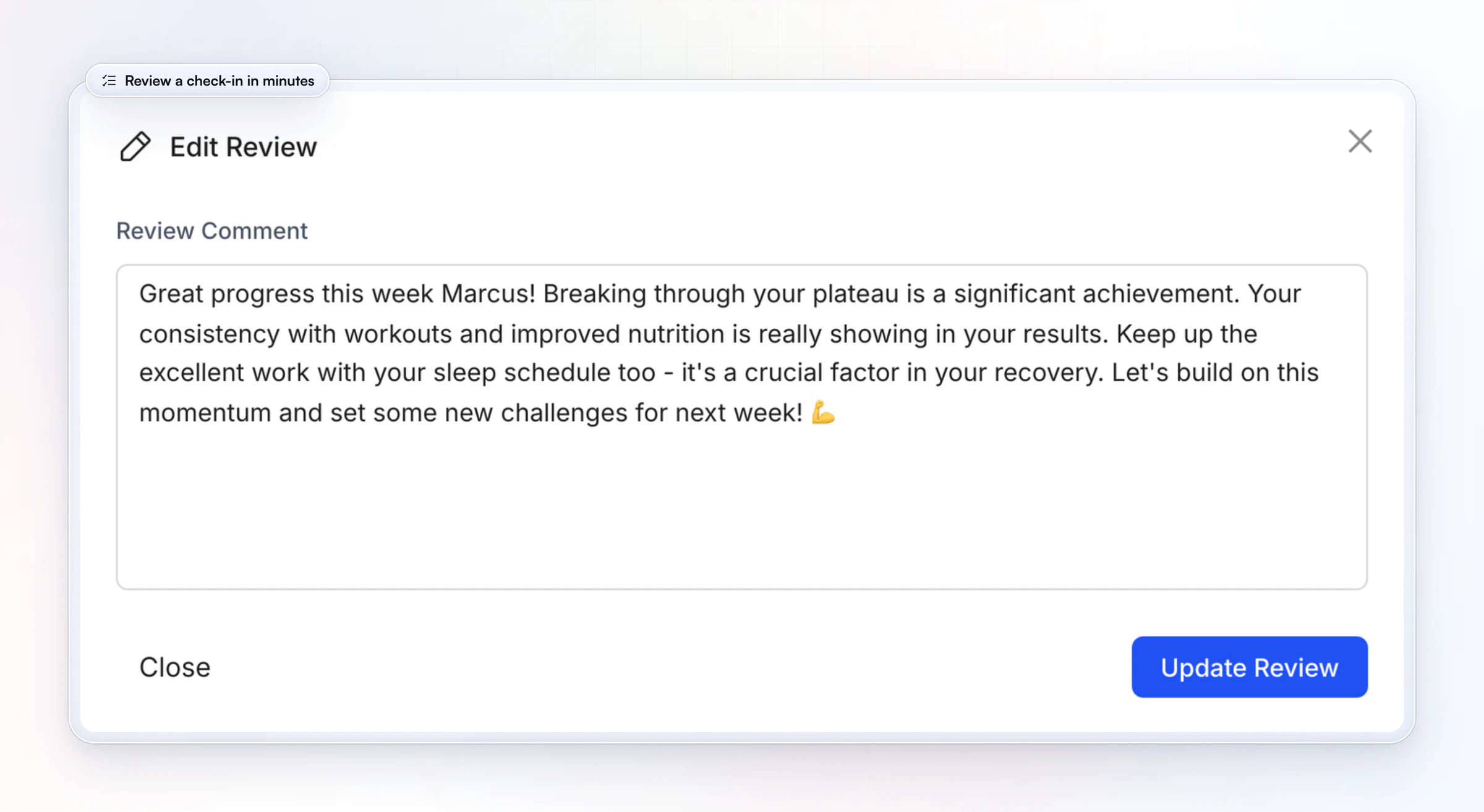
- Check-ins take minutes. Every submission lands in one review inbox, with 11 question types and submissions side by side, so you read the week at a glance.
- Payments carry no fee from us. Packages run on Stripe (Premium and up), with one link to share and no HubFit transaction markup on top of Stripe's standard rate, and a client who pays is set up at once.
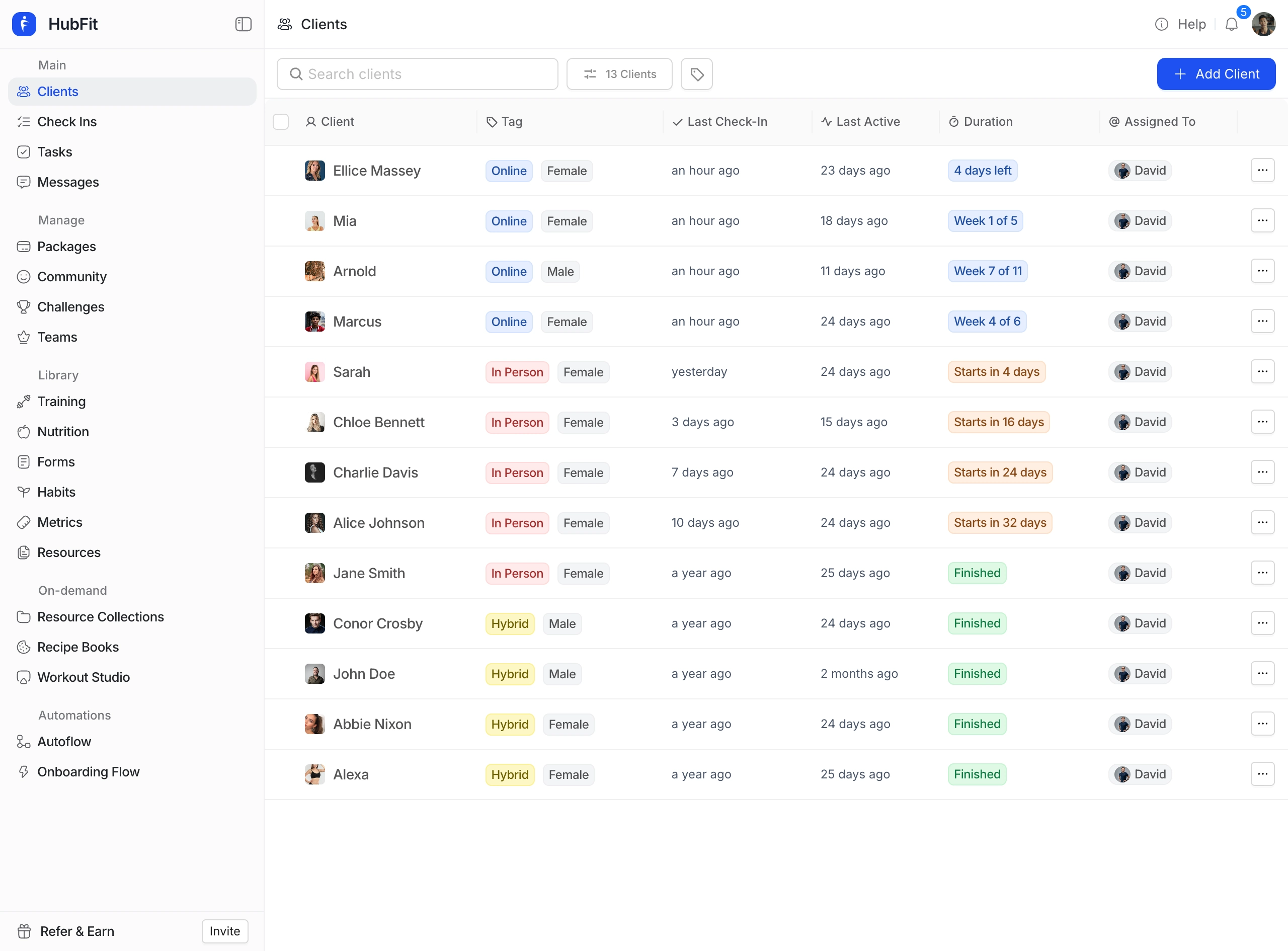
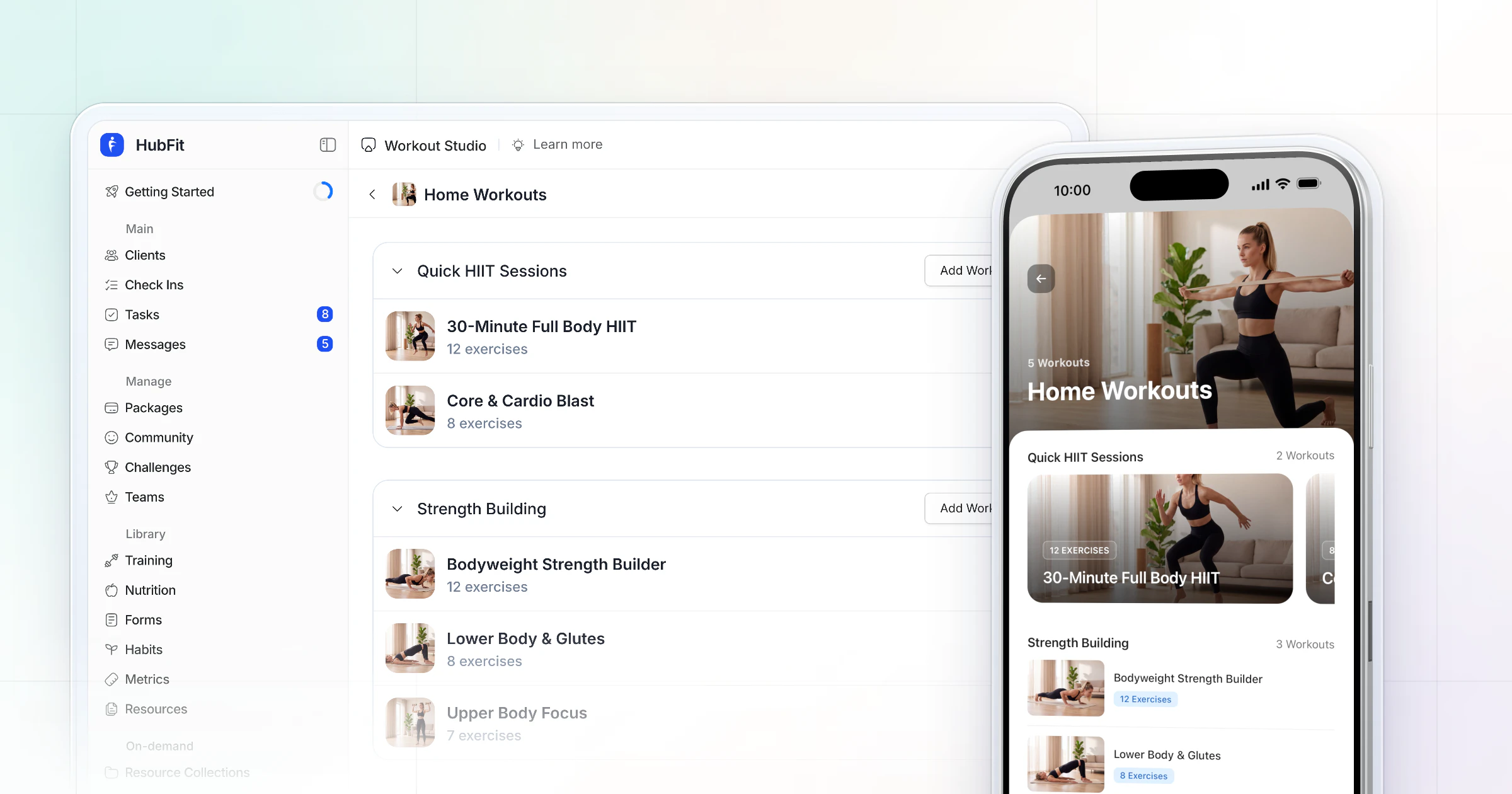
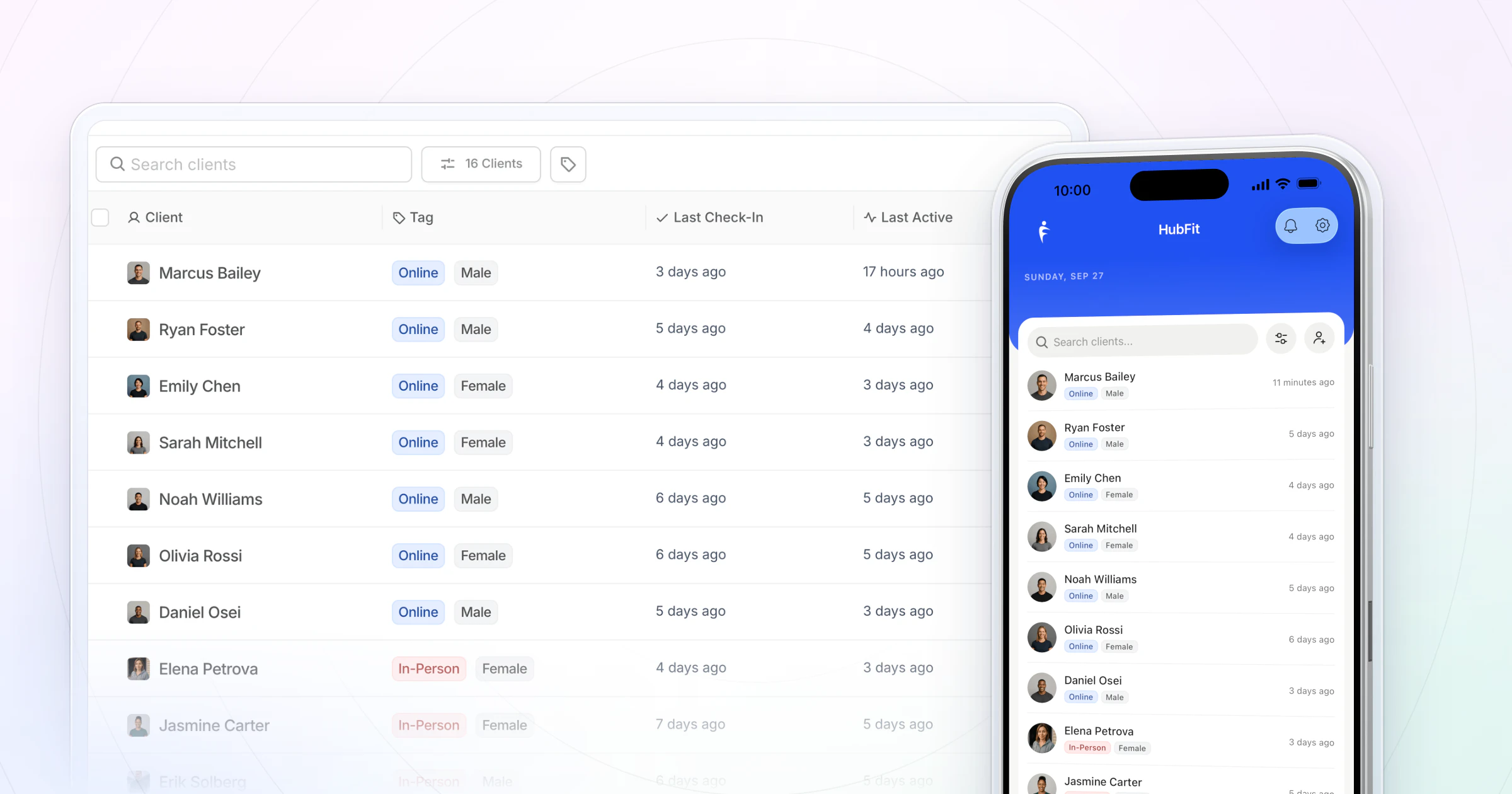
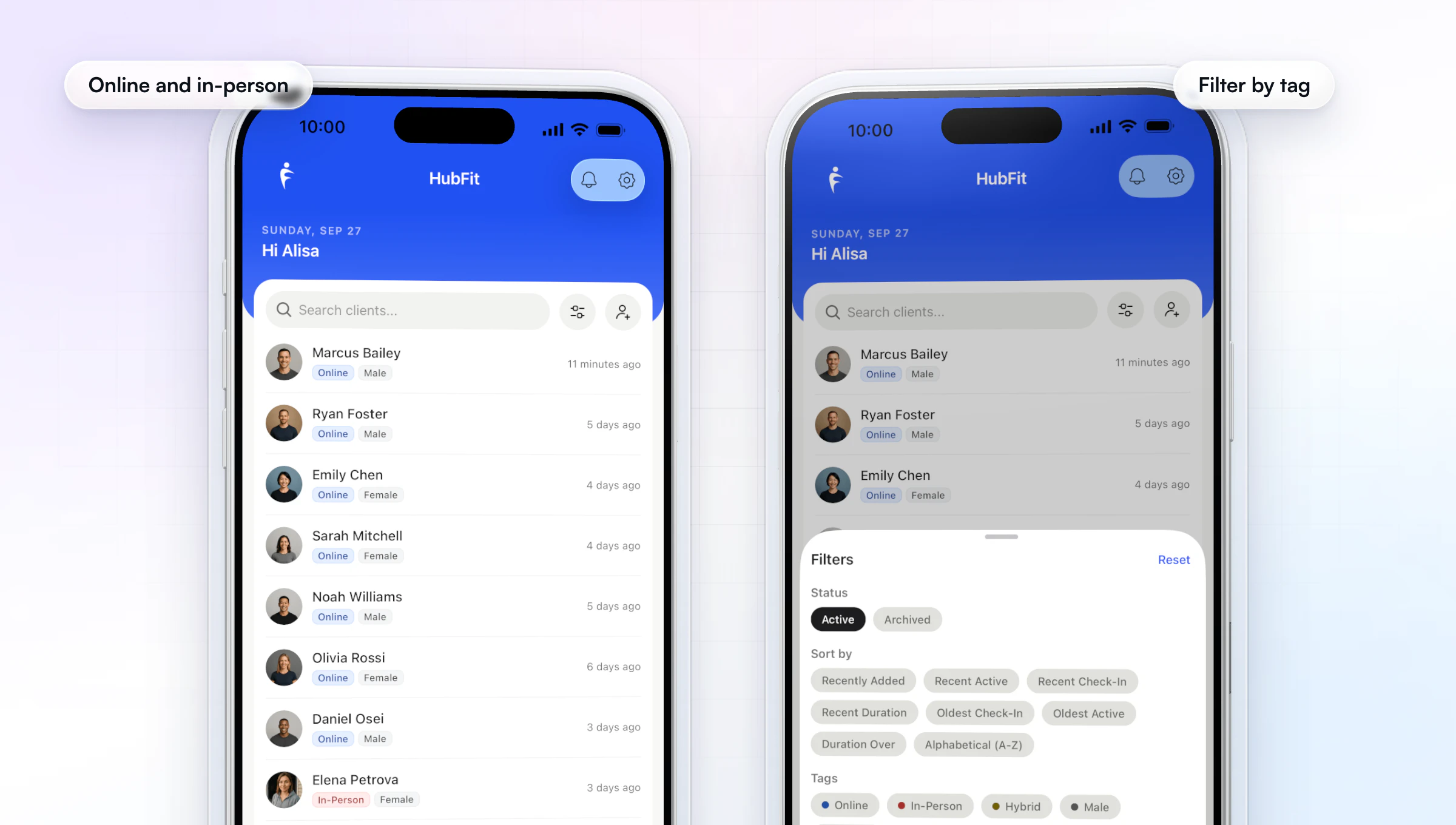
- Your roster on your phone. Tag clients (for example Online, In-Person or Hybrid), filter the list, and see when each one was last active, all from the coach app.
Want your own minutes per client to drop? Start your free trial and run your next check-in in HubFit.
What affects a personal trainer's salary?
Six things move a trainer's pay more than the national median does, and most of them are in your control.
- Pay model. As the table above shows, the same work can pay more than twice as much.
- Location. State medians run from $30,540 to $64,620, and session prices follow local living costs.
- Workplace. Government jobs and gyms sit near the top of the BLS medians; civic and social organizations sit lowest.
- Certification and education. A recognized certification is the entry ticket at most gyms. Specialties (strength and conditioning, prenatal and postpartum, corrective exercise) let you charge more per session.
- Experience and retention. Clients who stay fill your week without new sales. Retention is the cheapest raise a trainer can get.
- Business skills. Selling, marketing and a full calendar decide independent and online income far more than training knowledge. These ways to get more personal training clients are a good start.
Related fitness jobs and what they pay
Related fitness jobs pay between about $36,000 and $76,000 at the median, according to the BLS's May 2025 data. Several of them suit a trainer who wants to specialize or move into a new setting.
| Job | What it involves | Median annual pay |
|---|---|---|
| Group fitness instructor | Classes; same BLS group as trainers | $47,160 |
| Athletic trainer | Injury prevention and care in sport | $62,520 |
| Exercise physiologist | Exercise programs for health conditions | $59,460 |
| Dietitian or nutritionist | Nutrition plans, often licensed | $76,400 |
| Coach or scout | Coaching athletes and teams | $47,320 |
| Recreation worker | Activities at camps, parks, centers | $36,560 |
Each figure is from the BLS occupation pages for athletic trainers, exercise physiologists, dietitians and nutritionists, coaches and scouts and recreation workers. Several of these roles need a degree or a license that a personal trainer certification doesn't cover. Online coaching has no BLS figure; its income is the clients × price math above.
How do you make $100,000 as a personal trainer?
You make $100,000 as a personal trainer by raising what you keep per hour, not by working more hours. Here is the math three ways, with example prices:
| Route | The math | Yearly |
|---|---|---|
| In person, independent | 25 sessions a week × $85 × 48 weeks | $102,000 |
| Online | 50 clients × $170 a month × 12 | $102,000 |
| Hybrid | 12 sessions × $85 × 48, plus 25 × $175 × 12 | $101,460 |
All three are revenue before taxes and costs, and the in-person route assumes $85 kept per session. Online scales furthest because a client takes less of your time than a live session, which is why many trainers add an online tier before they leave the gym. If you also sell workout programs, those add income without adding sessions.
The hybrid route is the one most trainers can start next month. Keep your best in-person clients, move the rest of each client's week into an app, and tag who is in person and who is online, so one list shows your whole business.
Past one person's capacity, the next step is hiring coaches. See how to scale your coaching business.
What should you pay the coaches you hire?
Pay the coaches you hire in a way that ties their pay to the clients they serve and keep. Most coaching businesses use one of five models, often mixed.
| Pay model | How it works | Best for | Watch out for |
|---|---|---|---|
| Hourly wage | A rate for every hour worked | Floor time, new coaches | You pay for quiet hours |
| Per session | A flat amount per session | Studios, in-person teams | Volume over quality |
| Revenue share | A share of what each client pays | Online and in person | Discounts cut their pay |
| Per client per month | A flat amount per active client | Online coaching teams | Needs a client cap per coach |
| Base plus bonus | A salary plus a retention bonus | Head coaches, full time | Write the bonus rule down |
Worked example: paying an online coach per client
Here is a per-client worked example for an online business, with example numbers. Your clients pay $200 a month, and you pay the coach $80 of that for each active client.
| Step | Math | Result |
|---|---|---|
| Coach's roster | 25 clients | |
| Coach's monthly pay | 25 × $80 | $2,000 a month ($24,000 a year) |
| Coach's time | 25 × 45 minutes a week | About 81.25 hours a month |
| Effective hourly rate | $2,000 ÷ 81.25 hours | About $24.60 an hour |
| Benchmark | BLS median hourly, May 2025 | $22.67 an hour |
| Business keeps | 25 × $120 | $3,000 a month for costs and you |
The check that matters is the effective hourly rate. If it falls well below local pay for trainers, good coaches leave; if it sits far above, your margin goes. Time your own coaches for two weeks before you set the rate, because 45 minutes a client is an assumption and your check-in process changes it. Add a retention bonus, such as a set amount for each client who renews past three months, and the coach's pay follows the thing that grows your business.
Should a coach you hire be an employee or a contractor?
Whether a coach is an employee or an independent contractor depends on how much control you have over the work, not on what the contract calls them. The IRS test looks at behavioral control (do you set how and when they coach?), financial control (who pays for tools, can they work for others?) and the type of relationship (benefits, an ongoing role).
If you set the hours, the methods and the client list, the IRS may treat the coach as an employee. State rules can be stricter, so check with an accountant before you hire. For the day-to-day side, read our guide to how to manage a team of coaches.
How do you track coach pay and workload in one place?
You track coach pay most easily when every coach, client and assignment lives in one system. A per-client or revenue-share model only works if you know, at any moment, which coach has which clients.
In HubFit you invite coaches to your workspace, assign clients and set role-based permissions, with a full activity log. The Teams page lists every coach with their role, status and number of clients, which is the number a per-client pay model runs on.
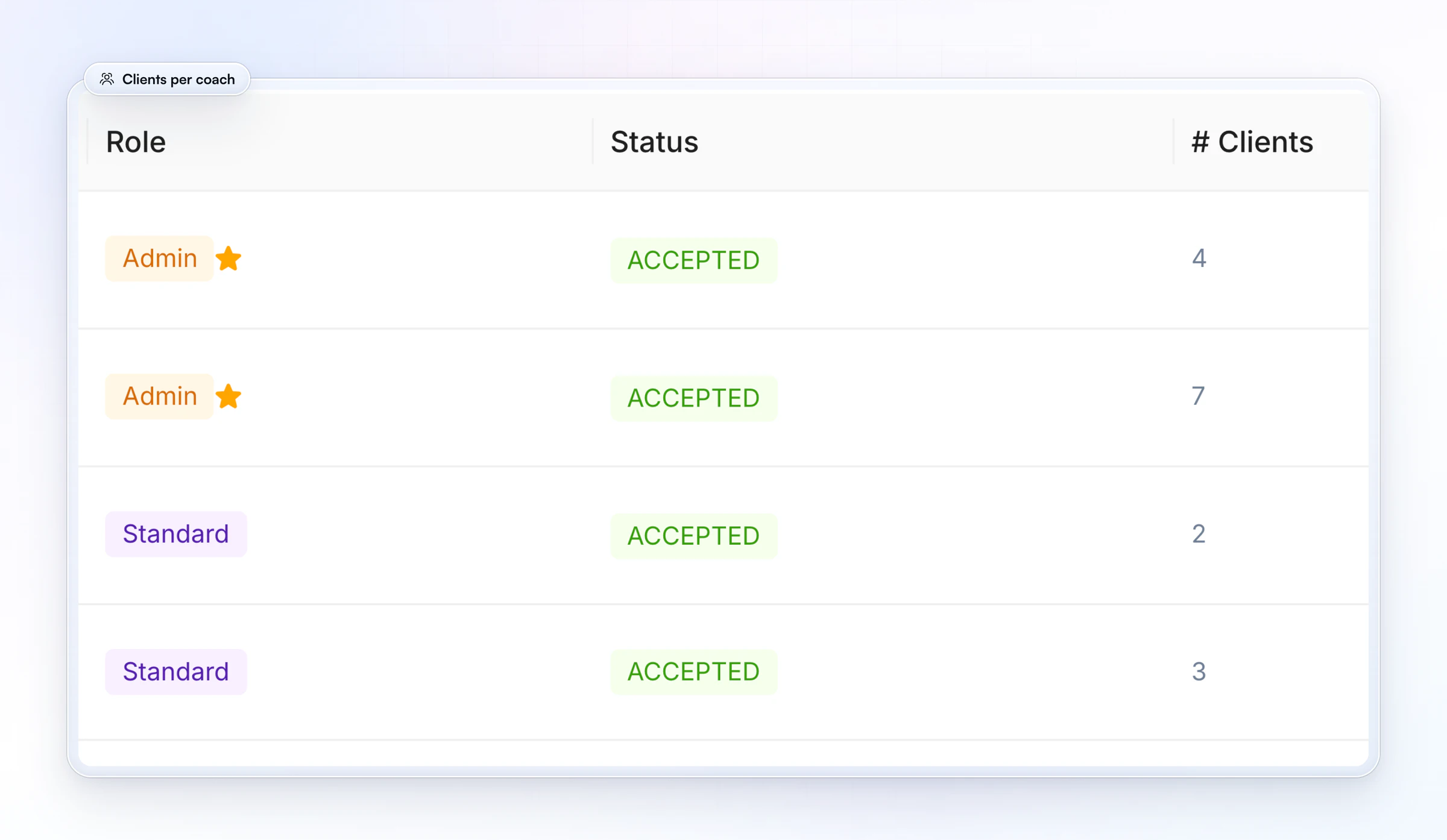
Standard coaches see only the clients assigned to them, Admins see everyone, and a client can have more than one coach. New clients can go to the right coach automatically: an onboarding flow can assign a team member based on the plan, package or goal they signed up for.
Team members are included on HubFit's Ultimate plan. Vegard Mikalsen grew VM Coaching to a team of five coaches on HubFit, with every coach working from the same setup.
“On your platform I could just add everything for them and they could just focus on answering clients and check-ins.”

To set roles, assign clients and see each coach's workload, see HubFit for coaching teams.
Is a personal trainer career worth it?
A personal trainer career is worth it if you build the business side as well as the coaching. The BLS projects employment of fitness trainers and instructors to grow 7% from 2025 to 2035, "much faster than the average for all occupations," with about 68,000 openings a year. There were 388,400 jobs in 2025, and 15% of trainers were self-employed.
The demand is there, according to the BLS. The pay depends on your model: a gym job is a safe way to learn and build a client base, and independent or online coaching is where the income ceiling rises. If you're just starting out, our guide for new personal trainers covers the first months.
FAQ
These are the questions trainers and coaching-business owners ask most about personal trainer pay.
Do personal trainers make good money?
Personal trainers make a median of $47,160 a year in the US, per the BLS (May 2025), and the top 10% earn over $83,100, according to the same data. Trainers who earn well usually sell their own sessions, run online clients alongside in-person work, or build a team. Pay rises with retention, specialty and price more than with hours.
How much do new personal trainers make?
The BLS doesn't report pay by experience, but the lower end of the range is a fair guide for a new trainer. In May 2025, 10% of trainers earned under $28,800 a year ($13.85 an hour) and 25% earned under $35,280 ($16.96 an hour). Pay rises as you build a client base; our guide for new personal trainers covers the first months.
How much do personal trainers make a month?
At the BLS median of $47,160 a year, a full-time personal trainer makes about $3,930 a month before tax (May 2025). Part-time trainers make less: 20 paid hours a week at the median rate is about $1,965 a month. Online coaches make clients × price, so 40 clients at $150 is $6,000 a month in revenue.
How much do personal trainers make per hour?
The BLS median hourly wage for fitness trainers and instructors is $22.67 (May 2025). That figure covers paid hours, including floor shifts and admin. Pay per training session is usually higher, because a session rate has to cover the time between sessions too. In our worked example of an $80 session, it runs from about $25 on a gym rate to the full $80 for an independent trainer with no rent.
How much do online fitness coaches make?
Online fitness coaches make the number of clients times their monthly price, minus costs. Forty clients at $150 a month is $72,000 a year in revenue; sixty at $200 is $144,000. There is no official government figure for online coaching alone. Check capacity too: at 45 minutes a client a week, 40 clients is about 30 hours.
Do online coaches make more than gym trainers?
Online coaches often make more per hour than gym trainers, because a client takes less time than a live session and the coach keeps the whole price. They also pay self-employment tax, software and marketing. The difference grows with the minutes each client takes, which is why automated onboarding and fast check-in reviews matter.
How much do gyms pay personal trainers?
Gyms pay personal trainers through an hourly floor rate, a flat rate per session, a commission share of each session sold, or contractor pay. Rates vary by gym and city. The BLS median for trainers at fitness and recreational sports centers was $48,140 a year, or $23.15 an hour, in May 2025. Ask any gym for its rate per session and its split before you accept.
What percentage do personal trainers make?
On a commission model, a personal trainer gets a share of each session's price, and the gym keeps the rest. The share differs by gym and often rises with a trainer's level or sales. Independent trainers keep the whole price but pay rent, taxes and marketing. Compare offers in dollars per session, as in the pay-model table above.
Is being a personal trainer worth it?
Being a personal trainer is worth it for people who enjoy coaching and are willing to learn sales and business. According to the BLS, jobs are projected to grow 7% from 2025 to 2035, much faster than average. Starting pay at a gym is modest; income grows with retention, an online tier or a team of coaches.
Ready to add an online tier? Set up your first online client in HubFit this week, with their program, check-in and payment link in one place.