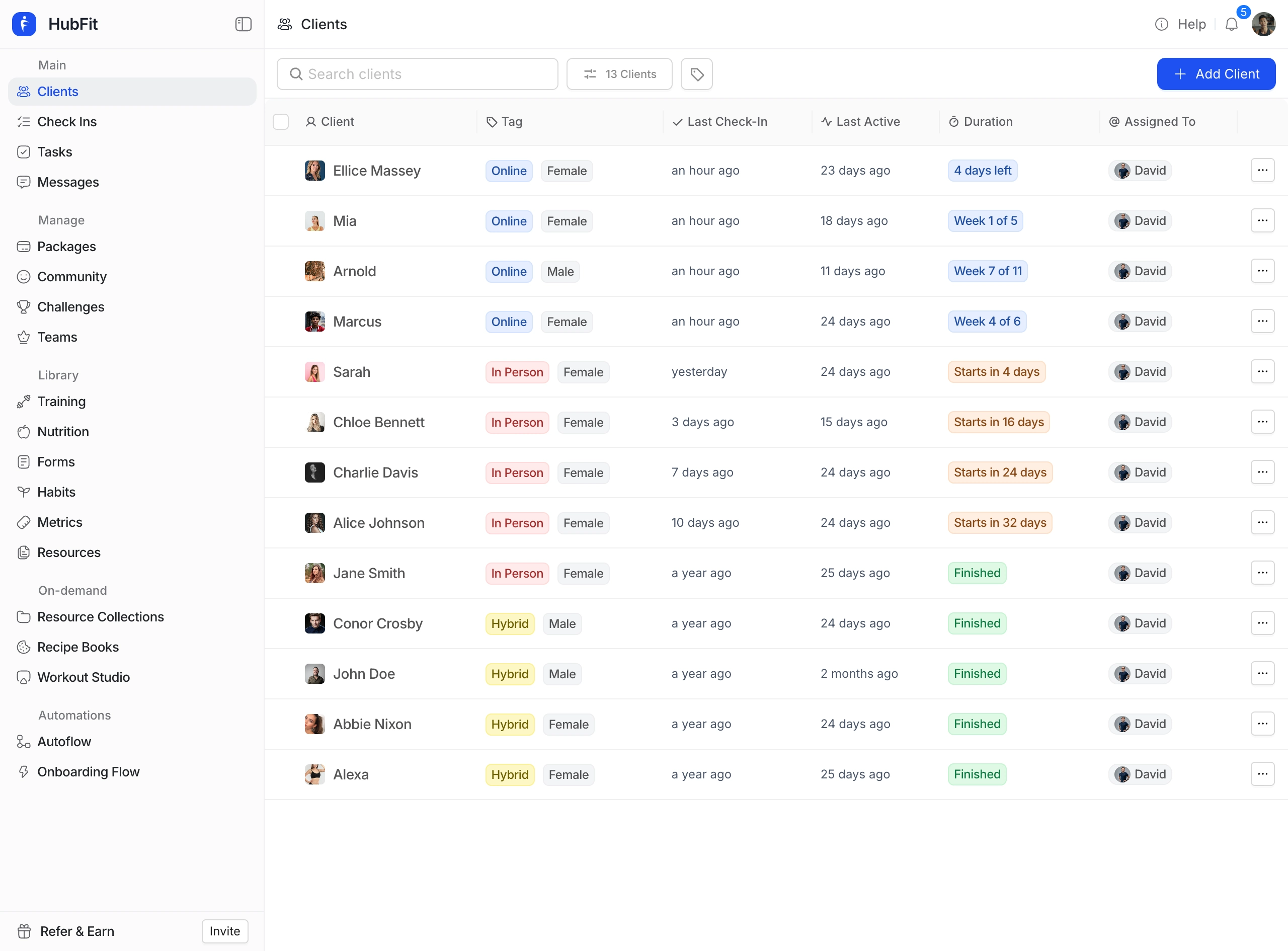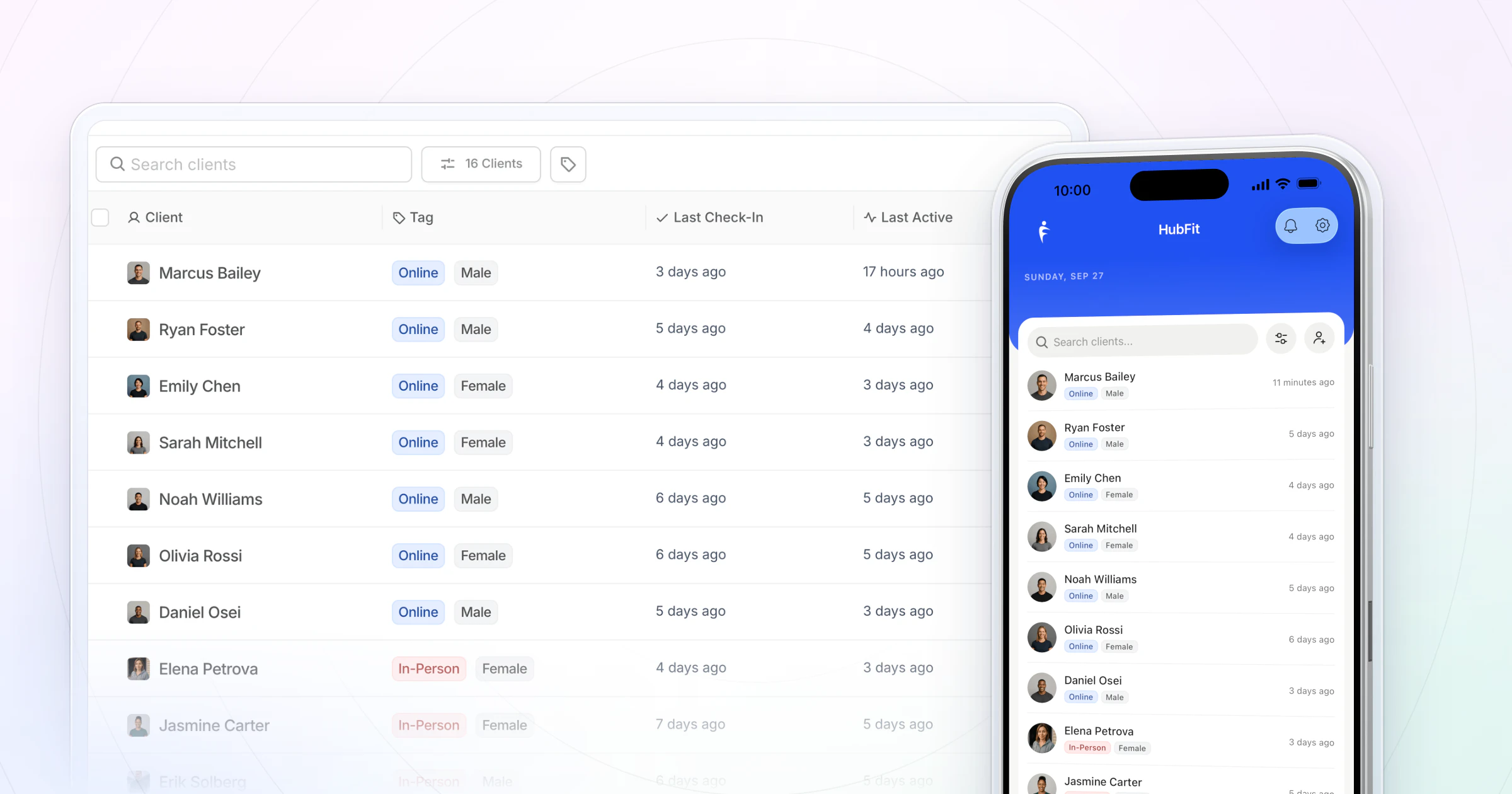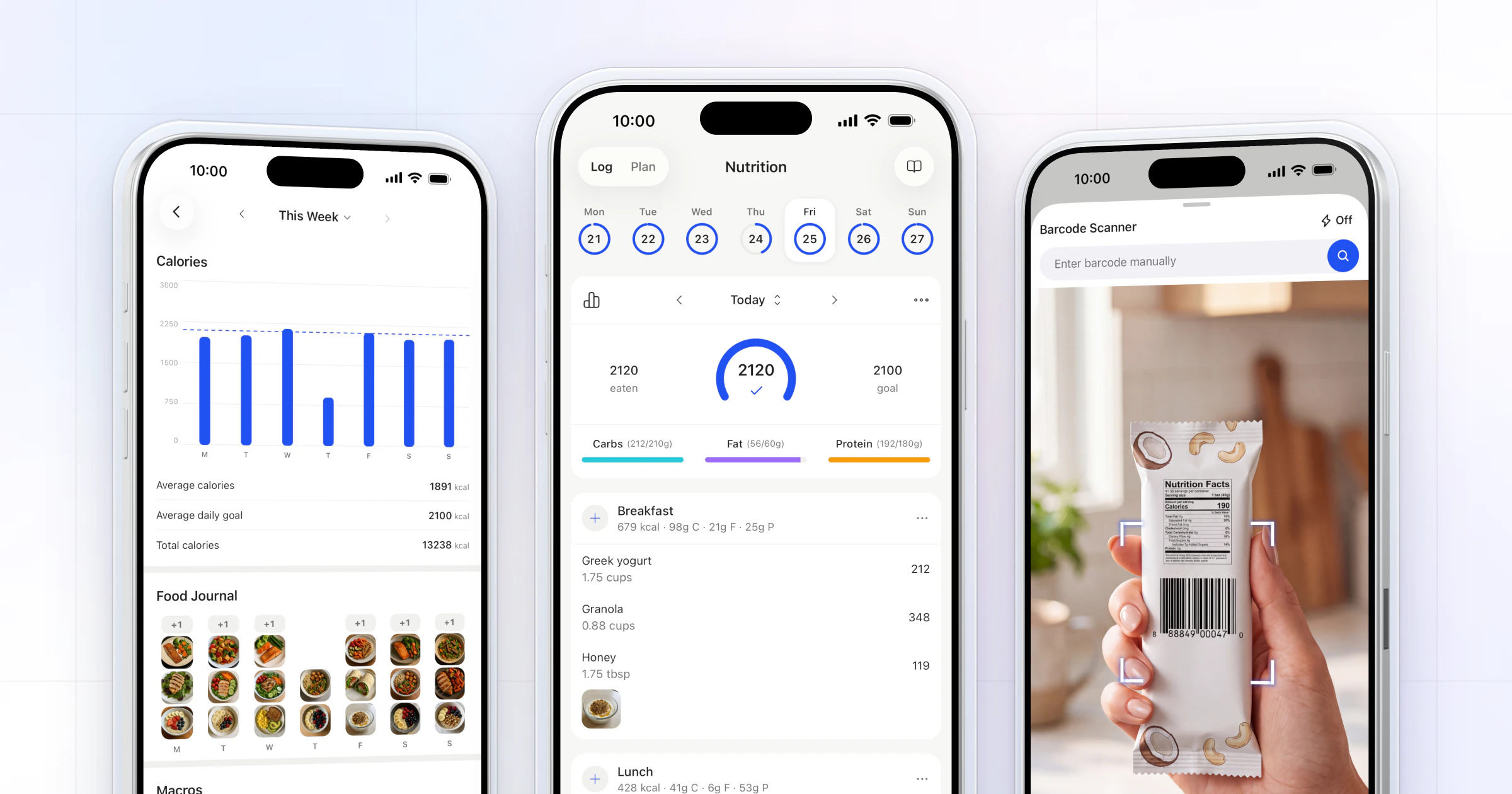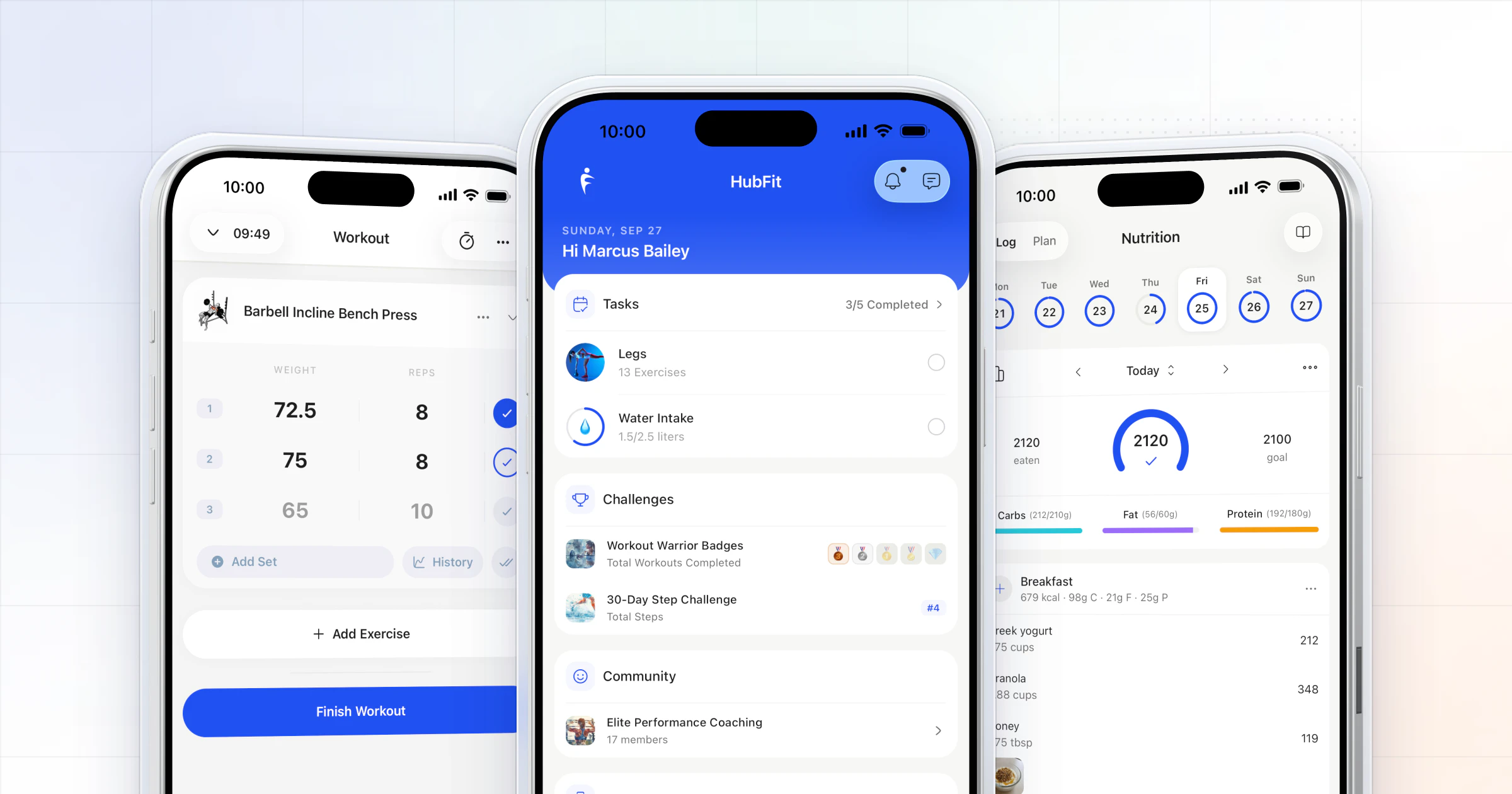
To get more clients as a personal trainer, pick one niche, ask happy clients for referrals, show up where your clients already are and reply to every lead within a day. Then make saying yes easy. HubFit, the #1 coaching app, gives you one link to your packages, a Stripe checkout and onboarding that starts the moment a client pays. Packages and payments come with Premium and up.
Key takeaways
- Your next client is closest to your current ones. Referrals, past clients and old leads convert faster than strangers, so start there.
- One niche, one line. "I help busy dads get strong in three sessions a week" is easier to share than "I do personal training".
- Speed wins the lead. Reply the same day, run a short consult, and send one link that lets them pay.
- Keeping clients is getting clients. A client who starts smoothly stays, gets results and tells a friend.
Quick answer: the 5 fastest ways to get more personal training clients
- Ask for a referral right after a client's win.
- Message past clients and old leads that you have spots open.
- Reply to every new lead the same day, with a question.
- Post client wins for one niche, with a clear ask.
- Run a free challenge and invite finishers to a paid package.
Where do personal training clients come from?
Personal training clients come from people who already trust you, then from people who see your proof, then from strangers. Work the list from the top down: the channels at the top cost the least and close the fastest.
| Channel | Best for | Your first move |
|---|---|---|
| Referrals | Every trainer | Ask after a client's win |
| Past clients and old leads | Trainers with a history | A personal "spots open" message |
| The gym floor and workshops | In-person trainers | Help one member a day |
| Instagram and TikTok | Online coaches | Three niche posts a week |
| Email newsletter | Anyone with an audience | A free 7-day plan for emails |
| Facebook groups | Local and niche trainers | Answer questions, no pitching |
| Google and your website | In-person and hybrid | Claim your Business Profile |
| Paid ads | Offers that already sell | Small test, one audience |
Paid ads sit last on purpose. Ads multiply an offer that already converts; they rarely fix one that doesn't.
15 ways to get more personal training clients
These 15 ways work for in-person and online trainers alike, grouped by where the client comes from. Start with the people who know you: those ways cost nothing and pay back fastest. Ways 13 to 15, your offer, make every other way convert.
People who know you
1. Ask for referrals at the right moment
Ask right after a client wins: a PR, a finished program, a great check-in. That is when they want to share. Try: "So glad this week went well. Do you know one person who'd like the same? I'll give them a free week to start, and you a free month." Give both people something, and make the reward simple to explain.
2. Turn referrals into a program
A referral program is a standing offer, so clients refer without being asked each time. Pick one reward for the friend and one for the client who sent them, and say it the same way everywhere: on your packages page, in your welcome message and after every check-in where a client is happy. The rewards that work, and how to set them up, are in the referral program section below.
3. Turn results into proof
Proof sells better than promises. Collect a short quote from each happy client, with their written permission, and share the wins that aren't about how anyone looks: a first pull-up, 30 days of logged meals, a habit streak. Ask happy clients for a Google review too. One real story a week beats ten generic tips, and your certification and insurance belong on your bio and packages page, where a careful buyer checks.
4. Follow up with every lead and every past client
Most leads go cold because nobody answers. Reply the same day with a question, not a price list: "Thanks for reaching out. What would you like to change in the next 12 weeks?" Then offer a 15-minute call. Keep a simple list of everyone who asked, and once a month message past clients and old leads personally: "I have two spots opening in November. Want one?"
In person
5. Win clients on the gym floor
If you train in a gym, the floor is your shop window. Learn members' names, help with a setup or a spotter when they look stuck, and never pitch on the first chat. Ask the front desk and the class instructors to send you members who ask about training, and send their way the people who want a class. A trainer who helps one member a day for a month is the one people ask for.
6. Run a free group workshop
A free 45-minute workshop lets 10 people meet you at once. Pick one problem your niche has, such as "squat without knee pain" or "your first pull-up", teach it in the gym or a park, and keep the pitch to one line at the end. Collect names and emails at the door, then follow up the next day with a short offer for attendees, such as a first week free.
7. Partner with local health pros
Other health professionals see your future clients first. Swap referrals with a physio, a chiropractor or a nutritionist whose clients need a trainer, and offer a free first session to anyone they send. A short, friendly email works: "I train clients after rehab. If anyone you see is ready to get strong again, I'd love to help."
Online
8. Post for your niche, not for other trainers
Social media brings strangers to you, but only if it answers your niche's questions. Post three times a week on Instagram or TikTok: one tip, one client win and one behind-the-scenes look at how you coach. End one post a week with a clear ask: "DM me 'START' and I'll send you the details."
9. Run a free challenge to fill a launch
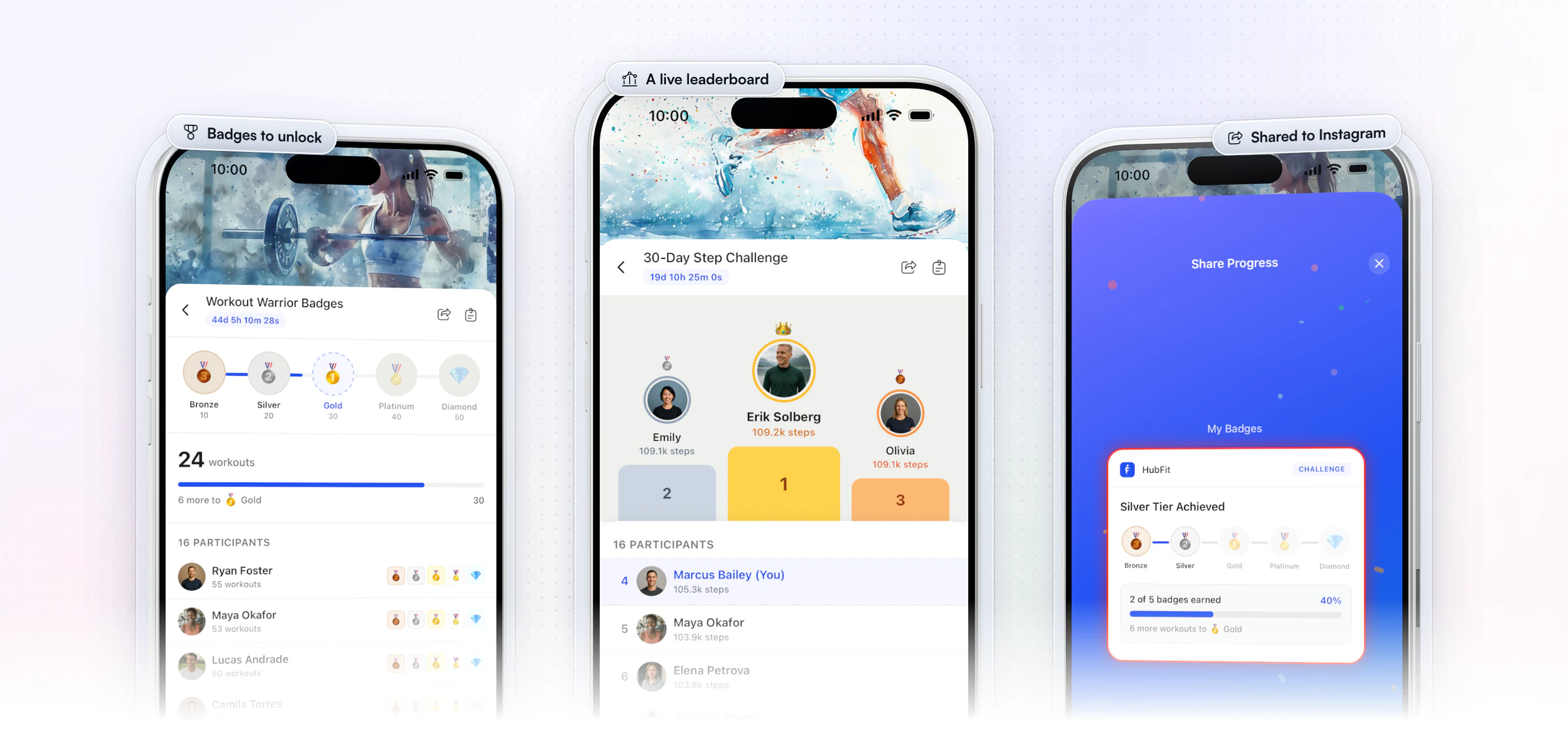
A free 7-day challenge gives people a taste of your coaching and a reason to tell friends. Set one goal, a leaderboard or badges, and a prize, then invite participants to your paid package on the last day. Competition helps: in a randomized trial, adults in a game-style competition with a weekly leaderboard walked more each day than a control group.
HubFit has 25+ ready-made challenge templates, tracks progress automatically, and creates branded share cards clients post to Instagram. Challenges come with Premium and up.To let followers join, put them on a free ($0) package; an onboarding flow can enrol every new client in the challenge for you. Our challenge ideas and guide to running a fitness challenge cover the setup.
10. Start an email newsletter with a free plan
An email list is the one audience no app can take from you. Offer something useful in exchange for an email, such as a free 7-day starter plan for your niche, then send one short email a week: a tip, a client story and one line about your coaching. When a spot opens, your list hears first. A small list of people who chose to hear from you is worth more than a big following that scrolls past.
11. Join local Facebook groups, then run your own
Local community and neighborhood groups are full of people asking "can anyone recommend a trainer?" Answer questions there with real help, follow each group's rules, and let people come to you. Then run your own free group for your niche, with a weekly tip and a weekly question, so members get to know you before they buy.
Once they're clients, keep the group going inside your coaching app, where it sits next to their training (more on that below).
12. Get found on Google with SEO: profile, website and blog
Many people still search for "personal trainer near me" before they buy. Claim your Google Business Profile, add photos, link your website or packages page, and ask clients for reviews. Google says complete, accurate profiles are easier to match with the right local searches, and responding to reviews shows you value your customers.
Then add a simple website with a page per service and your area in the title, and write one blog post a month answering a question your clients ask. Guest posts on a local gym's or physio's blog bring readers and links.
Your offer
13. Pick a niche and say it in one line
A niche makes you easy to remember and easy to recommend. Write one line: "I help [who] get [result] without [the thing they hate]." For example, "I help new moms get strong again in 30 minutes a day." Put it in your bio, your email signature and the top of your packages page.
14. Make the offer easy to buy
People buy what they understand in ten seconds. Offer two or three packages at most, each with who it's for, what's included and the price, and send one link where they can pay. A second tier can add a service, such as nutrition coaching with a meal plan, or online coaching for clients between sessions. Our guide to pricing coaching packages helps you set the numbers.
15. Keep clients longer, and they bring the next ones
Keeping a client costs less than finding a new one, and a client who stays gets the results that make friends ask. Welcome them, get their goals, and have their first workout ready before they ask. Then keep a rhythm: a weekly check-in, a few habits with streaks, and a reply within a day. Our client retention guide and guide to onboarding new clients automatically go deeper.
How do you turn a lead into a paying client?
You turn a lead into a paying client with a short consult that asks before it sells, one clear recommendation, and a link they can pay through the same day. Most lost leads aren't lost to another trainer; they're lost to a slow reply or a confusing price list.
Run the consult in 15 minutes with five questions:
- Goal: "What would you like to be different in 12 weeks?"
- Timeline: "Is there a date that matters, such as a wedding, a race or a holiday?"
- History: "What have you tried before, and what got in the way?"
- Schedule: "How many days a week can you train, and where?"
- Budget: "Is there a monthly amount you'd like to stay within?"
Then recommend one package, say why it fits their answers, and send the link while you're still talking. If they want to think, agree on when you'll check in, and follow up like this:
| Day | Message | Goal |
|---|---|---|
| 0 | Thanks, the link and a recap | Make yes easy today |
| 2 | One tip for their goal | Show how you coach |
| 7 | A client story like theirs | Answer the doubt |
| 14 | "Still keen? One spot left" | Get a yes or a no |
Stop after day 14 and add them to your monthly list.
That link is what turns a yes into a client. Vegard Mikalsen of VM Coaching sells this way: a new client pays, and their coaching is set up automatically.
“I literally just send them a Stripe link. They pay and everything gets set up.”

How do you set up a personal trainer referral program?
You set up a personal trainer referral program by picking one reward for the friend and one for the client who refers them, then making the friend's reward automatic at checkout. Keep it to one sentence a client can repeat: "Bring a friend, they get their first week free and you get a free month."
| Reward | For the friend | For the referrer | Set it up in HubFit |
|---|---|---|---|
| A free week | First 7 days free | A free week | 7-day free trial |
| First month off | % off month one | The same % off | A % coupon, once |
| Several months off | % off 3 months | A free month | A coupon for months |
| A fixed credit | $ off the first bill | $ off their next | A fixed-amount coupon |
The friend's reward lives on your package as a free trial or a coupon code; the referrer's reward you give yourself when the friend pays, such as an extra session or a free week of coaching. In HubFit, coupons are a percentage or a fixed amount, last once or for several months, and can carry a redemption limit and an expiry date. Free trials of 3, 7, 14 or 30 days work on weekly and monthly packages. For more ways to use offers without cheapening your coaching, see referral coupons and discounts.
How HubFit turns more of your leads into clients
HubFit closes the gap between "how much is it?" and a client who stays, which is where most trainers lose people. Here is what it does for each step this guide covered:
- A lead can buy from one link. Your packages sit on a branded page with a Stripe checkout, Apple Pay and Google Pay, one-time or recurring, with free trials and coupons. HubFit adds no transaction fee; you pay Stripe's standard rate.
- A buyer starts the same day. When a client buys a package, an Onboarding Flow assigns their program, nutrition plan, habits and check-ins, and can enrol them in a challenge, so their first week is ready before they message you.
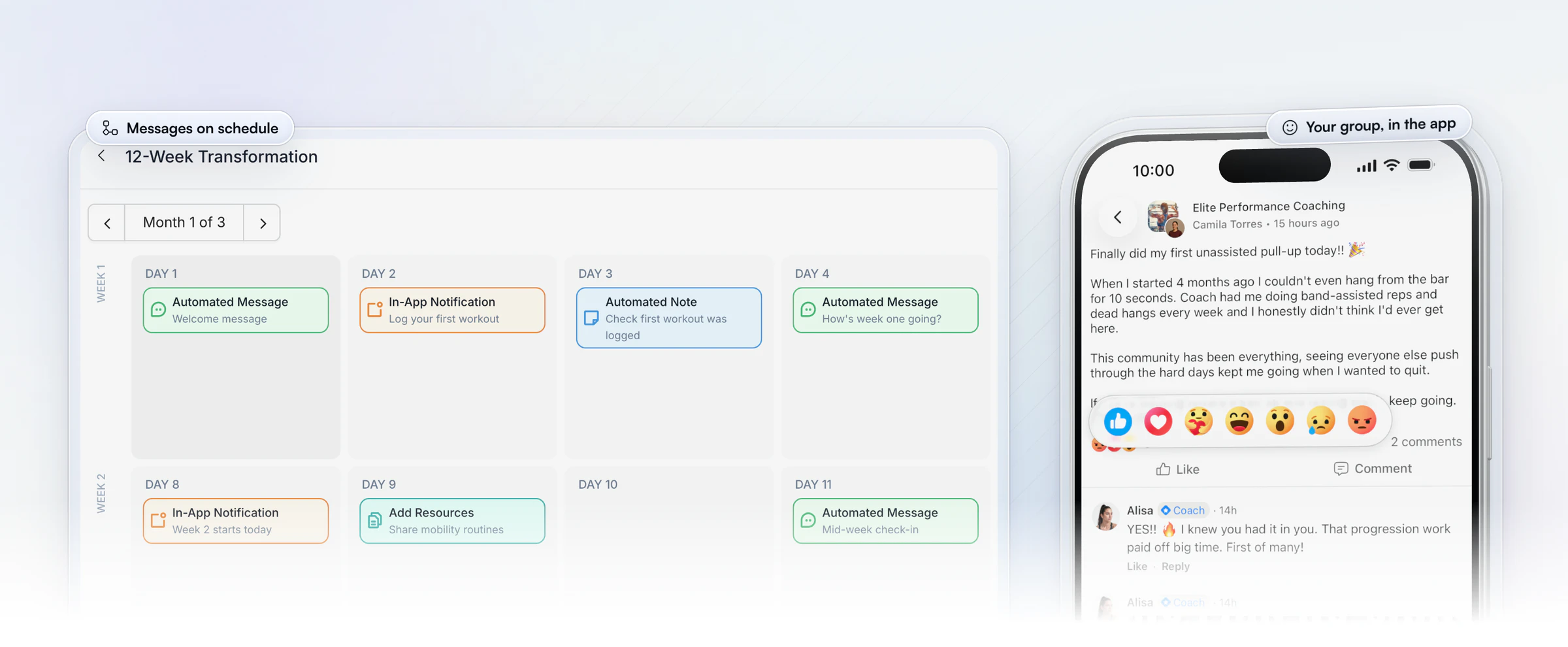
- A new client hears from you on schedule. AutoFlow sends day-based sequences, such as a welcome on day 1, a message on day 3 and a recap on day 7, so no one feels forgotten in the weeks that decide whether they stay.
- Your group lives in the app, not on Facebook. HubFit's Community, on Ultimate, gives clients a private feed with polls, reactions and posts you schedule ahead.
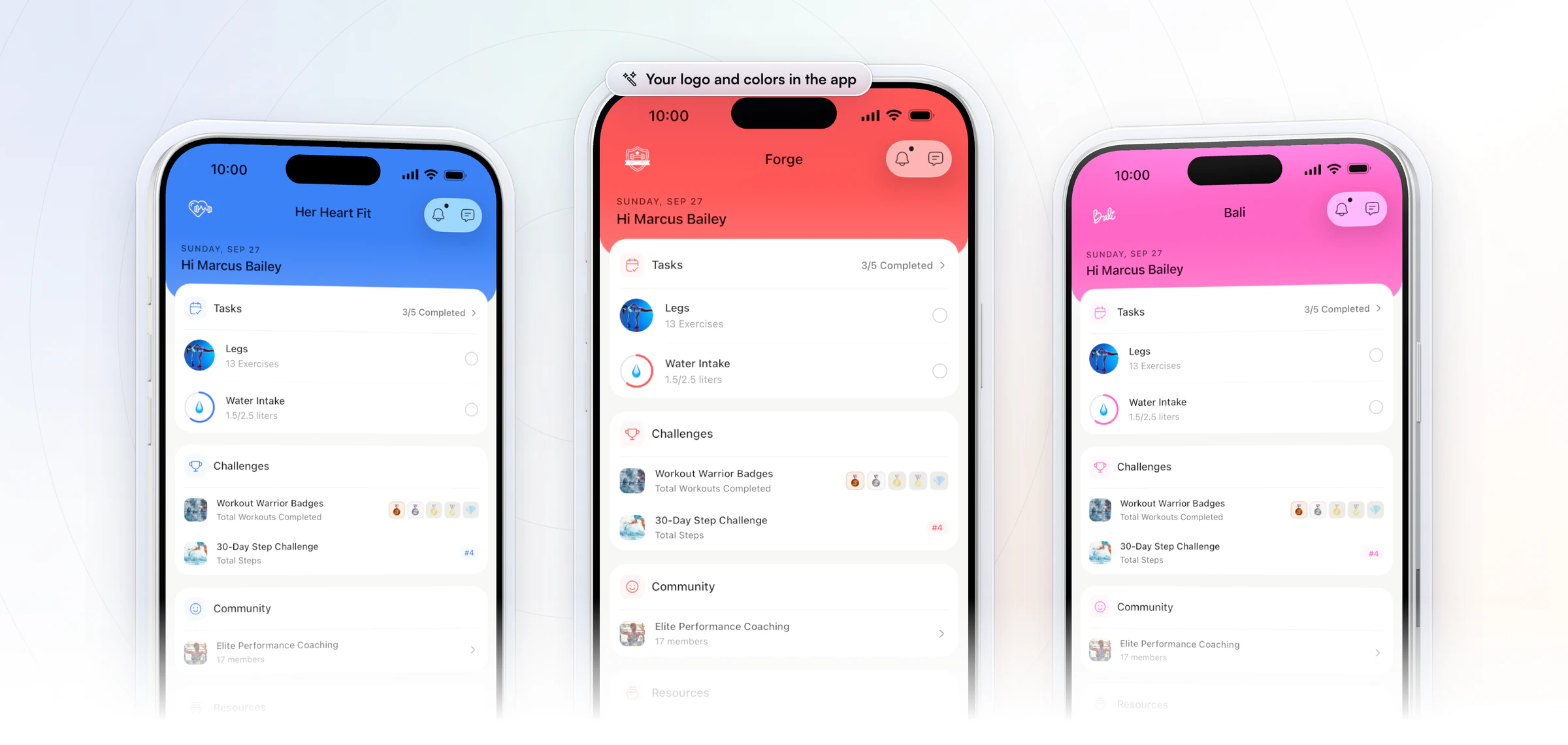
- A happy client shows their friends. Challenge share cards carry your brand to Instagram, and with Custom Branding your logo and colors appear in the client app, on the packages page and at checkout.
AutoFlow and Custom Branding come with Premium and up.
Follow-up is where most new clients drift away, and it's the part AutoFlow and the community take over. AutoFlow sends each new client's welcome message, notifications, notes and resources on the days you choose, and the community gives clients a place to share wins and cheer each other on, in the same app as their training.
A weekly client-getting routine
Getting clients works best as a small weekly habit, not a once-a-month push. Here is a routine that fits around a full coaching schedule.
| Day | Task | Time |
|---|---|---|
| Monday | Post a tip for your niche | 30 minutes |
| Tuesday | Message 5 past clients or old leads | 20 minutes |
| Wednesday | Post a client win (with permission) | 20 minutes |
| Thursday | Ask one client for a referral | 5 minutes |
| Friday | Send your newsletter, with an ask | 30 minutes |
| Weekdays | Reply to new leads | 15 minutes a day |
That's about three hours a week. Keep it for 12 weeks before you judge it, and track one number: how many people asked about coaching.
How do you get online personal training clients?
You get online personal training clients the same way, with content, email and DMs doing the work the gym floor does in person. Nobody sees you coach on a gym floor, so your posts, your replies and your app are what they judge you by.
Three things matter more online:
- Show the coaching, not just the workouts. Post check-in feedback (with permission) and how you adjust a plan.
- Answer DMs like a consult. Ask about goals and schedule before you send a link.
- Make the app part of the offer. "Your program, meals, habits and check-ins in one app" sounds more premium than "I'll send a PDF". Selling a program to a bigger audience is its own skill; see how to sell a program to your audience.
FAQ
Here are the questions trainers ask most about finding clients.
What's the best way to get more personal training clients?
The best way is to ask for referrals right after a client's win, such as a PR or a finished program. The client is proud and wants to share, and a friend they send already trusts you. Give both people a simple reward, such as a free week for the friend and a free month for the client.
How do I get my first personal training clients?
Start with people who already know you: friends, family, gym regulars and old colleagues. Offer three or four people a discounted founding spot in exchange for honest feedback and a testimonial. Their results and words become the proof that sells your next clients. See HubFit for personal trainers for the setup.
How do I get clients right after getting certified?
Take three founding clients at a discount in exchange for testimonials, spend time on the gym floor helping members, and tell everyone you know what you now do, in one line. Aim for three written testimonials in your first two months. Our guide to your first year as a trainer covers the nerves too.
Can I get personal training clients without social media?
Yes. Referrals, past clients, the gym floor, free workshops, local partners such as physios, and a Google Business Profile with reviews all work without posting. Many in-person trainers fill their schedule this way. Social media helps you reach strangers, but the people closest to you convert faster.
Does social media actually help personal trainers get clients?
Yes, when it works as proof for one niche with a clear ask. Posts that show client wins, how you coach and the answers to your niche's questions turn followers into leads. Posting general tips for everyone rarely does. End one post a week with an ask, and reply to every DM the same day.
Should personal trainers run paid ads?
Run paid ads only once your offer already sells from referrals and content. Ads multiply what converts. Start small with one audience and one offer, send people to a page where they can buy, and stop anything that brings messages but no clients.
Is a free session or a free trial better?
A free session suits in-person training, because people meet you and feel the workout. A short free trial suits online coaching, because people see the app, the program and your check-ins. HubFit's weekly and monthly packages can include a 3, 7, 14 or 30-day free trial.
How many clients should a personal trainer have?
It depends on your hours and how many minutes each client takes each week. Most trainers hit a ceiling when onboarding and check-ins are done by hand. Our guide to scaling an online coaching business shows the formula.
Get more clients this week, then keep them
Pick two ways from this list, ask one client for a referral today and put your packages behind one link. HubFit takes the payment on plans that include payments, sets up every new client the moment they buy, and gives them an app they'll show their friends. Start your 14-day free trial and send your first link this week.