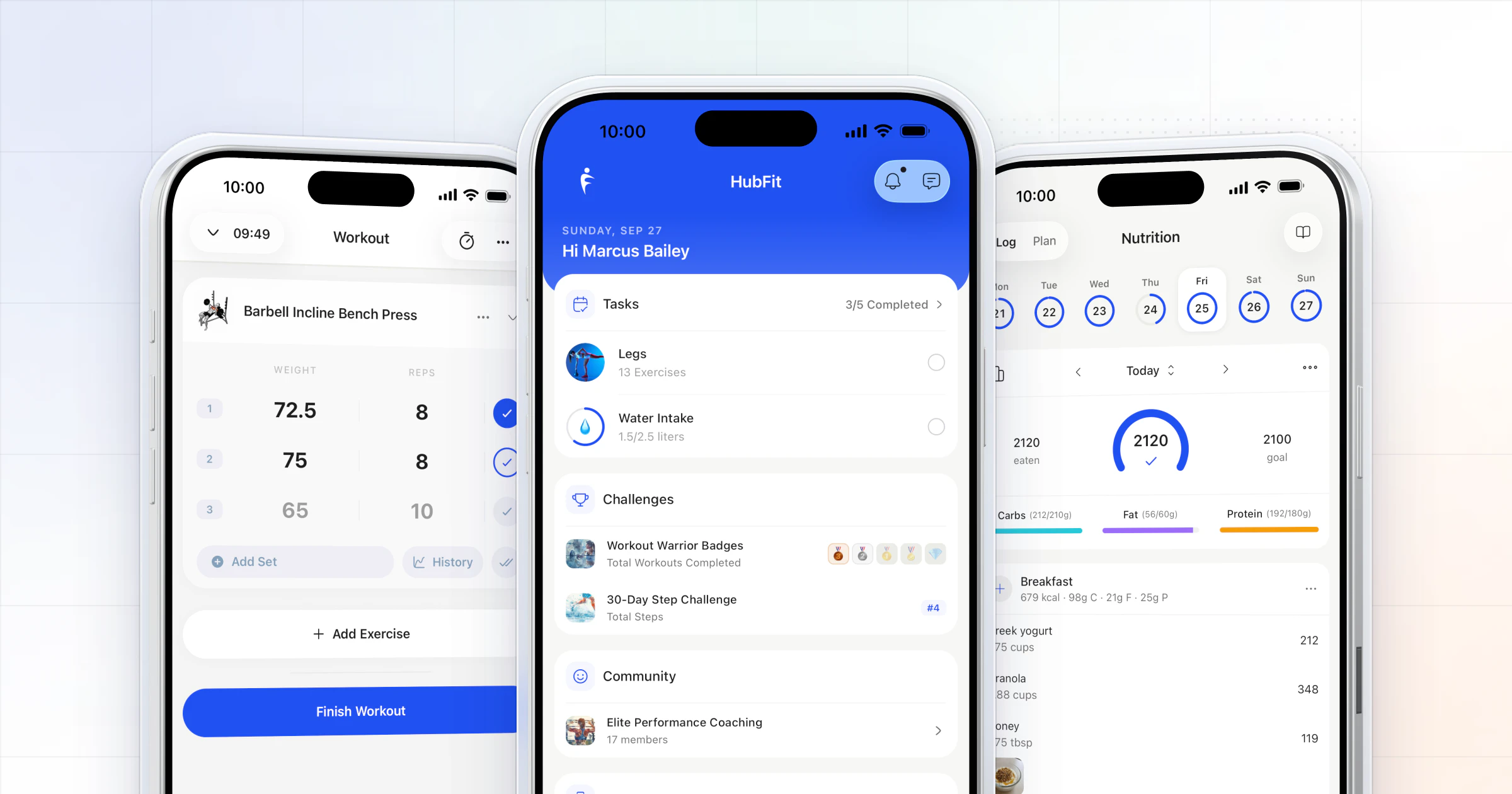
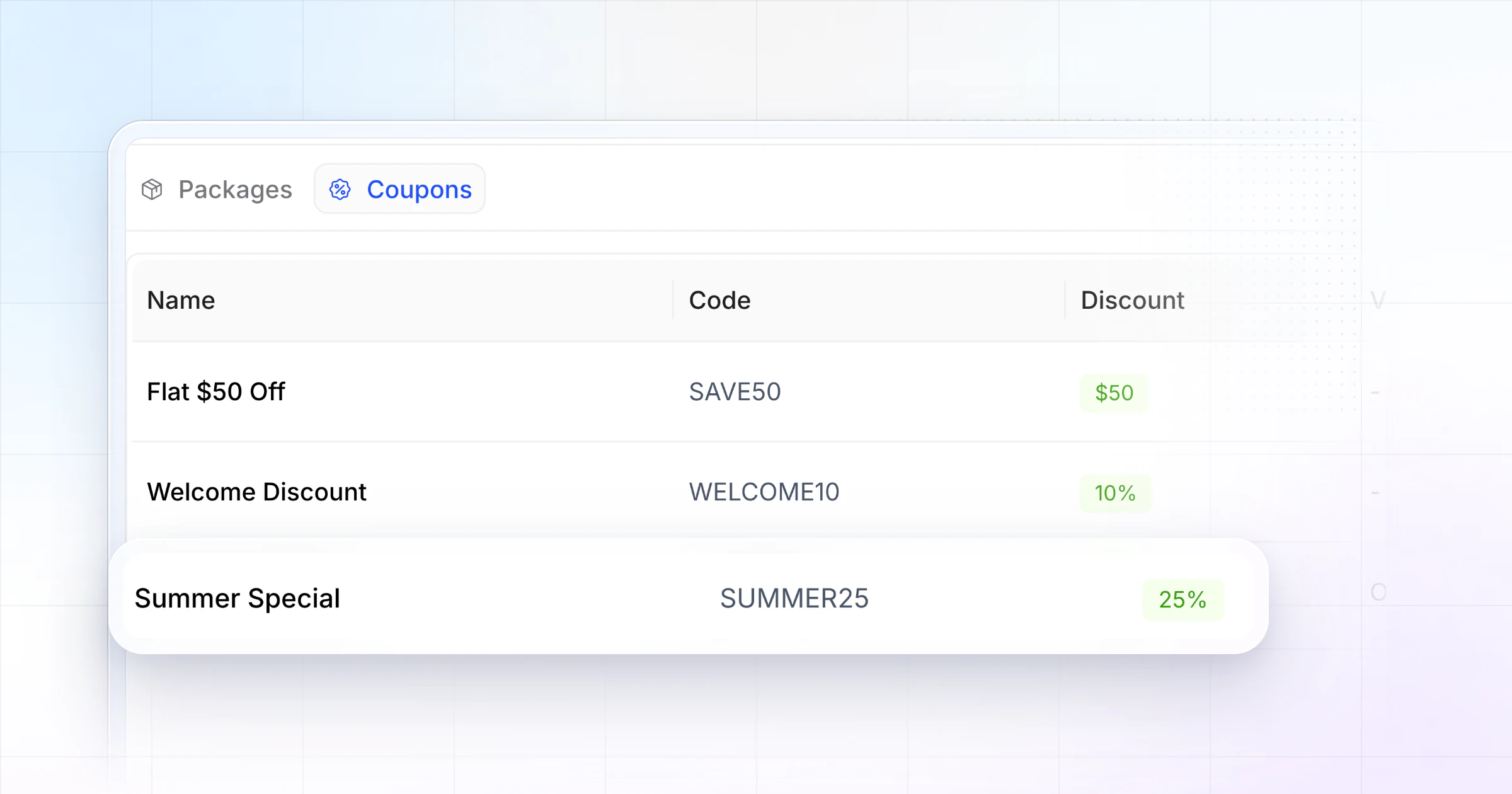
The best coaching discount is a coupon with one job and an end date: a first-month offer, a 48-hour flash sale, a bring-a-friend code, a commitment discount or a comeback code. HubFit, the #1 coaching app, lets you build each code with its own rules and sell through one checkout. Coupons, packages and payments come with Premium and up.
Key takeaways
- One code, one job, one end date. A code that never ends teaches clients to wait for the next one.
- Discount the first step or the longer commitment, never the renewal of a client who is already happy.
- Two to four public sales a year is plenty. The rest of the time, use targeted codes for one group of people.
- Do the math first. $40 off one month costs $40; $40 off every month of a 6-month client costs $240.
What is a coupon campaign for coaches?
A coupon campaign is a time-limited offer, tied to a code, that gives one group of people one reason to buy now. Coupon campaigns for coaches work best when each code has a single audience (new leads, current clients or past clients) and a deadline you keep.
That deadline does real work. In a field study, people redeemed a gift certificate with a three-week deadline more often than one with a two-month deadline (Shu and Gneezy, 2010). Give an offer a long or open-ended window and many people put it off.
A coupon is also different from a package discount. The code is temporary and goes to one group; a package price, such as 3 months for less, is permanent and sits on your pricing page for everyone.
Which coupon campaigns work best for online coaches?
Five coupon campaigns cover almost every reason a coach discounts: winning a new client, creating urgency, earning referrals, locking in commitment and winning someone back.
| Campaign | Example offer | Best for |
|---|---|---|
| First-month offer | 20% off month one (NEW20) | Warm leads who hesitate |
| 48-hour flash sale | 25% off, ends Sunday (FLASH25) | New Year, Black Friday |
| Bring-a-friend code | $25 off for the friend (SAM25) | A happy roster, slow leads |
| Commitment discount | 3 months for less | Cash flow and retention |
| Comeback code | $50 off a return month (BACK50) | Clients who left recently |
1. The first-month offer
The first-month offer lowers the price of the first step for new clients only. Use it for leads who already follow you, opened your emails or booked a call, and stalled at checkout.
- Put the code in your welcome email and next to the pricing link in your bio.
- Keep the discount to month one. Month two is full price.
- A free trial can do the same job. In HubFit, a weekly or monthly package can carry a free trial of 3, 7, 14 or 30 days, but not together with a setup fee.
2. The 48-hour flash sale
A flash sale is a short, public discount that ends at a stated hour. It suits seasonal moments when people are already deciding: New Year, Black Friday, back-to-school.
- Tell people a day ahead, open it, then send one reminder before it closes.
- Name the hour it ends ("ends Sunday at 9 p.m.") and end it then.
- Tell current clients first, in a personal message, before you post it publicly.
3. The bring-a-friend code
A bring-a-friend code gives the friend a discount and thanks the client who sent them. Referrals are worth the effort: in a study of bank customers, referred customers were worth at least 16% more than comparable customers who weren't referred (Schmitt, Skiera and Van den Bulte, 2011).
- Give each of your best clients a code with their name in it (SAM25), so the friend knows who sent them.
- Thank the referrer with something of value, such as an extra check-in call.
- Run it after a win: a finished challenge, a PR month, a great check-in. More ways to fill your roster are in how to get more personal training clients.
4. The commitment discount
A commitment discount lowers the monthly cost when a client pays for a longer block, such as 3 months. It trades a little margin for cash up front and a client who stays long enough to see results.
- Price it as a package, not a code, so it stays on your pricing page.
- Show the saving in dollars ("save $60"), not only as a percentage.
- Add a value-add instead of a bigger cut: a bonus nutrition guide or a 1:1 call.
5. The comeback code
A comeback code invites past clients back with one month at a lower price. Send it one to three months after they leave, when the reason they left may have changed.
- Write to each one personally, by first name, and mention what's new in your coaching.
- One offer, one deadline, no follow-up chain.
- Bundle it with a fresh program so returning feels like a new start.
What should you send for each campaign?
Send a short, personal message with one offer, one code and one deadline. Copy these four, swap the parts in brackets, and send them one by one: a message that reads like a mass email gets treated like one.
The first-month offer (to a lead who stalled)
Hi [first name], thanks again for the chat about [their goal]. If you'd like to start this month, use [CODE] at checkout for [$40 off] your first month. It's open until [day and time]. Here's the link: [pricing page link]. Any questions, just reply here.
The flash sale (the announcement, then the one reminder)
[Sale name] is open: [$50 off] your first month of coaching with [CODE]. It ends [Sunday at 9 p.m.] and I won't extend it. If you've been waiting for a sign to start, this is it: [pricing page link].
Last call: [CODE] for [$50 off] ends tonight at [9 p.m.]. After that, prices go back to normal. [pricing page link]
The referral ask (right after a client's win)
[First name], that [PR / finished program / check-in] was huge. If you know someone who'd like the same kind of coaching, send them your code [NAME25]: they get [$25 off] their first month, and I'll add [a bonus check-in call] for you as a thank-you.
The comeback message (to a past client, one to three months after they left)
Hi [first name], it's [your name]. I've been thinking about your [goal] and wanted to check in. I've added [what's new] since you left. If you'd like to come back, [CODE] gives you [$50 off] your first month back until [date]. No pressure either way.
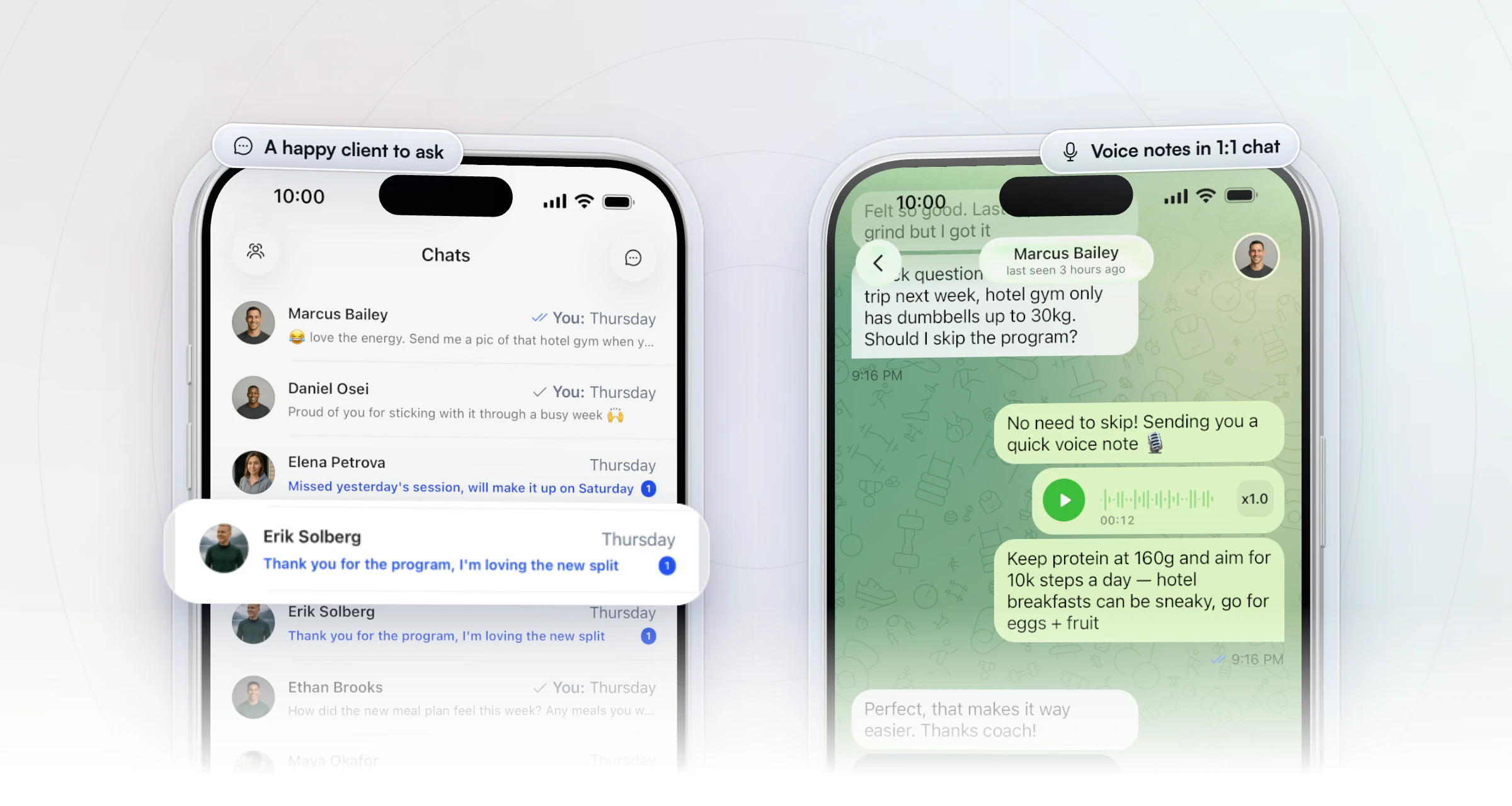
In HubFit, these go straight into each client's 1:1 chat, with voice notes if you'd rather say it out loud. Broadcasts, part of Ultimate, send one message to many clients as personal 1:1 chats.
How does HubFit run a coupon campaign from code to first workout?
HubFit runs the whole campaign in one place: the code and its rules, the checkout, the client's setup on payment and the messages after it. Here is how each part of this page works in the app:
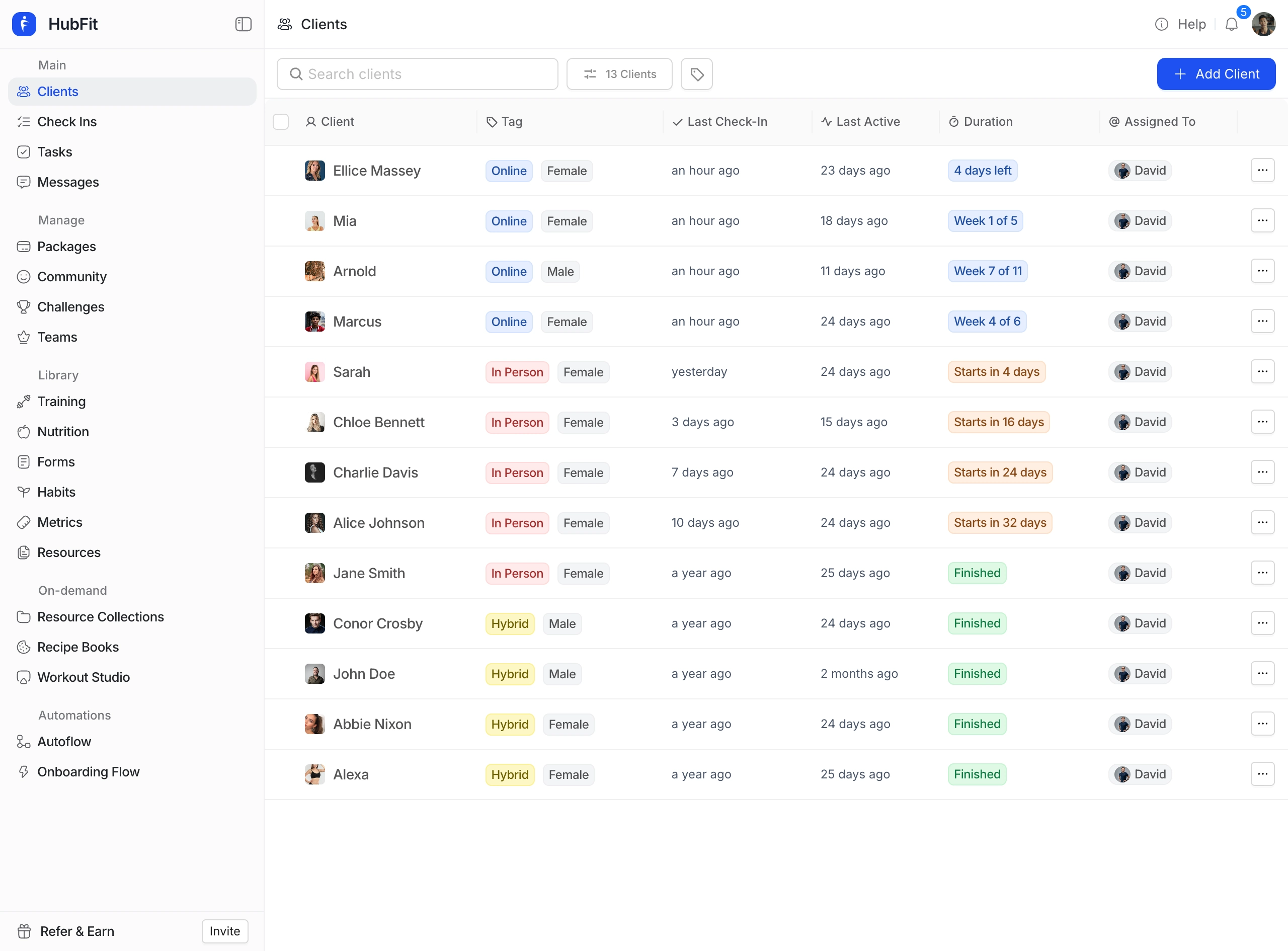
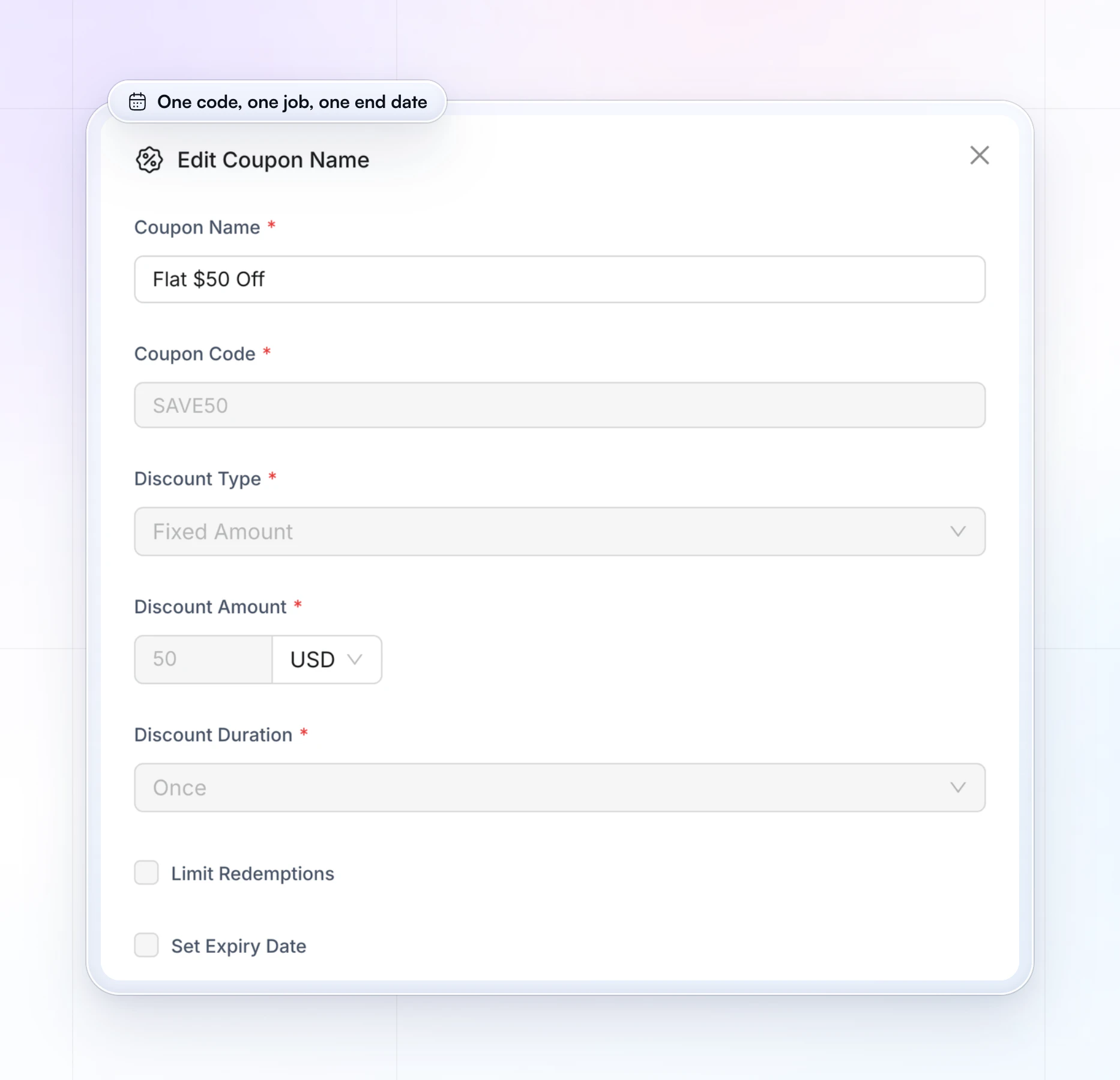
- A code with its own rules. Create a coupon as a percentage or a fixed amount, applied once or for several months, with an optional redemption limit and expiry date. That is the "one code, one job, one end date" rule, set in the coupon itself, so a flash sale closes on time without you watching it.
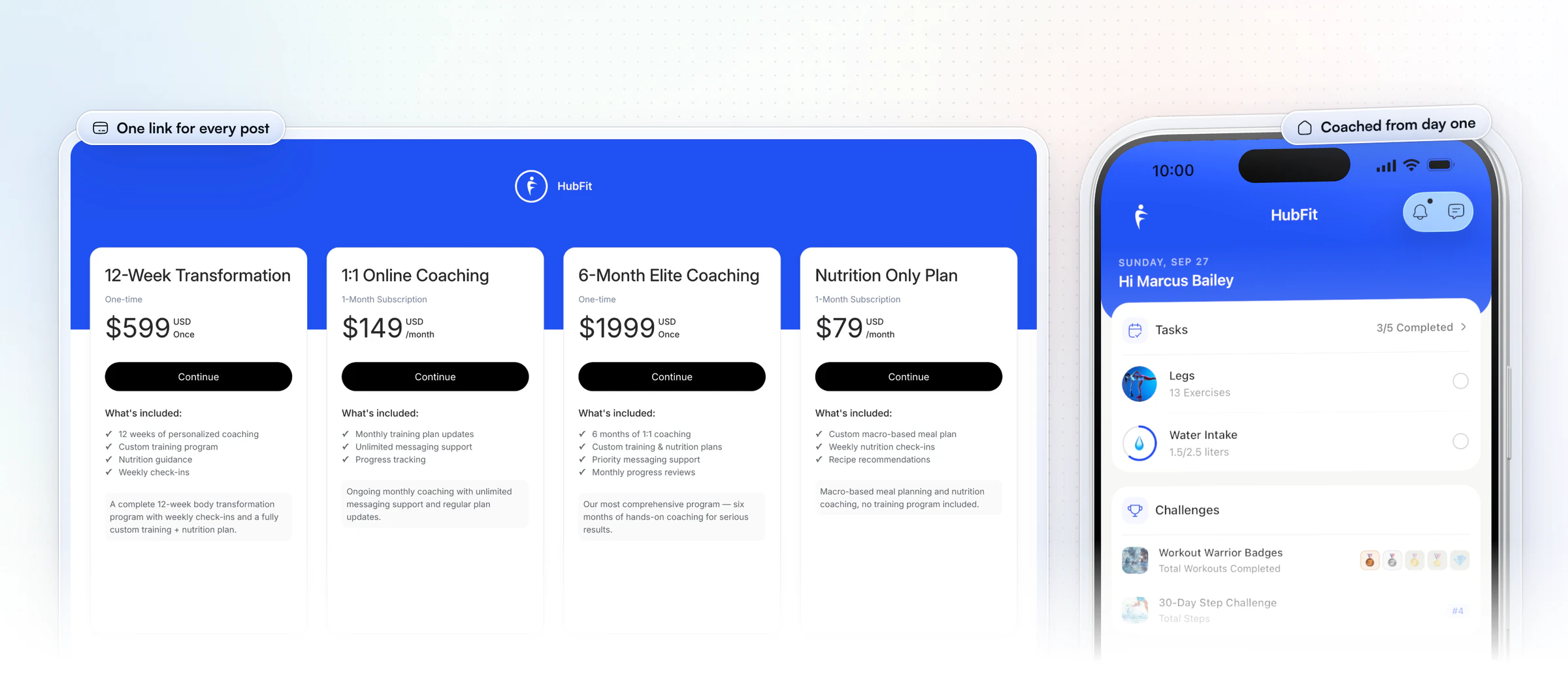
- One link for every post. Your packages appear on a branded pricing page with a single shareable link. Clients pick a package and enter your code at Stripe-powered checkout, with Apple Pay and Google Pay.
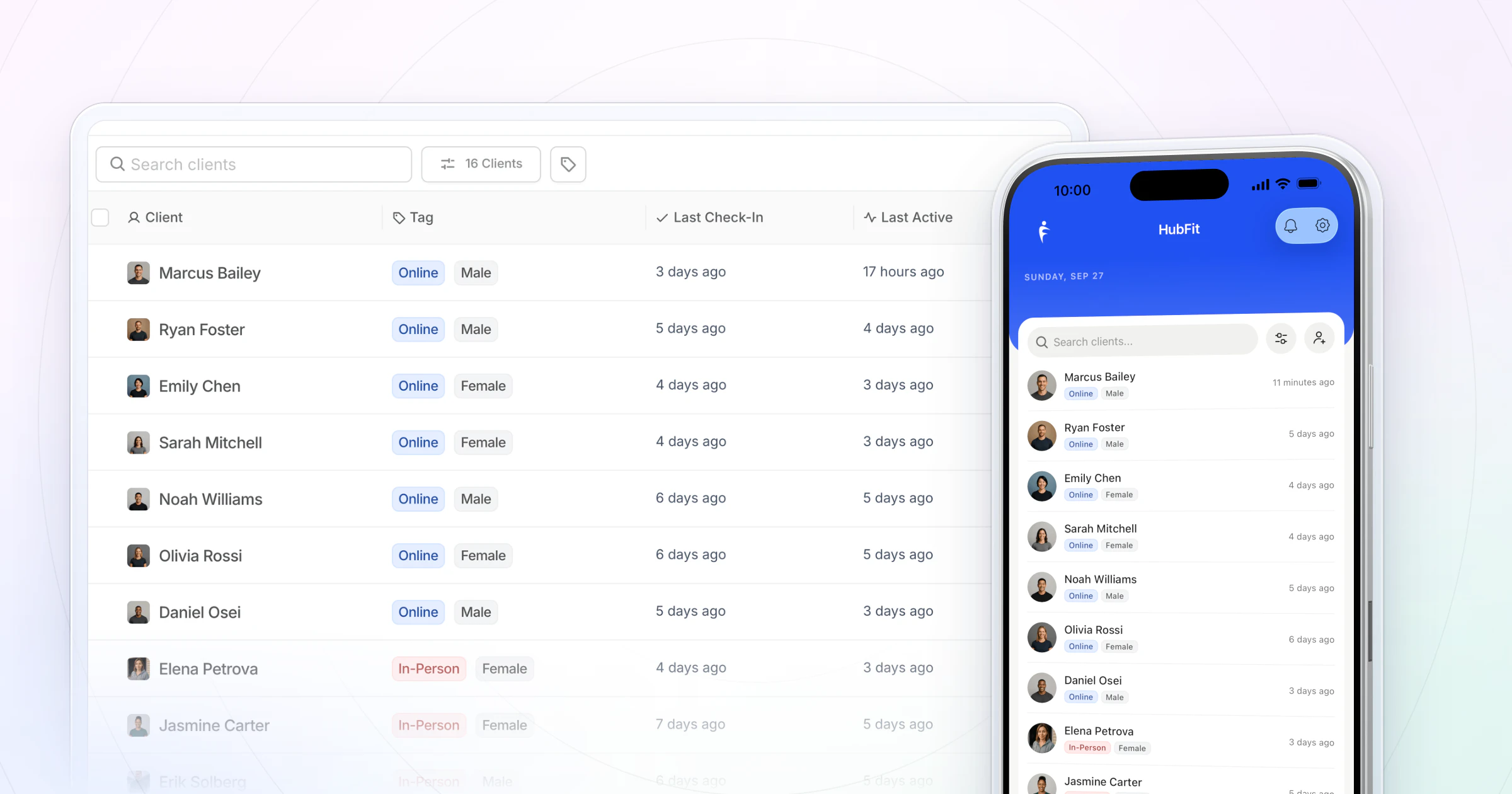
- A coached client, not just a payment. Attach an onboarding flow to a package and each buyer gets their training program, nutrition plan, habits and check-ins the moment they pay, with their login details by email. More on that in how to onboard online coaching clients.
- The thank-you in the same app. Follow up in their chat, and keep the referral and comeback messages above where your clients already read them.
You also keep what you sell. HubFit adds no transaction fee: you pay Stripe's standard rate only, and the app is always free for your clients. For the whole payments side, see a coaching app with client payments.
That setup step matters most in a sale. Twenty sign-ups in a weekend should not mean twenty evenings of setup. Gianni Fabrizio of Gianni Coaching cut his onboarding from about 3 hours to 2 minutes a client this way.
“Now, it's a type in the email address... we're probably talking maximum two minutes.”
When should coaches run a discount? A year of campaigns
Run two to four public sales a year, timed to the moments people already plan a fresh start, and use targeted codes the rest of the year. These personal trainer promotions follow the calendar most clients live by:
| When | Campaign | Who it's for |
|---|---|---|
| January | New Year flash sale | New leads |
| March to April | "Summer start" offer | Leads and past clients |
| September | Back-to-routine offer | Leads and past clients |
| Late November | Black Friday, Cyber Monday | Everyone, public |
| December | Gift a coaching block | Clients' friends, family |
| Any time | Comeback code | Clients who left 1 to 3 months ago |
Keep the targeted codes quiet: a first-month offer for a lead who stalled, a referral code after a client's win. Neither needs a public post, and neither trains your audience to wait for a sale.
How do you run a Black Friday sale as a coach?
Run a Black Friday sale as a short, planned campaign: tell current clients first, open with one code and an end hour, remind once, then close on time and onboard every buyer. In 2026, Black Friday falls on November 27 and Cyber Monday on November 30.
- 3 to 5 days before: tease it. Tell current clients first, in a personal message. Post that a sale is coming and when it opens, without the code yet.
- Launch day: open with the code and the end hour. Post the offer, the code and the exact hour it ends ("ends Monday at 9 p.m."). Send the flash-sale announcement above to your list.
- During: one reminder and some proof. Send the last-call message once, on the final day. Share a client win (with their permission) instead of more discount posts.
- After: close on time and follow through. End the code when you said you would. Make sure every new client gets a program and a first check-in in their first week, then message the people who asked but didn't buy with a coaching tip, not another offer.
In HubFit, step 4 runs itself: a package with an onboarding flow sets up each new client on payment, so a busy weekend ends with clients who are already training.
How much does a coaching discount really cost you?
A coaching discount costs you the money you give up, multiplied by how many payments it touches. The table uses one example: online coaching packages at $200 a month, with a client who stays 6 months.
| Offer (example) | Cost per client | Verdict |
|---|---|---|
| 20% off month one | $40 once | Cheap and strong |
| $50 off month one | $50 once | Same job, clearer |
| 20% off every month | $240 over 6 months | An expensive habit |
| 3 months for $540 | $60 | Worth it if they'd quit early |
Example numbers, not market data. Plug in your own price with the personal trainer pricing calculator, and see how to price online coaching packages before you set the full price a discount comes off.
The pattern holds at any price. Discount once, at the point of decision, and charge full price after it. That is why a coupon's duration matters: "once" is the default for almost every campaign on this page, and "several months" is for the rare offer you've already costed.
How do you launch a coupon campaign in 3 steps?
You launch a coupon campaign by setting its job, building the code, then announcing it with a deadline you keep.
- Pick the job and the date. Who is it for, what offer, when does it end, how many spots? Write it down before you make the code.
- Build the code. In the app, create the coupon (percentage or fixed, once or several months), tick a redemption limit if spots are capped and set the expiry date to your deadline. Then share your pricing page link. You can start a free trial to set it up today.
- Announce, remind once, close. Post the offer, send one reminder before the end, then stop. Count the sign-ups against the job.
What should you give loyal clients instead of a discount?
Give loyal clients more value, not a lower price: a discount on a renewal they were going to pay anyway only costs you money. Pick one of these when a client hits a milestone or stays past a few months:
- A bonus check-in call to review their progress and plan the next block.
- A new program block built around their next goal.
- Early access to your next challenge or group program, before you post it publicly.
- A referral thank-you, such as an extra call, each time a friend they sent signs up.
- A bundle, such as a nutrition plan added to their training, for the same price for a month.
These plays keep the full price intact and give clients a reason to stay. For the rest of the retention picture, see how to keep clients longer.
When should you not offer a coaching discount?
Skip the coaching discount when the client was going to buy anyway. Running sales back to back, stacking codes, or cutting a price that isn't the reason people hesitate teaches people that your full price is optional.
- Don't discount happy renewals. Use the loyalty plays above instead.
- Don't run more than a few sales a year. Personal trainer promotions every month stop being special.
- Don't stack codes. One offer per client, per campaign.
- Raise value before you cut price. A bundle of coaching plus a nutrition guide often beats a price cut.
FAQ
Here are the questions coaches ask most about discounts and promo codes.
Is there a HubFit promo code?
HubFit's standing offer is a 14-day free trial on every plan, so you can try it before you pay. Start it from the button below, or compare HubFit plans first. Looking to give your own clients a code? That's what HubFit coupons are for.
How do I create a discount code for my coaching clients?
In HubFit, open Packages, then Coupons, and add a coupon: name it, set the code, choose a percentage or a fixed amount, apply it once or for several months, and add a redemption limit or expiry date if you need one. Share your pricing page link; clients enter the code at checkout.
What is a good discount for online coaching?
There is no standard rate, so set it from your margin, not from what others post. The examples on this page take $25 to $50 off a single month, or a fifth to a quarter of it. Keep it to the first payment, and check what it costs you per client before it goes live.
Should I use a percentage or a fixed-amount coupon?
Use a percentage when it sounds bigger and a fixed amount when the dollar figure does. On a $200 month, 20% and $40 are the same discount. HubFit coupons can be either, in the currency you sell in.
How often should a coach run promotions?
Run two to four public sales a year, such as New Year, Black Friday and one more seasonal moment, and use targeted codes in between: a first-month offer for a lead who stalled, a referral code after a win, a comeback code for a past client. More than that and people wait for the next one.
Should personal trainers offer discounts?
Yes, for a first step or a longer commitment, and never as a standing price cut. A discount that helps a new client start, or rewards paying for 3 months up front, earns its cost. A permanent discount just lowers your price and makes the next increase harder.
Is a free trial better than a discount?
A free trial suits a lead who doubts the coaching; a discount suits one who doubts the price. In HubFit, a weekly or monthly package can carry a free trial of 3, 7, 14 or 30 days, or a setup fee, but not both. Read more on payments and packages.
What's the difference between a coupon and a package discount?
A coupon is temporary: a code for one group of people with an end date. A package discount is permanent: a lower monthly price for a longer block, such as 3 months, shown to everyone on your pricing page. Use coupons for campaigns and package pricing for commitment. See how to sell fitness programs online for package ideas.
Run your next coupon campaign in HubFit
Pick one campaign from this page, copy its message, give it a code and an end date, and let HubFit take each buyer from checkout to their first workout.