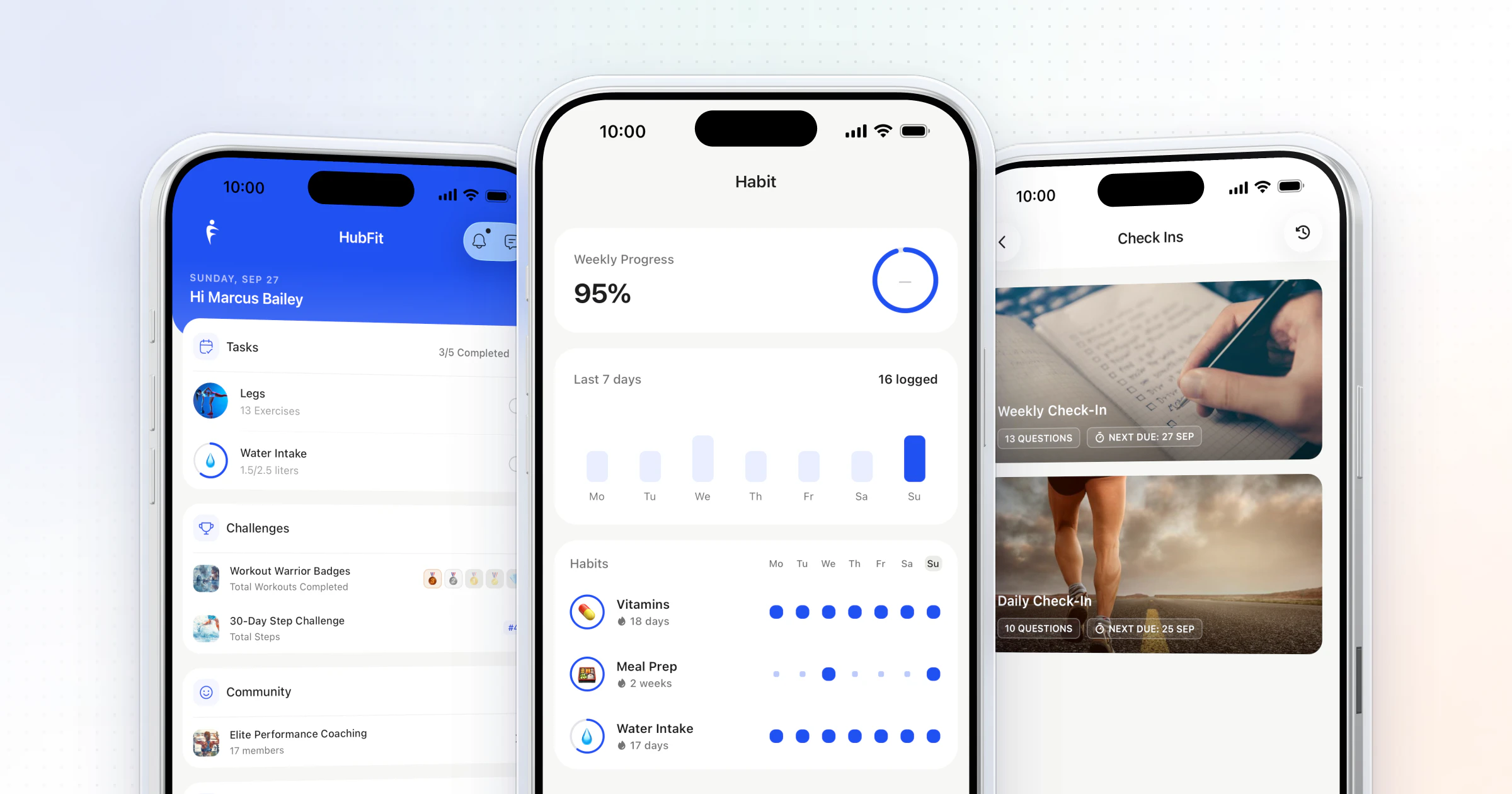
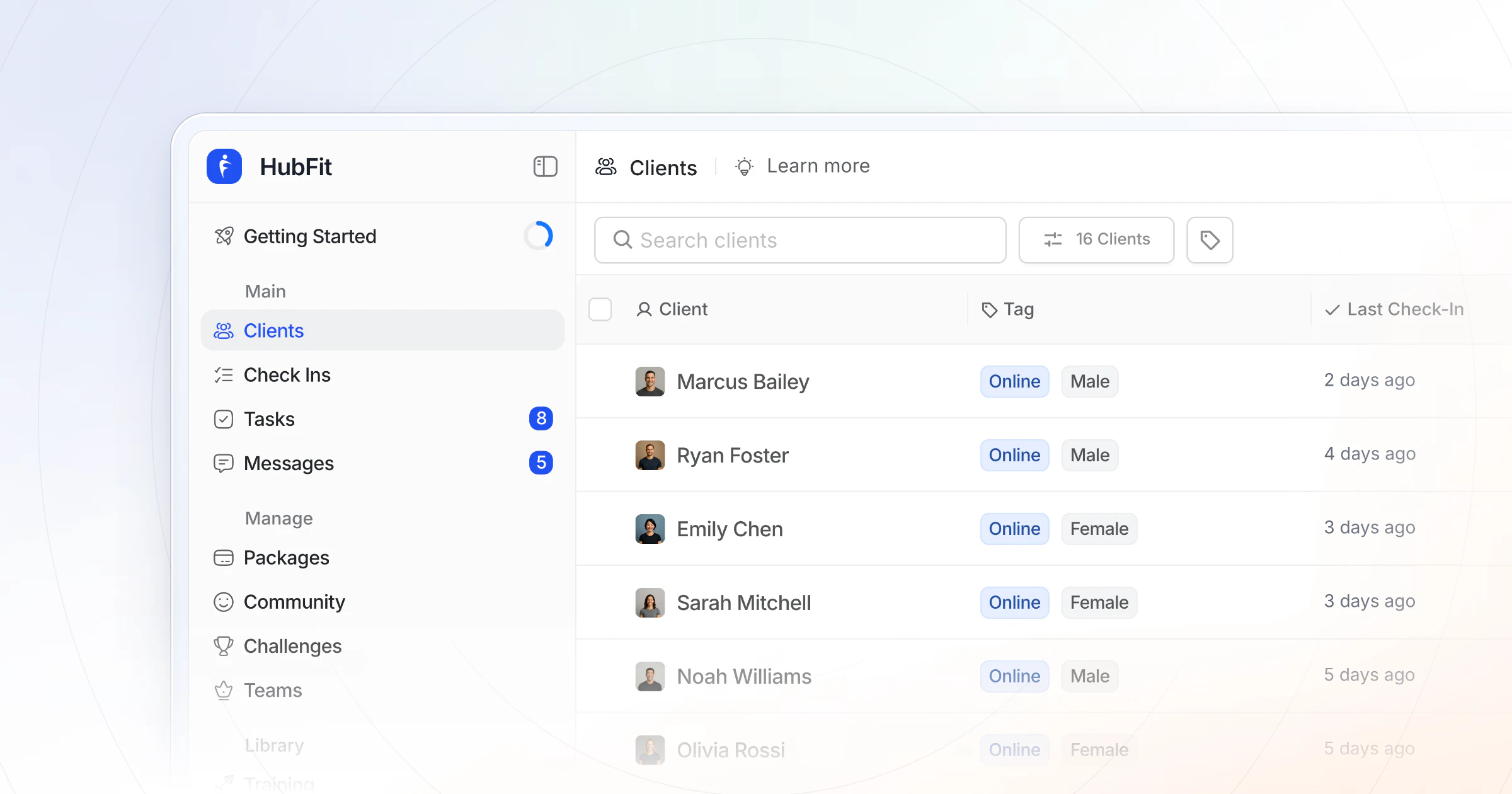
To retain online coaching clients, make every week feel coached: a weekly check-in with a personal reply, progress they can see, wins you celebrate and a quick message the day someone goes quiet. HubFit puts check-ins, workout tracking, habits and chat in one client app, so you spot a quiet client in days, not after they cancel.
Key takeaways
- Clients rarely announce they're leaving. They go quiet first: a missed check-in, fewer logged workouts, slower replies.
- Retention is your income. At the same fee, losing 1 client in 20 a month instead of 2 doubles what each client is worth.
- A weekly check-in with a personal reply is where clients feel coached. Make it quick for them and for you.
- Run retention as a system: a threshold, a weekly sweep and a same-day message, not a rescue after they cancel.
Why do online coaching clients leave?
Retention in online coaching is how many months a client keeps paying you, and most clients leave because they stop feeling coached, not because of one bad week. They miss a check-in, results stall, life gets busy, and nobody notices for a month. By then the decision is made.
These churn signals show up weeks before the cancellation. Here is what to watch and what to do the same week.
| Signal | What you notice | Your first move |
|---|---|---|
| Missed check-in | The form is overdue | A two-line personal message |
| Going quiet in chat | Short replies, then none | Ask one easy question |
| Fewer logged workouts | Sessions planned, not done | Cut the plan for a week |
| Broken habit streak | Daily habits left blank | Shrink the habit, not the goal |
| "Nothing's changing" | Flat scale, low mood | Show their PRs and history |
With five clients you can spot these from memory. At 30, you need a routine that shows you, which is what the early-warning section below sets up.
Why client retention matters more than new clients
Every month a client stays adds a full fee to what they're worth, so keeping clients grows your income faster than finding new ones. Two formulas tell you where you stand:
- Monthly churn = clients who left this month ÷ clients you had at the start of the month.
- Average stay in months ≈ 1 ÷ monthly churn. Losing 1 client in 20 is a churn of 0.05, so the average client stays about 20 months.
Here is that math with an example fee of $200 a month. Swap in your own fee and your own churn.
| Monthly churn | Average stay | Value at $200 a month |
|---|---|---|
| 1 in 20 a month | 20 months | $4,000 |
| 2 in 20 a month | 10 months | $2,000 |
| 4 in 20 a month | 5 months | $1,000 |
This is your own math, not an industry benchmark: there is no reliable public figure for how long online coaching clients stay, so measure yours. Going from 2 lost clients in 20 a month to 1 doubles what each client is worth, with no extra marketing. It also compounds: a client who stays longer is more likely to send you a friend.
How to retain online coaching clients: 7 strategies
Each strategy below is something you can set up this week. Together they make client retention for online coaches a routine, not a rescue job.
1. Front-load the first 30 days
The first month decides whether a client stays, so set clear expectations and make the start effortless. On day one, tell them what coaching includes, when you check in and how fast you reply. Then make the first workout, meal plan and habits appear without a back-and-forth. Our guide to an onboarding flow for your first 30 days walks through it step by step.
In HubFit, Onboarding Flows do that the moment a client is added or buys a package: programs, nutrition plans, habits, check-ins and questionnaires are assigned for you. Selling packages comes with Premium and up.
2. Hold a weekly check-in and always reply personally
A weekly check-in is the moment a client feels seen, so keep the day fixed and the reply personal. Ask about sleep, stress, energy and hunger, not only weight. A flat scale with falling sleep scores is a recovery conversation, not a calorie cut.
Front-load the cadence: some coaches add a short daily check-in for the first two weeks, then settle on weekly. HubFit check-ins run on a schedule you set (daily, weekly, bi-weekly or monthly), with push reminders, and a missed one stays on the client's dashboard as overdue. Every submission lands in one review inbox, you can compare two weeks side by side, and you can reply with a Loom video.
A fast review is what leaves time for a personal reply every week. Vegard Mikalsen of VM Coaching works through his clients' check-ins this way.
“I spend one to two minutes per client on a proper check-in now.”

Once a month, ask for feedback on the coaching itself: what's working, what isn't. Change one thing and tell them you did. Clients stay with a coach who listens. Our guide on how to run client check-ins covers the full routine.
3. Make progress visible
Clients quit when they can't see progress, even when they're making it. Show them the numbers: workouts completed, weights going up, records broken.
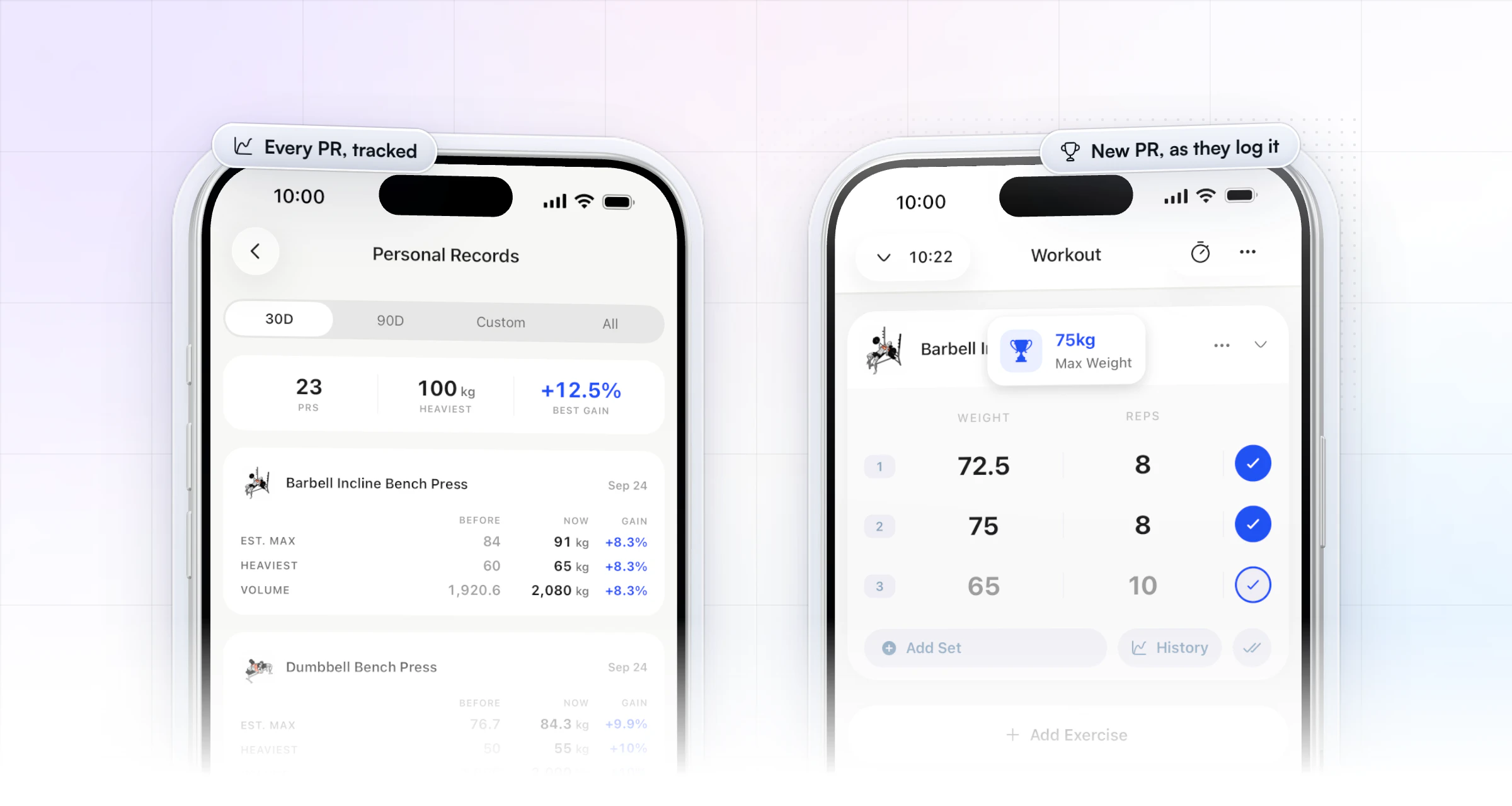
HubFit tracks personal records automatically (max weight, max volume and estimated one-rep max), and each exercise keeps a history chart so clients watch the weight climb. A new record pops up the moment they log the set.
4. Celebrate PRs, milestones and success stories
A win you notice is worth more than a win the client finds alone, so name it within a day. Be specific: "Your 10th workout this month" beats "great job". Praise the showing up as well as the result. Effort is the part they control.
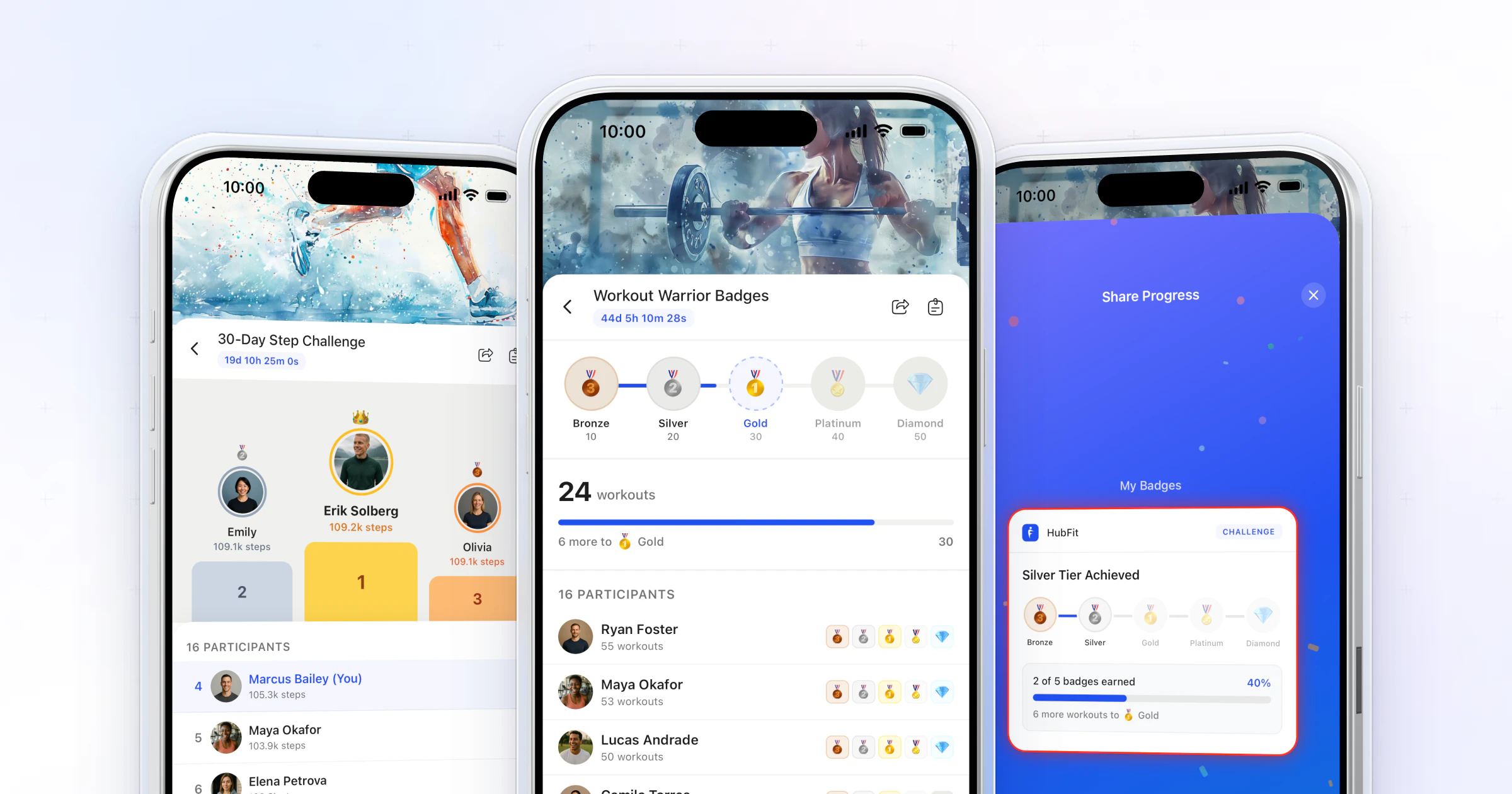
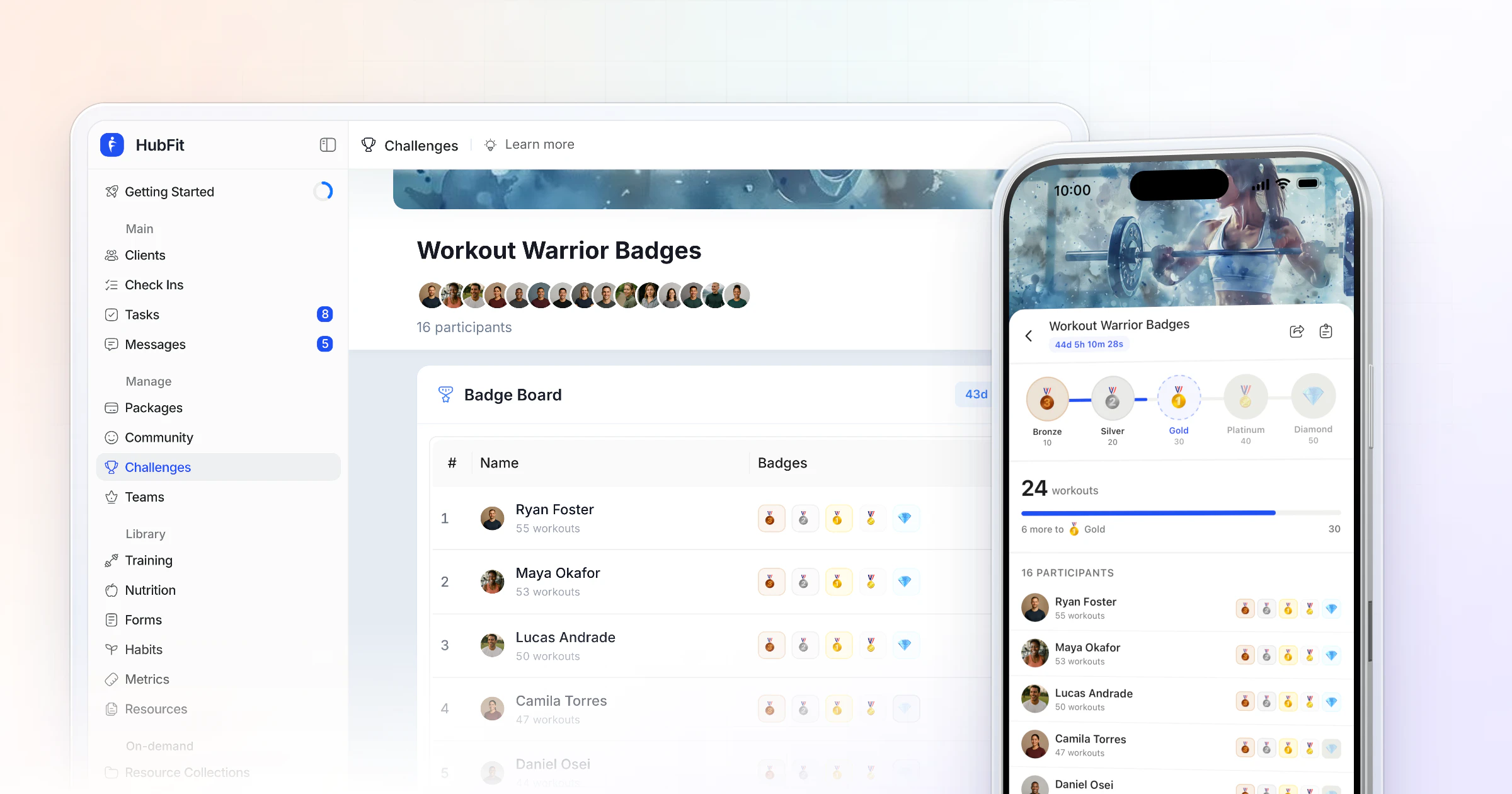
Group wins work too. Challenges let clients earn badges or climb a leaderboard as they train, log meals or sync steps, and share a branded card to social media. A private community feed lets them share wins and cheer each other on. Challenges come with Premium and up, and the community is part of Ultimate. See our guide to client challenges for formats that work.
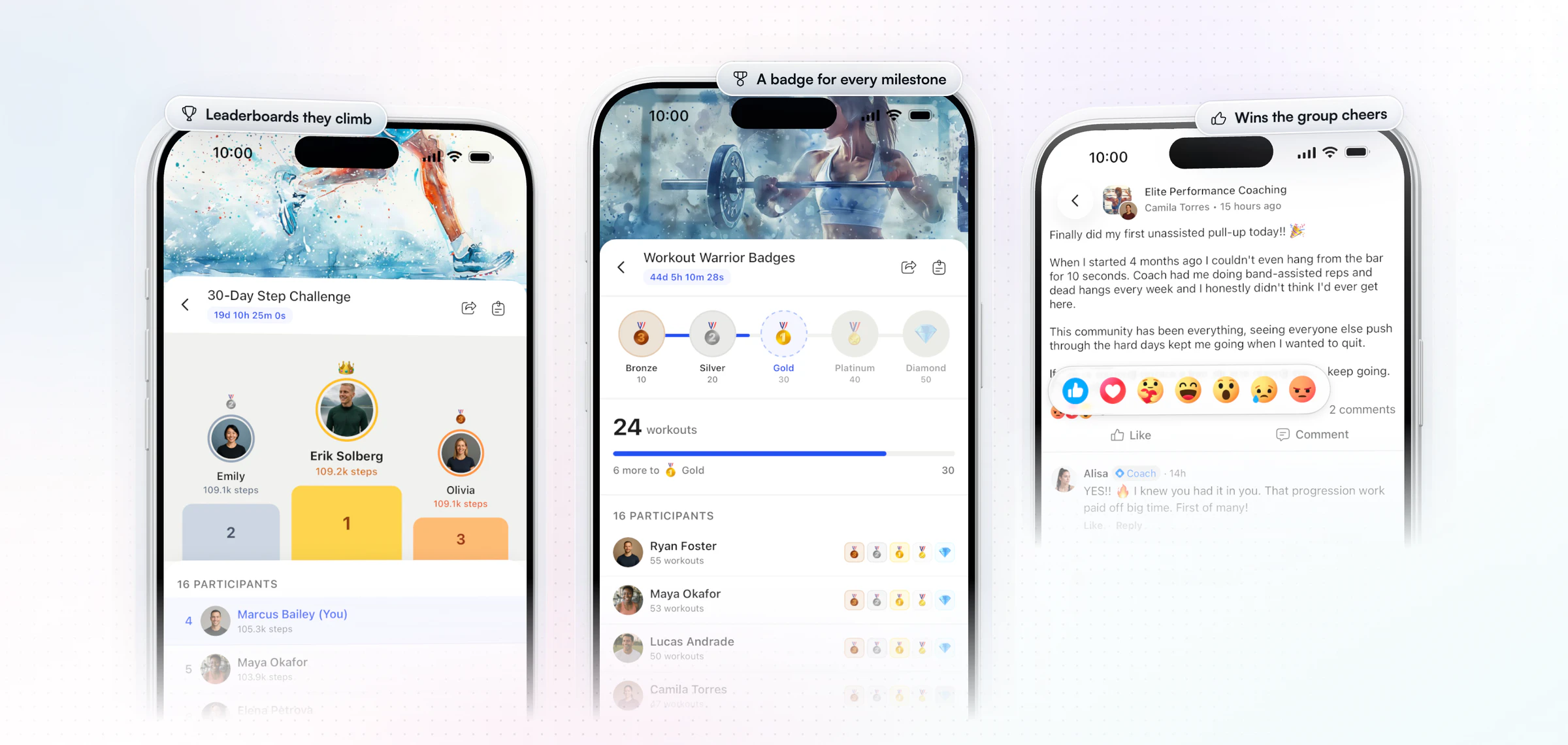
Share client success stories, with their permission, in your community or newsletter. A story from someone a few months ahead shows a new client what staying looks like.
5. Coach their reason, not a reward
Rewards fade; a reason that matters to the client keeps them going. In a systematic review of exercise motivation, motivation rooted in a person's own reasons went with more exercise, and enjoying the activity itself was more predictive of sticking with it long term.
Three ways to coach it:
- Find their why. Keep asking until you get past "lose weight": being able to play with their kids, feeling confident again.
- Set identity goals. "I'm someone who trains four times a week" outlasts "lose 10 pounds".
- Bring it back. Revisit their why in a check-in when a week goes badly.
6. Build small habits they can't skip
Consistency comes from routines small enough to survive a bad week. A 20-minute workout done four times a week beats a 90-minute session that rarely happens. Habits also take longer to stick than most clients expect: in Lally and colleagues' study, new daily habits took a median of 66 days to reach their peak automaticity, anywhere from 18 to 254 days.
So plan for months, and treat slip-ups as data. Ask three questions: What threw you off? What would make it easier? Should we shrink the habit for now?
HubFit habits track streaks and completion rates for you and send push reminders in each client's timezone. Clients see their habits on a calendar, so a missed day shows before it becomes a missed week. Our guide to habit coaching goes deeper.
7. Catch the quiet client the same week
The cheapest client to keep is the one you message before they decide to leave. Anyone who missed a check-in or hasn't logged a workout gets a message that day, and the early-warning routine below makes sure you see them.
Chat works with voice notes, so a 20-second message feels personal without taking your evening. Keep it out of your personal phone number too. Our guide to keeping clients accountable between check-ins has more ways to stay in their week.
Build an early-warning system for churn
An early-warning system is a rule that tells you which clients to contact this week, checked on a fixed day, so nobody slips for a month unseen. It has three parts.
- Pick a threshold. One missed check-in, or no logged workout in 7 days. Write it down so it's the same for every client.
- Do a 10-minute sweep on review day. Go through your client list once a week with the threshold in hand. Anyone over the line goes on a short list.
- Act the same day. Spotting it is the trigger, not the save. A personal message the day you spot it is the save.
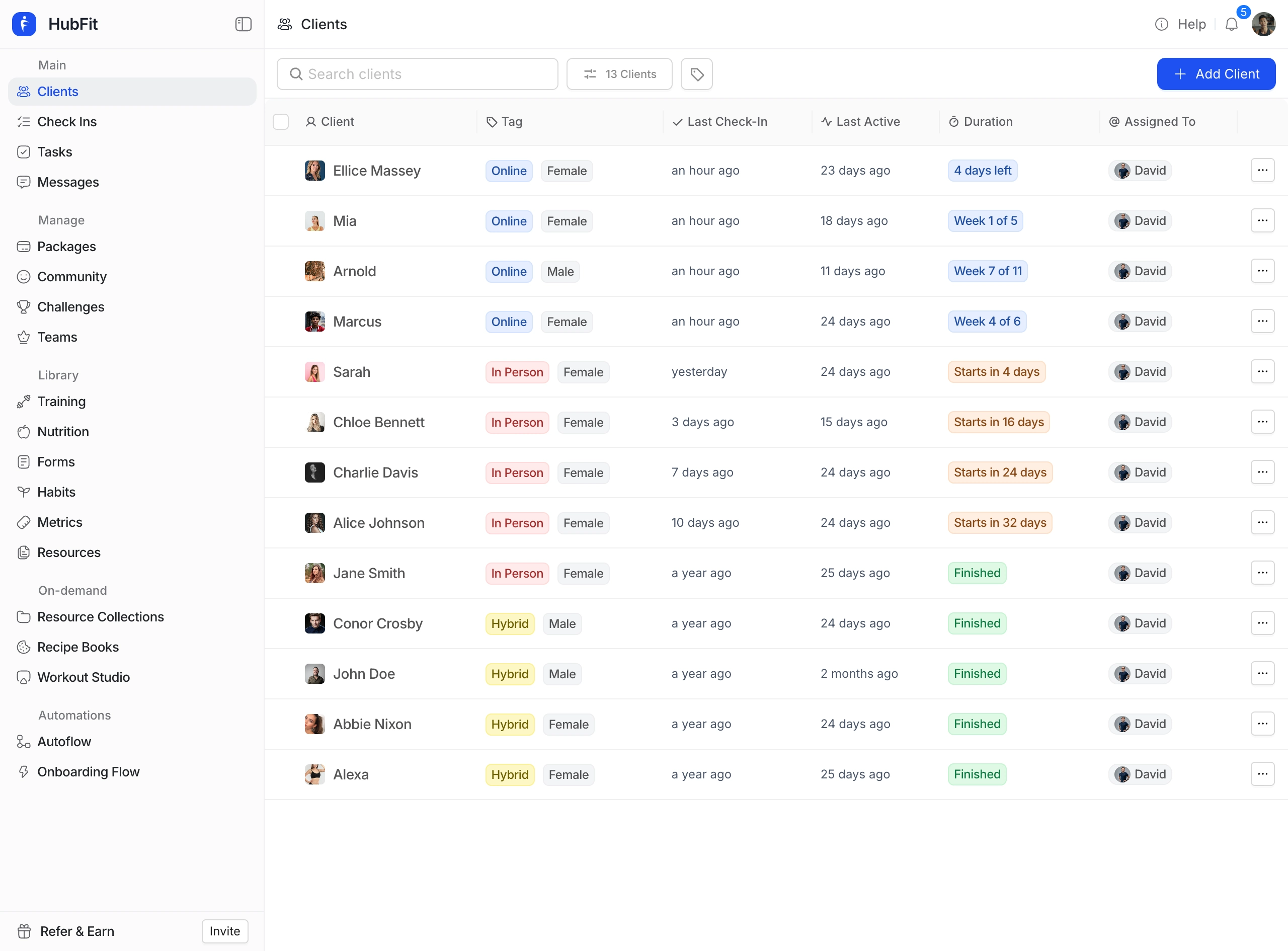
HubFit makes the sweep quick. An overdue check-in stays on the client's dashboard until the next one is due, your client list sorts by the oldest check-in or the least recent activity, and the habits Weekly Summary shows every habit day by day. You're notified when a client submits a check-in or finishes a workout, so a silent week stands out. The sweep itself stays yours: it takes minutes, and the message you send after it is the part only you can do.
What should you say when a client goes quiet?
A good re-engagement message is short, warm and easy to answer, with no guilt. Here is one you can copy:
Hey Sam, haven't heard from you this week and wanted to check in. No pressure at all. Want me to make the plan lighter for the next two weeks while things are busy?
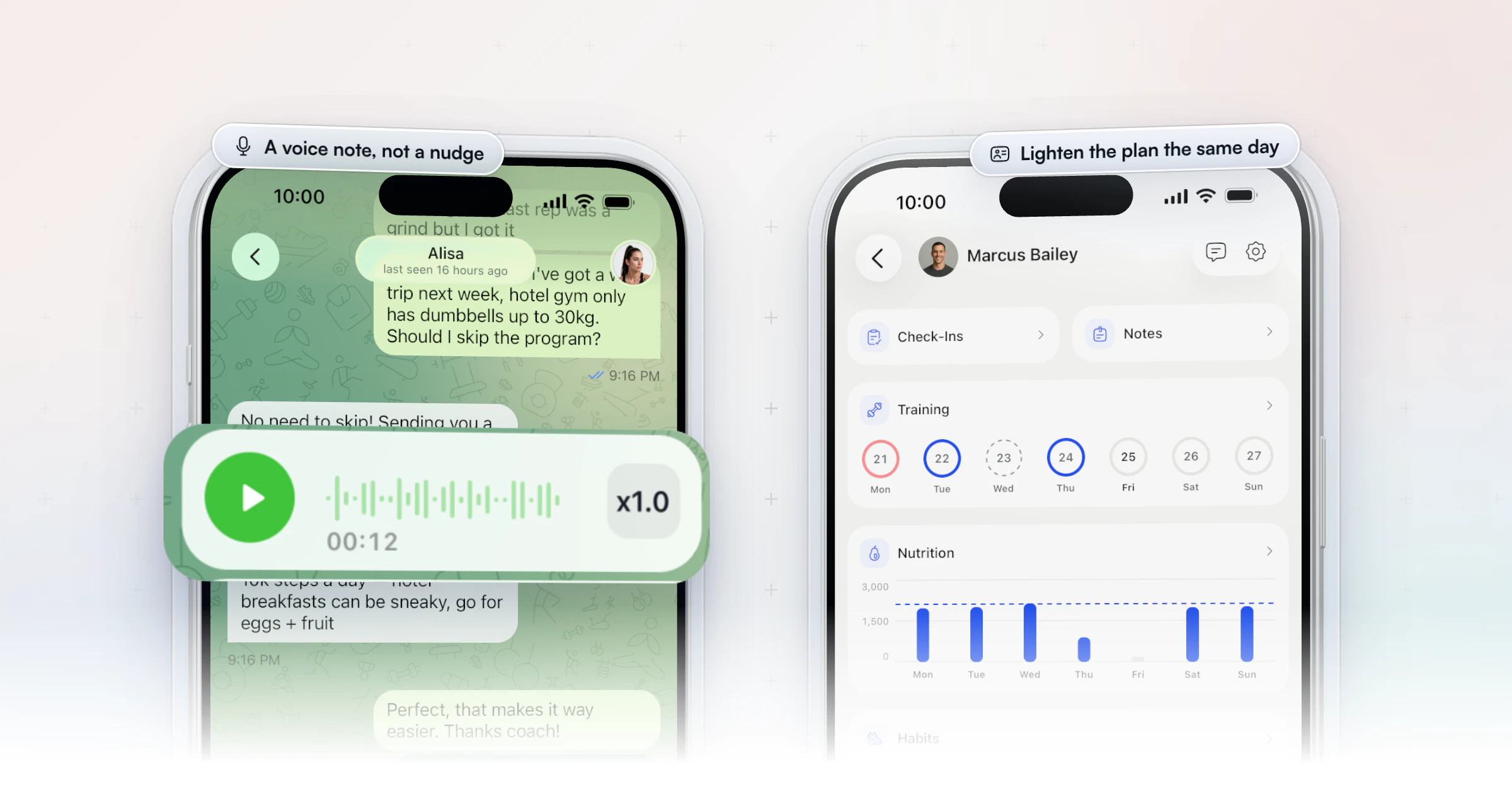
If they reply, make the plan smaller right away. A voice note works well here: they hear that a person noticed, not an automated nudge.
If motivation is the problem, these lines help:
- "Let's focus on what you can do today."
- "Remember why you started."
- "One missed week doesn't undo the last three months."
What to do when a client's results plateau
When results stall, change the plan and the story before the client changes coach. "Nothing's changing" is one of the most common reasons clients leave, so treat a plateau as a scheduled event, not a surprise. Three moves:
- Show the non-scale wins. Pull up their PR history, their habit streaks and the workouts completed this month. A client who sees ten finished sessions and a heavier squat reads the flat scale differently.
- Change one variable. A new training block, a small calorie adjustment or a higher step target. One change, so you both learn what worked.
- Reset the goal with a date. A four-week target they can see on the calendar beats "keep going".
A check-in question such as "What was your biggest win this week?" surfaces the progress the scale hides, and gives you the words for your reply.
A short script to send the week a plateau shows up:
Your weight's held steady for three weeks, and your squat is up 10 kg over the same time, so you're getting stronger. Let's change one thing for the next four weeks: 1,000 more steps a day. We'll look at it together on the 28th.
How HubFit helps you keep online clients longer
HubFit turns the retention routine above into something the app keeps for you, so you spend your time on the clients who need a person. Four ways it does that:
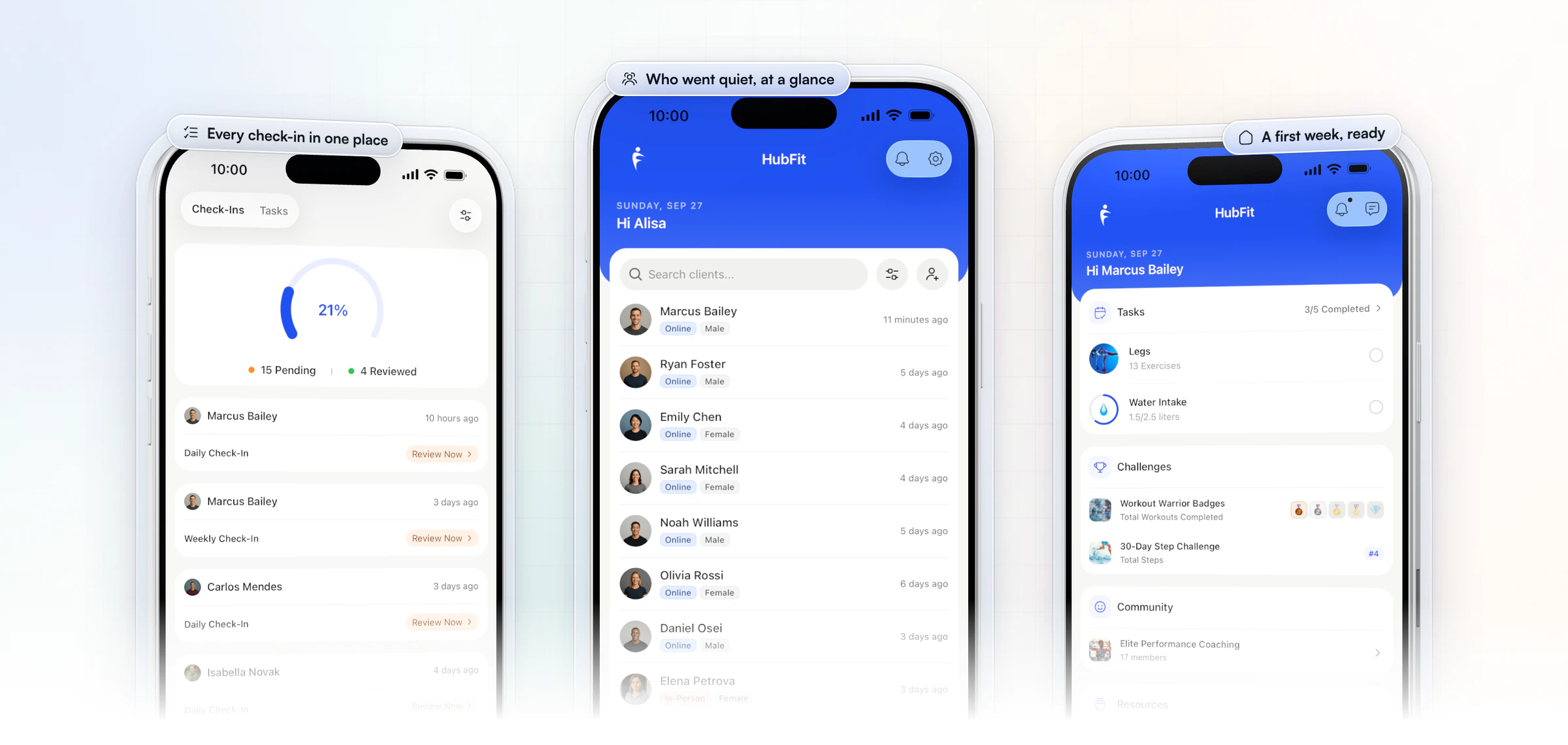
- The sweep takes minutes. Sort your client list by the oldest check-in or the least recent activity, and the quiet clients are at the top.
- You hear about the good weeks too. Check-in submissions and completed workouts arrive as notifications, so a silent client stands out.
- The start is automatic. Onboarding Flows assign the program, habits and check-ins the moment a client joins.
- Progress shows itself. PRs are tracked automatically and each new one pops up for the client as they log it.
| What keeps clients | How the app does it |
|---|---|
| A strong first week | Onboarding Flows assign the plan |
| Weekly check-ins | Scheduled forms with reminders |
| Visible progress | Automatic PRs and exercise history |
| Daily consistency | Habits with streaks and reminders |
| Early warning | Sort by oldest check-in or activity |
You can start your free trial and set up your first check-in and habits today.
Does a branded app help you keep clients?
A branded app helps because your name and icon sit on the client's home screen, so you stay in their week between check-ins. HubFit's Branded App, an add-on to your subscription, puts your own client app on the App Store and Google Play under your name, icon and brand colors, by application. HubFit builds, submits and maintains it, and new features arrive automatically.
Clients still train, log habits, send check-ins and message you in the same place, now under your brand. Our guide to your own branded app explains what's involved, or you can apply for your branded app.
Keeping clients when money gets tight
When a client says money is tight, offer a lighter way to stay before you offer a discount. A client who drops to a smaller package for two months is still your client; a client who cancels has to be won back. Three options, in this order:
- A pause with a date. Agree a restart date and keep one light touch in between, such as a monthly check-in.
- A lower-touch package. A check-in every two weeks instead of weekly, with the program still in the app.
- A shorter commitment. Month to month instead of three months up front.
Only then a discount, and a time-limited one. In HubFit you can sell weekly or monthly packages, and coupons can apply once or for several months, so a "half price for two months" offer ends by itself. Our guide to pricing online coaching packages covers building a lighter tier.
Some churn is healthy: how to let a client go well
Not every cancellation is a failure. Healthy churn is a client who reached their goal or whose life changed; avoidable churn is a client who felt unseen or saw no progress. Fix the second kind, and make the first kind your best marketing. You won't keep every client, and a good exit brings some of them back.
| Kind of churn | Example | Your move |
|---|---|---|
| Healthy | Goal reached, new job, a move | A great goodbye |
| Avoidable | Felt unseen, no progress | Fix the gap for the others |
A four-step offboarding routine:
- A last check-in. Ask what worked, what didn't and what they'll keep doing.
- A results summary. Their PRs, workouts completed and habits built, in one message they can keep.
- A referral ask. "If a friend wants what you got, I'd love to help them."
- An open door. Tell them how to come back, and check in once after a few months.
Ask for referrals at a win, not only at the exit. A client who just hit a PR or finished a challenge is the one most ready to tell a friend.
FAQ
These are the questions coaches ask most about keeping online clients.
How often should you check in with online coaching clients?
Weekly suits most online clients. Some coaches check in daily for the first two weeks, while habits form, then move to weekly, and use every two weeks for maintenance clients. HubFit schedules daily, weekly, bi-weekly or monthly check-ins with reminders, and our list of weekly check-in questions gives you a form to start from.
What are the first signs a client is about to quit?
The first signs are a missed check-in, shorter replies in chat, fewer logged workouts and a broken habit streak. Each one shows up weeks before a cancellation. Set a threshold, such as one missed check-in or 7 days without a workout, and message anyone who crosses it the same day.
What is a good client retention rate for online coaching?
There is no reliable public benchmark for online coaching, so measure your own. Track monthly churn and average months per client. If most leave around month three, fix the first 90 days first: onboarding, the first check-ins and an early win they can see.
How do I handle a client who ghosts me mid-program?
Send two short, warm messages a week apart, with no guilt and one easy question. If neither gets a reply, offer a pause with a restart date instead of chasing. Many ghosting clients are overwhelmed, not unhappy, and a smaller plan or a pause gives them a way back.
Should I let go of a client who keeps missing check-ins?
Not at first. Ask whether the check-in is too long, at the wrong time, or no longer fits their goal, and shorten it. If they still miss most weeks and won't pause, end the coaching kindly with a results summary and an open door. Paying for coaching they don't use rarely ends well.
What should you do when a client wants to cancel?
Ask why before you offer anything. If it's time, make the plan smaller. If it's money, offer a pause or a lighter package. If they've reached their goal, set a new one or let them go well and ask for a referral.
How do you keep clients past the first three months?
Make the first 30 days effortless, hold a weekly check-in with a personal reply, and make progress visible. A client who starts without friction, feels heard every week and watches their records climb has a reason to renew. HubFit's check-ins, habits and training run that routine, and check-in software compares your options.
Is gym member retention different from online client retention?
Yes. Gym members leave when visits drop, so retention there is about attendance, community and what members do between visits. Online clients leave when they stop feeling coached. For gyms and studios, see our guide to gym member retention.
Keep your clients longer, starting this week
Pick two moves for this week: a weekly check-in with a personal reply, and a 10-minute sweep that ends in a same-day message to anyone who's gone quiet. Run both in HubFit, with check-ins, habits, workouts and chat in the one app your clients already open.