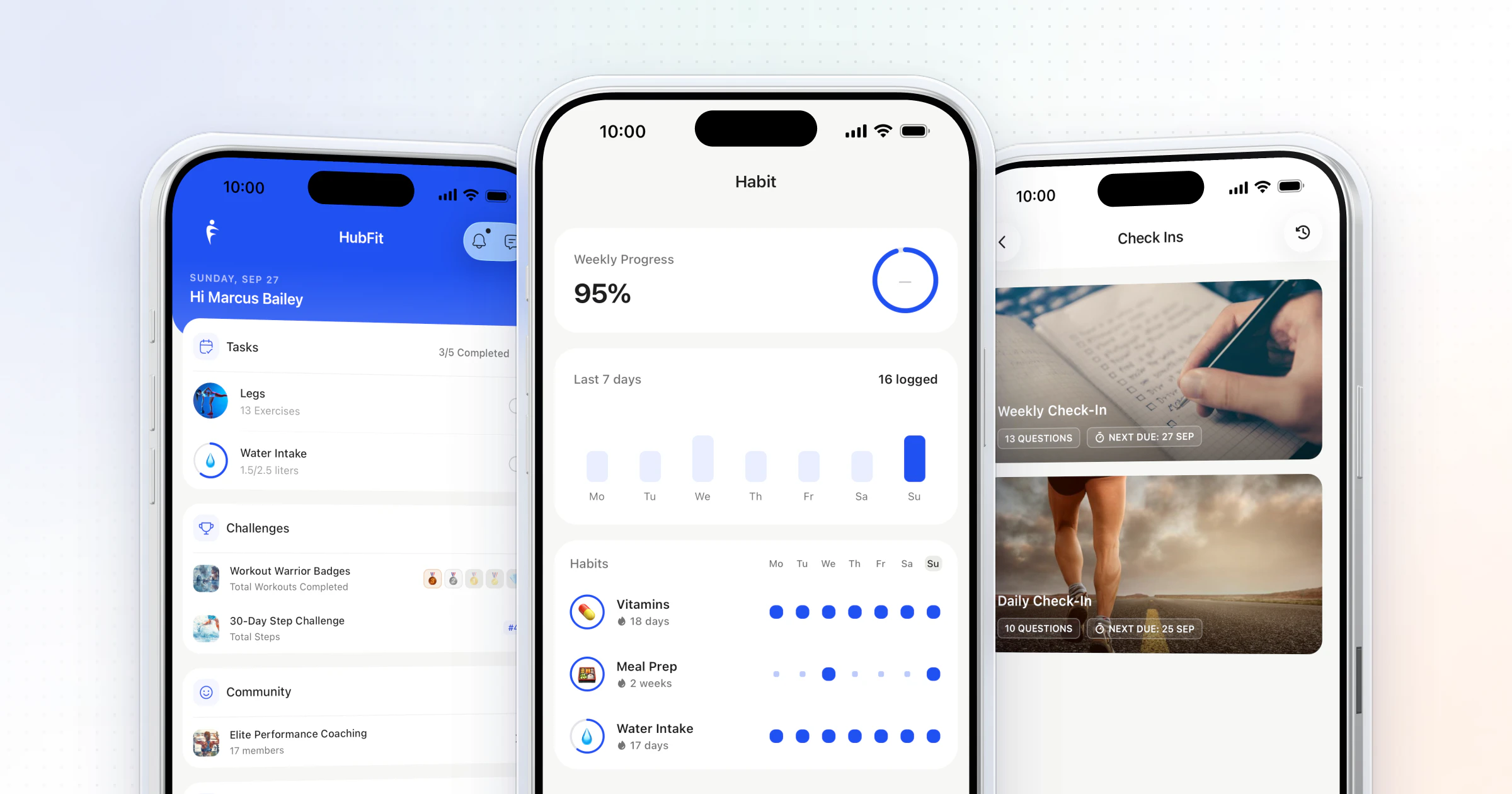
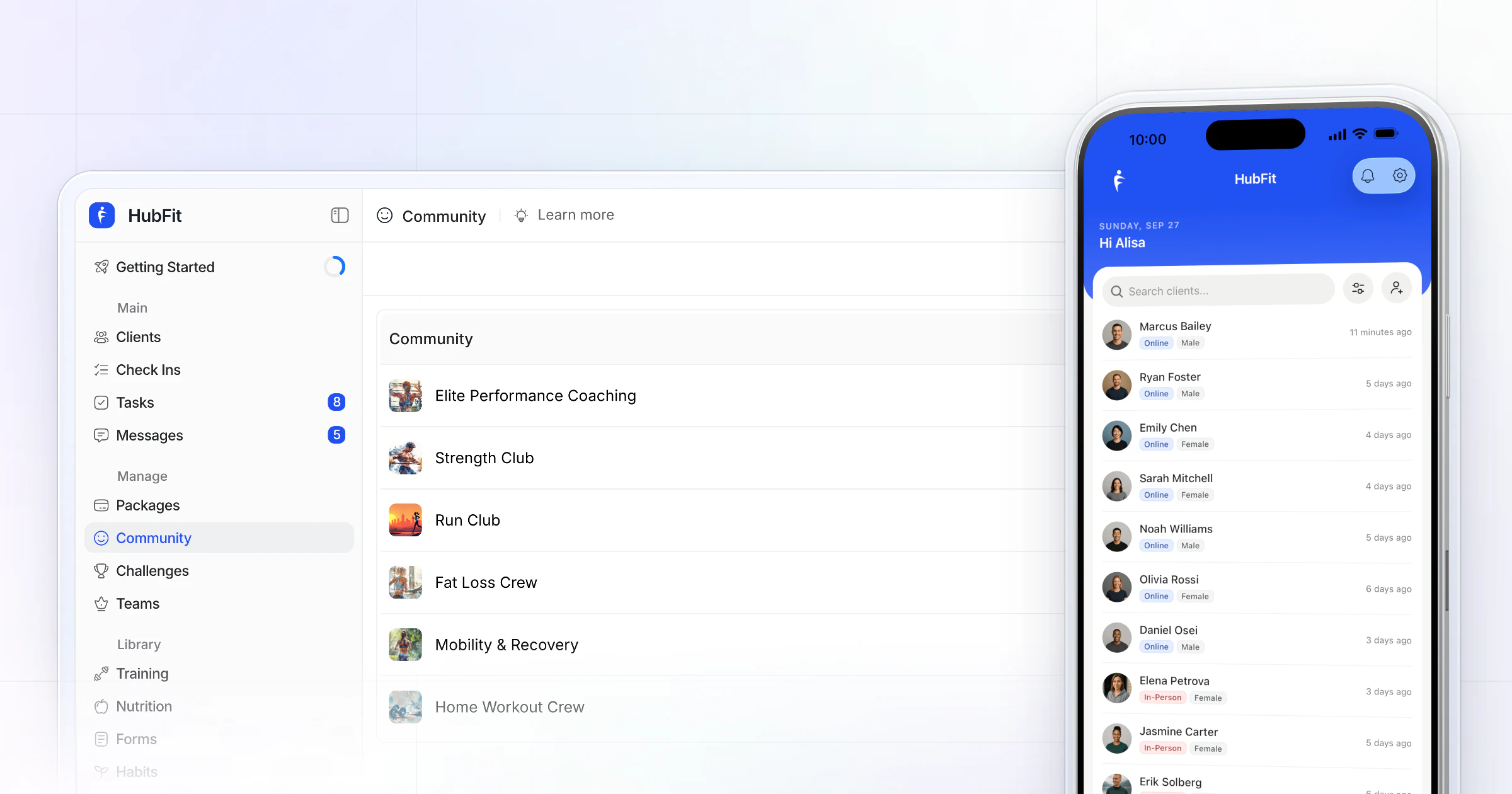
Gym member retention is the share of members who stay with your gym from one period to the next. You raise it by giving members a plan, a coach and people to train with between visits. HubFit, the #1 coaching app, adds that layer next to the booking system you already use: programs, habits and check-ins on your members' phones, free for your members.
Key takeaways
- Members who only think about your gym on training days are the easiest to lose. Retention is won on the other days of the week.
- The first 90 days decide most of it: a plan, a first win and a person who notices when they slip.
- Measure it monthly: churn, member lifetime value and NPS tell you whether a change worked long before a yearly number does.
- Keep your management system for booking, billing and door access. Add a coaching app for what members do between visits.
What is gym member retention?
Gym member retention is the percentage of members you keep over a set period, usually a year. Churn is the other side of it: the share who cancel. Retention and churn add up to the whole, so a gym that keeps four in five members has a churn of one in five.
To work it out, take the members you had at the start of the period, ignore anyone who joined during it, and count how many are still active at the end. If 160 of 200 members are still with you after 12 months, your retention rate is 160 ÷ 200, or 80 percent, and 40 members churned. Track it monthly too, because a bad month shows up there long before it shows up in a yearly number.
How do you measure gym member retention?
You measure gym member retention with five numbers, each worked out the same way every month: retention rate, monthly churn, member lifetime value, visits per member and Net Promoter Score.
| Metric | Formula | Example |
|---|---|---|
| Retention rate | Still active ÷ members at start | 160 of 200 kept for the year |
| Monthly churn | Cancellations ÷ members at start | 12 of 200 left in March |
| Member lifetime value | Monthly fee × average months stayed | $50 × 17 months = $850 |
| Visits per member | Weekly visits ÷ active members | 1,400 ÷ 700 = 2 a week |
| Net Promoter Score | Promoters minus detractors | Asked once a quarter |
A worked example: you start March with 200 members and 12 cancel during the month. Your monthly churn is 12 ÷ 200, or 6 in every 100 members. The average member then stays about 1 ÷ 0.06, or roughly 17 months, so at a $50 monthly fee each member is worth about $850. Bring March down to 6 cancellations, 3 in every 100, and the average member stays about 33 months, so that same member is worth about $1,670. These figures are an example for your own math, not industry averages.
Net Promoter Score comes from one question: "How likely are you to recommend us to a friend or colleague?", answered from 0 to 10. Following Bain's Net Promoter System, you take the share of members who answer 9 or 10 and subtract the share who answer 0 to 6. Ask it in a short questionnaire once a quarter, and read the comments of anyone who scores 6 or below: those are your cancellations of next quarter.
What's a good retention rate? The Health & Fitness Association's 2025 benchmarking report put average member retention at 66.4% for 2024. Keeping more than about two members in three for a year puts you above that average; your own monthly trend tells you whether you're getting better.
Why do new gym members quit, and when?
Most members who leave do it in their first months, before training has become a habit. In a study of 5,240 members of a fitness center in Rio de Janeiro, 63% of new members stopped before their third month, and fewer than 4% kept training continuously past 12 months. Three reasons sit behind most early exits:
- No plan. They walk in, don't know what to do, do a little of everything and see nothing change. Strategies 1 and 2 fix this.
- Nobody notices them. A missed week passes in silence, then a missed month. Strategies 4 and 7 fix this.
- No early result. Without a first win in the first month, the membership feels like a cost. Strategies 4 and 5 fix this.
How do you increase gym membership retention? 10 strategies
Here's how to retain gym members: give them a reason to think about your gym on the days they aren't in it, and someone who notices when they slip. In HubFit, challenges come with Premium and up, and community, group chats and broadcasts are part of Ultimate.
1. Onboard every new member with a 90-day plan
New members leave when they feel lost, so plan their first 90 days before they arrive. Each touch below shows them they made the right choice.
| When | The touch | Why it works |
|---|---|---|
| Day 1 | Program, first habit, welcome | They know what to do next |
| Week 1 | Coach message after visit one | Someone noticed them |
| Day 14 | First check-in | Small problems surface early |
| Day 30 | Progress review | They see a first result |
| Day 60 | Join a challenge | A goal beyond the routine |
| Day 90 | Plan the next block | A reason to stay for more |
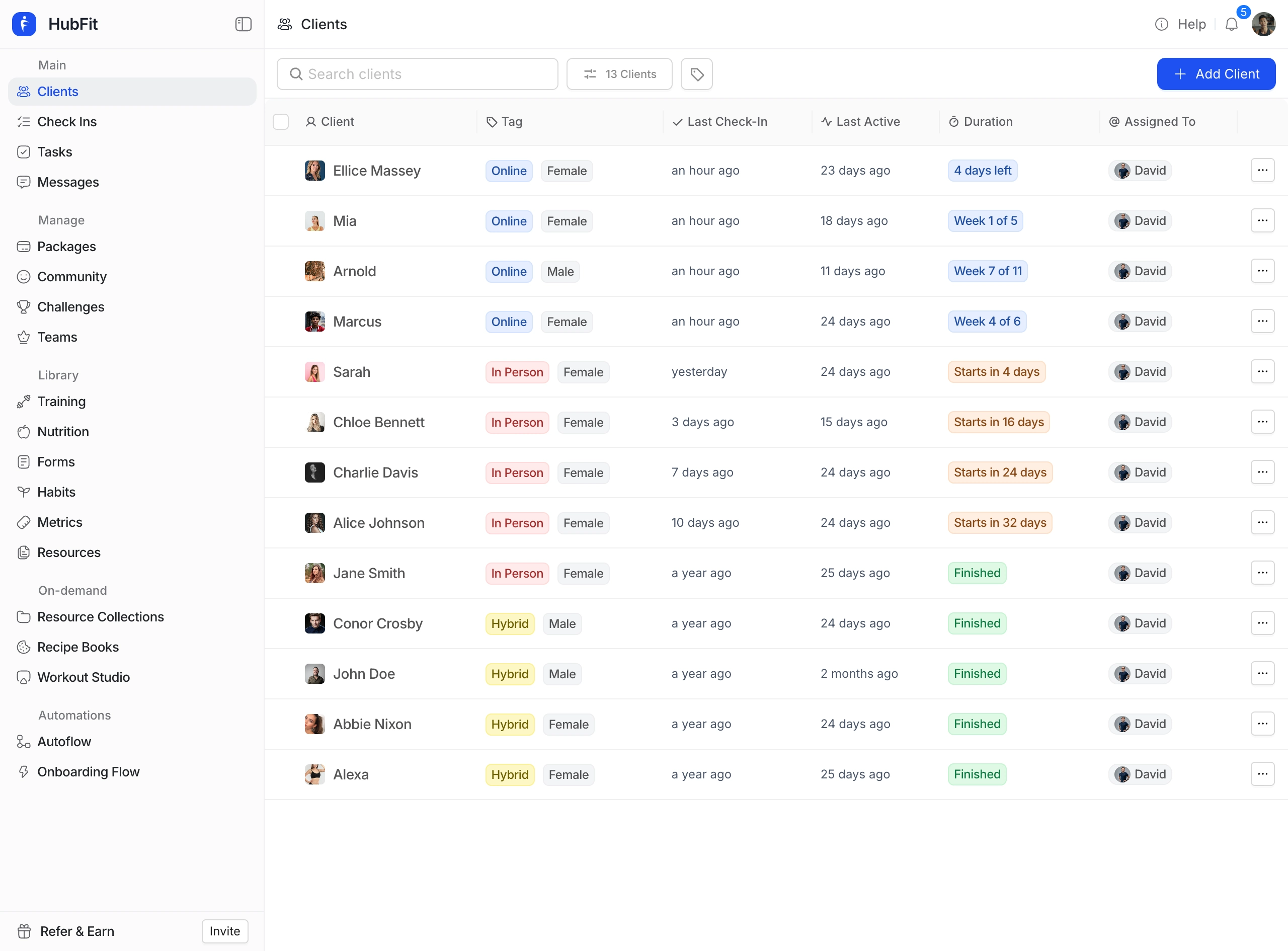
In HubFit, onboarding flows assign the program, habits and check-ins the moment a member is added, so day one never depends on someone remembering.
2. Give every member a program between visits
Members who walk in without a plan drift, then skip, then cancel. A written program answers "what do I do today?" before they ask. Assign one to every member, with the workouts on their phone, and update it every four to six weeks so there's always a next step.
3. Track one or two daily habits
Habits keep your gym in a member's day when they aren't training. Pick one or two that serve their goal, like 8,000 steps or protein at every meal, and set a reminder at the time they'd do it. Our guide to habit coaching shows how to choose them.
4. Check in and celebrate milestones
A short weekly or monthly check-in turns "I'm not sure it's working" into a conversation before it becomes a cancellation. Ask how training went, what got in the way, and one thing to change, then act on the feedback so they see it mattered. Celebrate the wins out loud: a first PR, a tenth workout, a habit streak. Our list of check-in questions gives you a form to start from.
5. Run challenges members can win
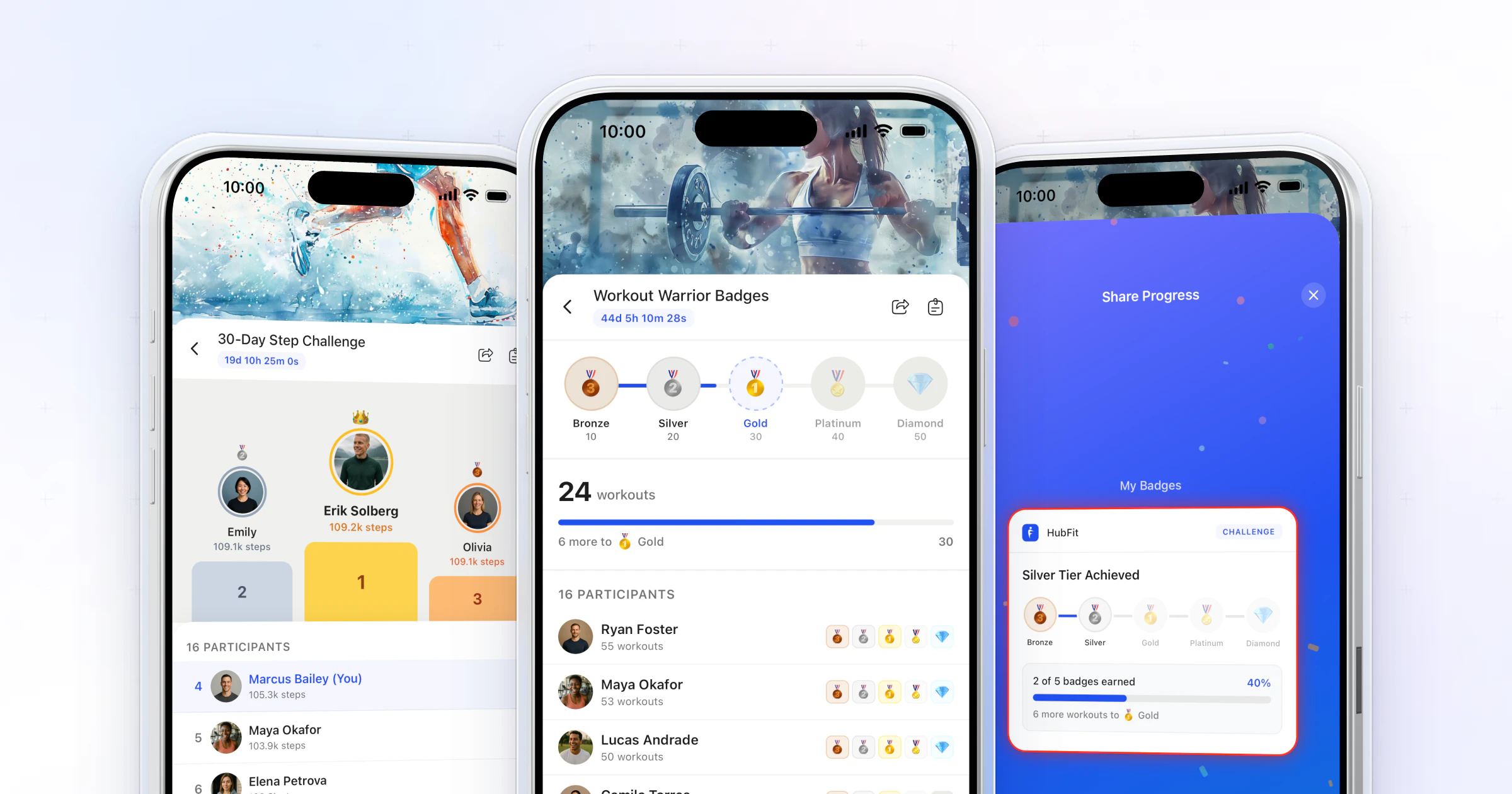
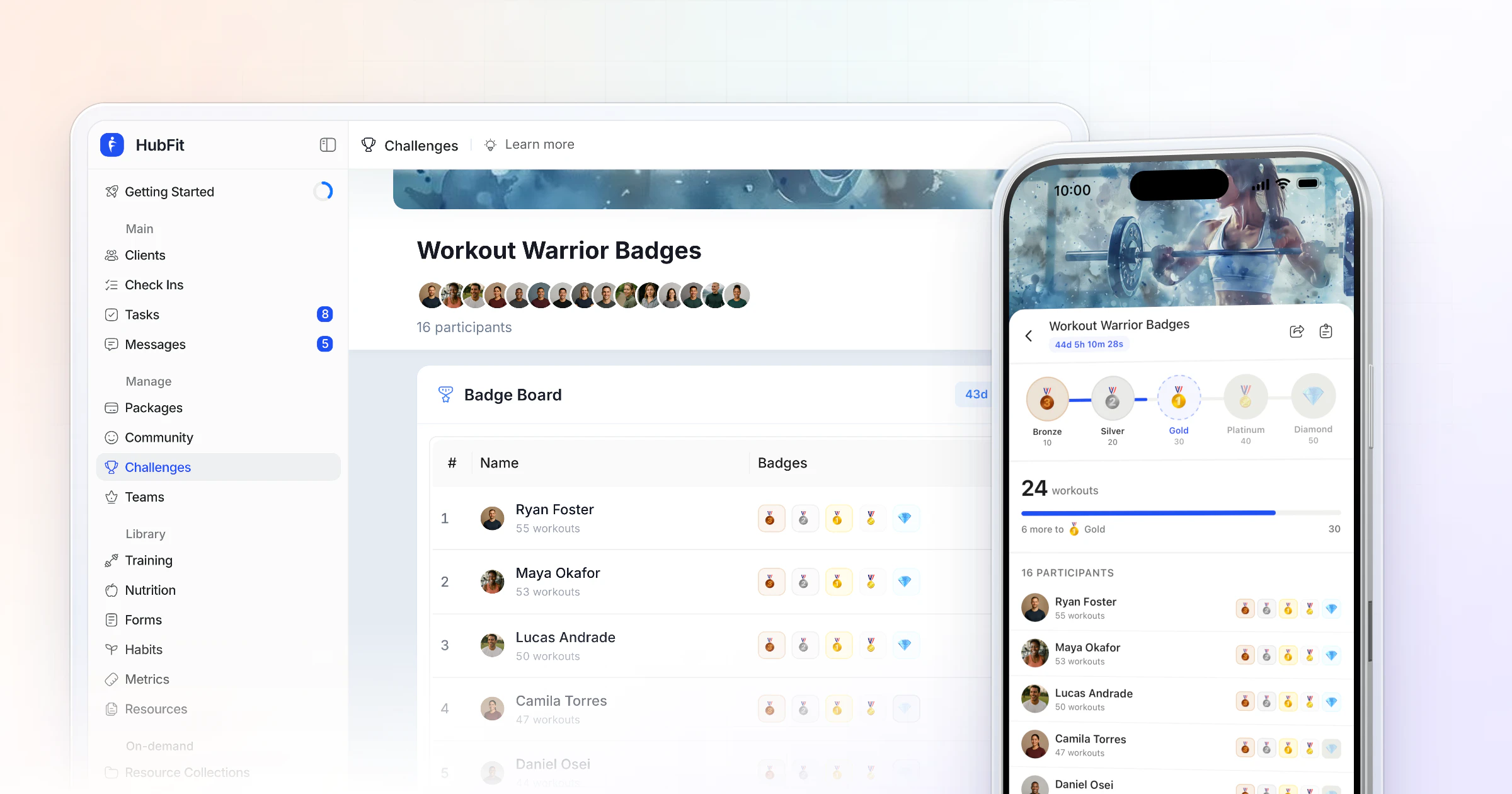
Challenges give members a goal for the next four weeks and a reason to log every session. Run leaderboards for the competitive members and milestone badges for everyone else, so a beginner can win too. Plan them as a calendar, one starting as the last one ends, so there is always a next goal. Our fitness challenge ideas give you formats to rotate, and our guide to starting a fitness challenge covers the setup.
6. Build a community inside your app
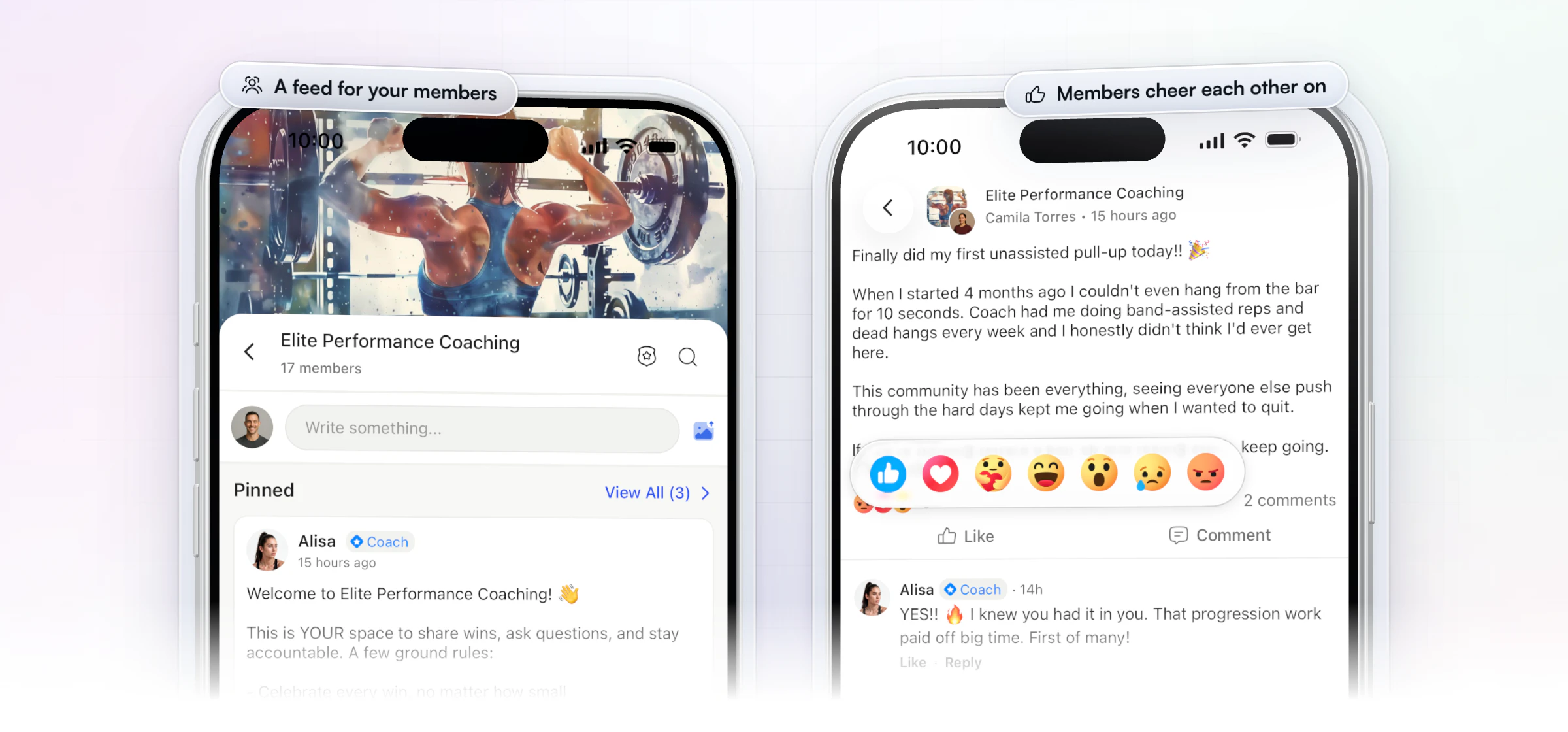
People stay where they have friends. A private member feed lets them post wins, answer polls and cheer each other on, without a Facebook group you don't control. Pin a weekly question, reply to every first post, and schedule your posts ahead so the feed never goes quiet. HubFit gives you the community feed, scheduled posts and group chats for it.
7. Message members personally
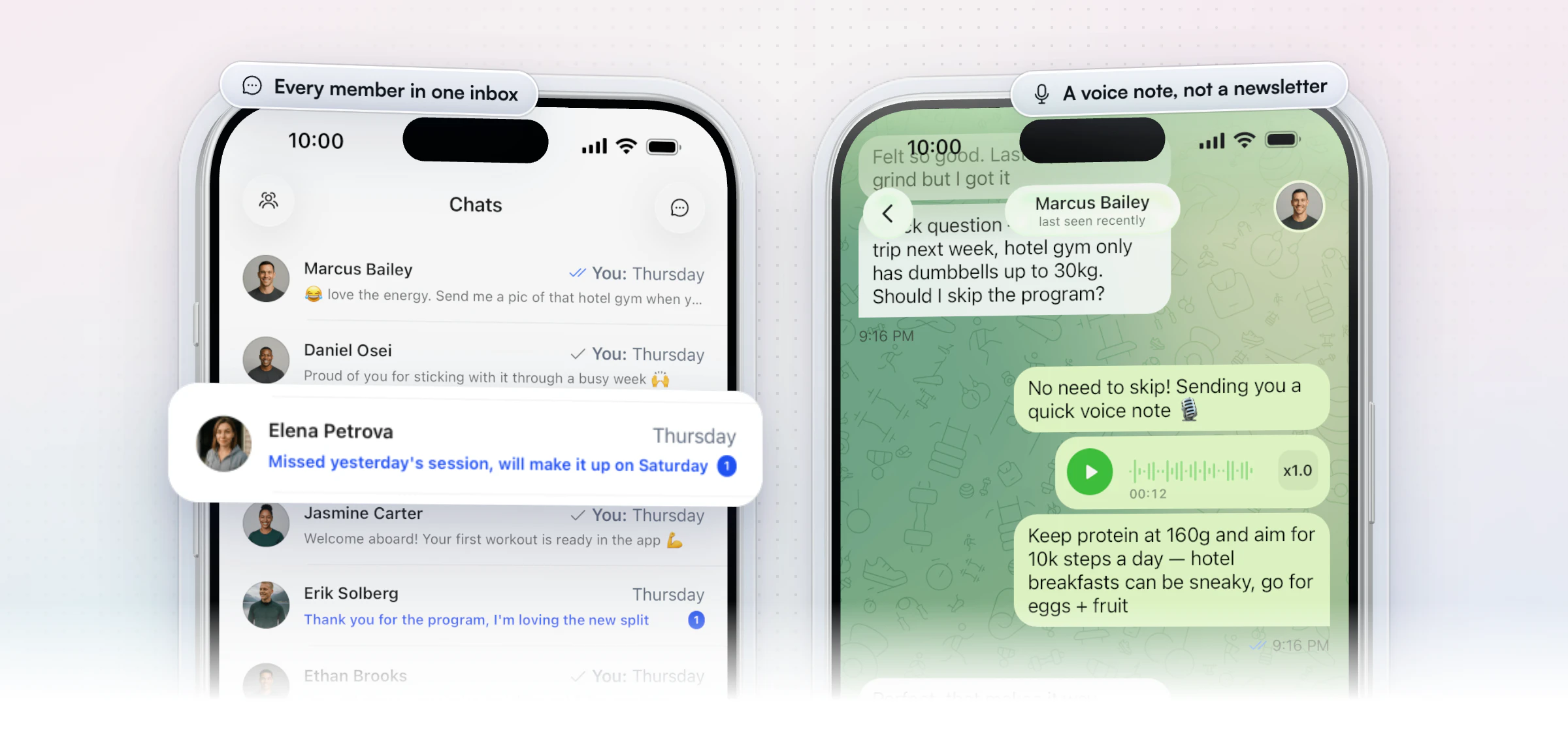
A personal message beats a newsletter. Send a short note after a member's first class, after a PR and after a quiet week. HubFit's 1:1 chat keeps it in the app, with voice notes and GIFs, and no coach has to share a personal number. Broadcasts send one message to many members as personal 1:1s.
8. Make the comeback after a miss easy
Every member misses a week eventually. What decides retention is how fast they come back. In a Nature megastudy of gym members, the program that raised gym visits most gave small rewards for returning after a missed workout. So make the comeback the moment you reward most: a quick message, a lighter session and a fresh start on the challenge.
9. Reward referrals and loyalty
A member who brings a friend now has a training partner at your gym, so make referring easy and thank people for it. Milestone badges give long-time members something to show, and challenge share cards are made to be posted, which puts your gym in front of their friends. Thank every referrer by name, in person or in the app, and mark membership anniversaries.
10. Know every member by name on the floor
A member who is greeted by name feels missed when they don't come. Ask your staff to learn names in the first week and to say hello at every visit. Coaches can go further: in the HubFit Coach App they log a member's workout on the gym floor as it happens, with sets, reps, weights and PRs, so the next session starts from what that member actually did.
How do you spot a member who's about to cancel?
You spot them by watching for small changes in what they do, weeks before they ask to cancel. Visits come from your access or booking system; the rest shows up in your coaching app.
| Warning sign | What you'll see | What to do |
|---|---|---|
| Fewer visits | Gaps in their attendance | Message them that day |
| Workouts not logged | A quiet program | Shorten the next session |
| Habit streak broken | Days missed in a row | Shrink the habit |
| Check-in overdue | No reply this week | Ask one easy question |
| Quiet in chat | No replies to you | Send a voice note |
Set a weekly review: one person, 15 minutes, every member who crossed a line gets a personal message the same day. Our guide to keeping clients accountable has the messages that work.
How do you handle a cancellation request?
Handle a cancellation request by asking why before you offer anything, then matching the offer to the reason. A discount answers only one of the five common reasons, so log the reason every time and you'll see which one your gym needs to fix.
| Reason they give | What to ask | What to offer |
|---|---|---|
| No time | What does your week look like? | Shorter sessions or a pause |
| No results | What did you hope to see? | A progress review, a new block |
| Moving or travel | Where will you train? | Programs in the app |
| Cost | What would fit your budget? | A downgrade, not a discount |
| Lost interest | What did you enjoy most? | A challenge or a group restart |
Pauses, freezes and downgrades live in your management system. The coaching side is where most saves happen: a new program block, workouts they can follow in a hotel gym, a progress review that shows what they'd lose. If they still leave, part well: a last workout plan, a thank-you and an open door.
Gym member retention tools: what you need
The tools that keep gym members fall into two groups: a management system that runs the front desk, and a coaching app that keeps members engaged between visits. Most gyms already have the first; the second is where retention is won.
| Tool | What it does for retention | Where it runs |
|---|---|---|
| Booking and billing | Easy classes, no payment friction | Your management system |
| Door access | Visit data for warning signs | Your management system |
| Member app with programs | A plan for every visit | Your coaching app |
| Habits with reminders | Your gym in their day | Your coaching app |
| Check-ins and questionnaires | Feedback and NPS | Your coaching app |
| Challenges and badges | A goal for the next month | Your coaching app |
| Community and group chat | Friends at the gym | Your coaching app |
| Onboarding and day-based messages | A first 90 days on autopilot | Your coaching app |
| A branded gym app | Your name on their home screen | Your coaching app, add-on |
Keep your booking, POS and door-access system for scheduling and payments; HubFit adds the coaching layer on top. If members only open your app to book a class, it can't keep them; the coaching layer is what they open on the days they don't come in. Day-based messages come with Premium and up.
How HubFit keeps gym members coming back between visits
HubFit, the #1 coaching app, rated 4.9 on the App Store and Google Play, puts your gym in your members' pockets every day, next to your booking and billing system, and it's free for your members. A member who can't make it in still has a workout to follow, a habit to tick off and a challenge to chase, all from your gym. Five ways it runs the strategies above:
- Workouts for the days they can't come in. Workout Studio streams your follow-along workout videos inside the app, so a member who travels or can't make a class still trains with you.
- Every member gets a habit with a reminder. Set daily or weekly habits with a goal and a reminder time, such as 10,000 steps a day at 6 PM, with streaks and completion rates tracked for you.
- There's always a next challenge. Line up leaderboard and badge challenges back to back, from 25+ ready-made templates, with progress tracked automatically.
- Day one runs itself. Onboarding flows assign the program, habits and check-ins when a member joins, and can assign them to a coach.
- Coaches log on the floor. The Coach App records a member's sets, reps, weights and PRs in real time, so every session builds on the last.
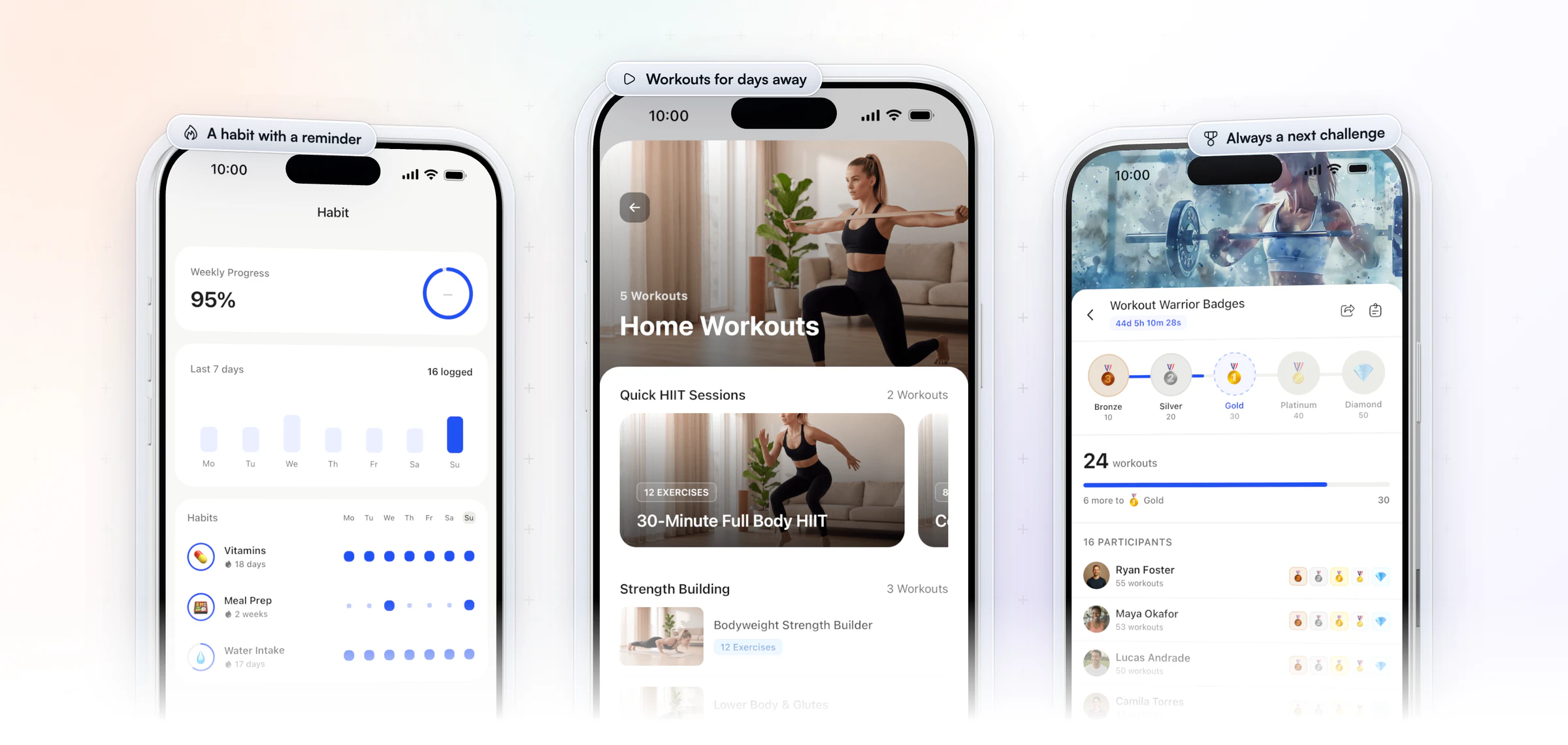
Workout Studio and team assignment are part of Ultimate.
Start your free trial and add a member to see what they'll see between visits.
FAQ
Here are the questions gym owners ask most about member retention.
What is a good gym member retention rate?
The Health & Fitness Association's 2025 benchmarking report put average member retention at 66.4% for 2024, so keeping more than about two members in three for a year is above average. Your own monthly trend matters more than any benchmark: measure it with the same formula every month and you'll see whether a change worked.
What's the difference between retention and churn?
Retention is the share of members you keep over a period; churn is the share you lose. They add up to the whole, so a gym that keeps 160 of 200 members for a year has lost the other 40 to churn. Track churn monthly and retention yearly.
When do gyms lose the most members?
Most gyms lose the most members in the first few months after joining, before training is a habit. That's why a first-90-days plan, an early check-in and a first visible result matter more than any later save. The section on why new members quit, above, has the three reasons and the fix for each.
Do 90% of people quit the gym after 3 months?
That figure has no primary source. The best data is lower but still high: in a study of 5,240 members of one fitness center in Brazil, 63% of new members stopped before their third month. The lesson holds either way: the first 90 days decide retention.
How do I keep gym members engaged between visits?
Give them something to do on the days they don't come in: one or two daily habits with reminders, a weekly check-in and a monthly challenge, all in an app they open every day. A private member community keeps friendships going between classes; our guide to a fitness community platform shows how to run one.
Does HubFit replace my gym management software?
No. Keep the system you have for scheduling and payments. HubFit adds the coaching layer on top: programs, habits, check-ins and messaging, plus challenges and community. See HubFit for gyms for how the two fit together.
Can my gym have its own branded app?
Yes. The Branded App, an add-on to your subscription, puts your gym's own app on the App Store and Google Play under your name, icon and brand colors, and we build and maintain it. Our guide to a branded gym app explains what's involved and how to apply.
How is retention different for online coaches?
Online coaches never see their clients in person, so the app is the whole relationship, not a layer on top of visits. The habits and check-ins work the same way. Our guide on how to retain online coaching clients covers that side, and managing a team of trainers covers the staff side of a gym.
Keep members coming back every day
Start this week with two moves: a 90-day plan for everyone who joined in the last month, and one daily habit with a reminder for every member. HubFit puts the plan, the habit and a weekly check-in on your members' phones, next to the booking system you already use.