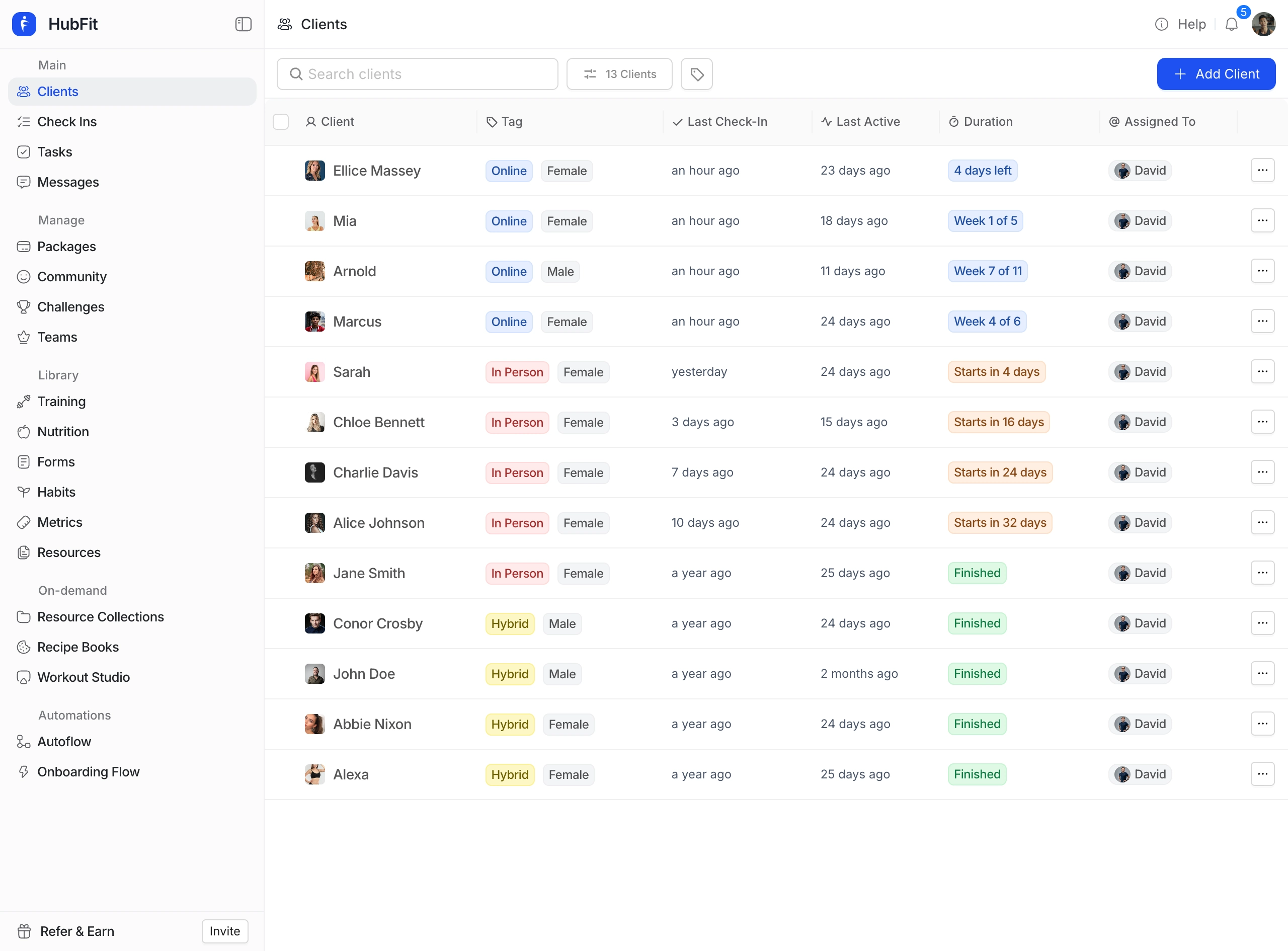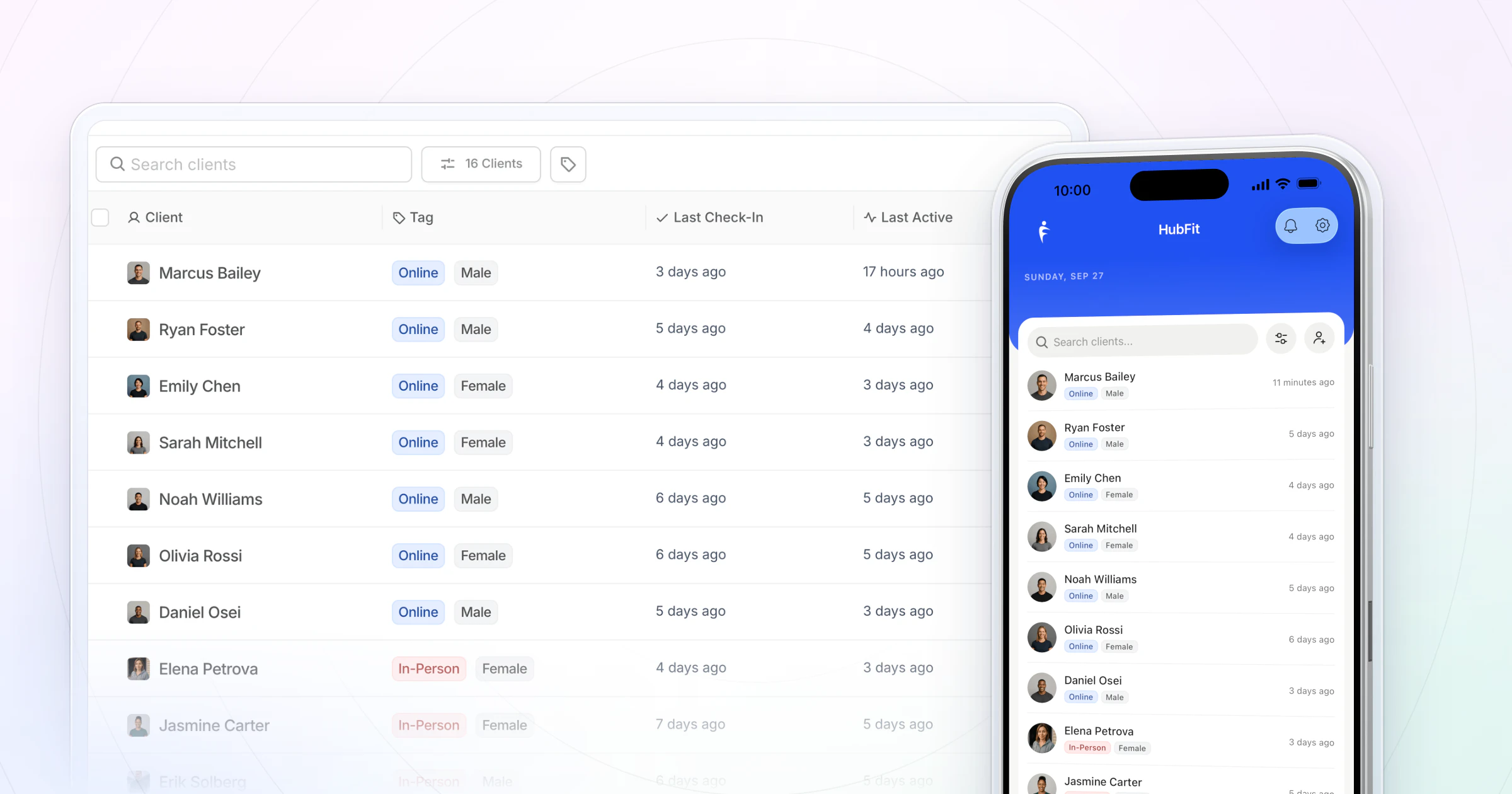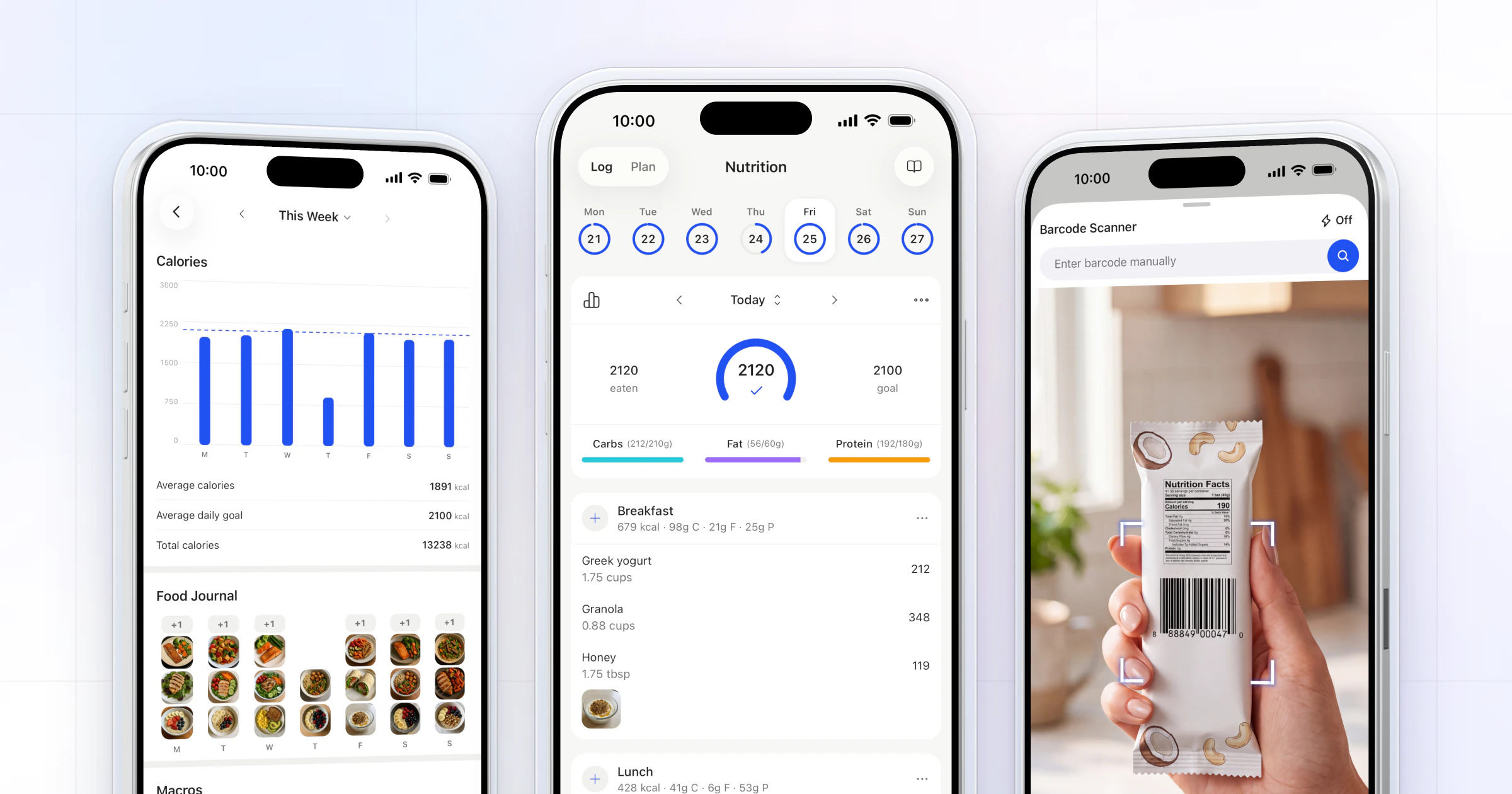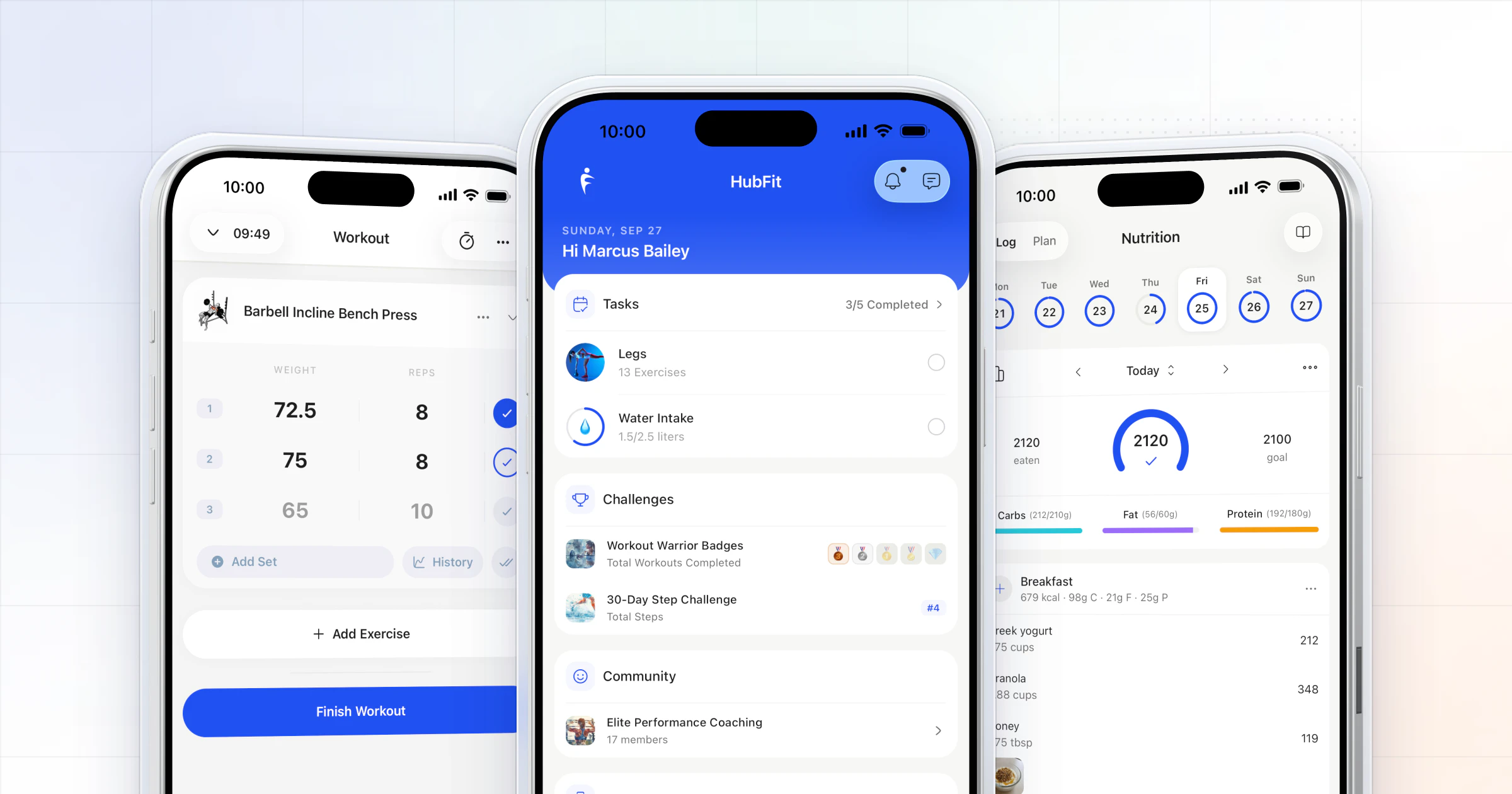
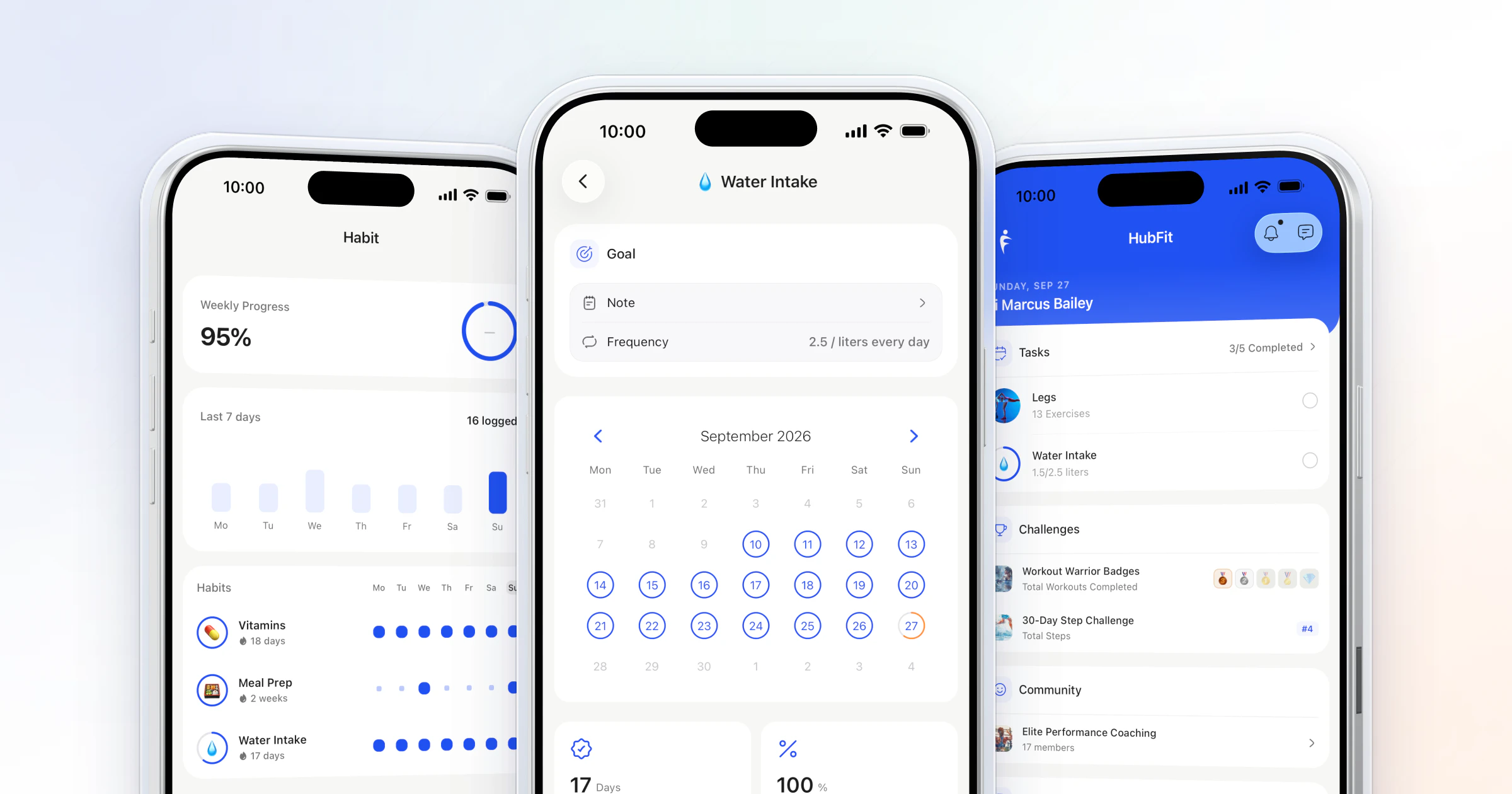
Habit coaching is coaching the small daily behaviors, like steps, sleep, water and protein, that decide whether a client's program works. You agree one or two habits, the client tracks them every day, and you adjust them every week. HubFit makes it easy to run online: habits sit in the same app as your training and nutrition, with streaks and reminders built in.
Key takeaways
- Habit coaching turns "eat better, move more" into one or two daily actions a client can check off, tracked and reviewed every week.
- Start with one or two habits, anchor each to something the client already does, and add the next only when the first is steady.
- To break a bad habit, replace it: keep the cue, swap the routine and track the new action.
- HubFit gives you 40+ ready-made habits, a library for your own, automatic streaks and reminders, included in every subscription.
What is habit coaching?
Habit coaching is a coaching method where you help a client build a few specific daily behaviors until they run on autopilot, with tracking and regular feedback from you. You'll also hear it called habit-based coaching, healthy habits coaching or habit change coaching. Your program covers the few hours a week a client trains. Habits cover the rest of the week, where most results are won or lost.
For a personal trainer or online coach, that isn't a new job. It's the part of coaching that happens between sessions, made visible.
| Compare | Program coaching | Habit coaching |
|---|---|---|
| What you set | Sessions, sets and loads | One or two daily actions |
| How often they act | 3 to 5 times a week | Every day |
| What you track | Lifts, body weight | Streaks, completion rate |
| What it changes | The hour in the gym | The rest of the week |
What does a habit coach do?
A habit coach is a coach who helps a client turn a goal into a few small daily actions, tracks those actions and adjusts them every week until they stick. The habit coach picks the behaviors with the client, keeps them accountable and changes the plan when life gets in the way.
That makes the role different from the coaches a client may already know:
| Role | Focus | Contact | What they track |
|---|---|---|---|
| Personal trainer | Sessions, technique, load | 1 to 3 sessions a week | Lifts, reps, body weight |
| Habit coach | Small daily behaviors | Daily logs, weekly review | Streaks, completion rate |
| Life coach | Career, relationships, goals | Calls every week or two | Goals and agreed actions |
| Registered dietitian | Medical nutrition care | Clinical appointments | Diet and health markers |
A habit coach is closest to a life coach in method (questions, small commitments, follow-up) and closest to a trainer in subject (movement, food, sleep, recovery). A fitness coach who adds habits does both jobs for the same client, and with the right app, from the same screen.
What can a habit coach help with?
A habit coach can help with any everyday behavior that can be counted or checked off. For fitness clients, six areas cover most goals:
- Movement: a 10-minute walk after lunch.
- Sleep: the same wake-up time seven days a week.
- Hydration: a full water bottle finished by noon.
- Nutrition: vegetables with dinner, or a planned snack instead of a vending machine.
- Stress: two minutes of slow breathing before bed.
- Screen time: the phone charging outside the bedroom.
Pick the area most tied to the client's goal first. Better sleep and more steps tend to make the rest easier, so they're good first habits for most people.
How do you do habit coaching with clients? 5 steps
You do habit coaching by agreeing one small, measurable habit, tracking it daily and reviewing it weekly, then adding the next one. Here is the method step by step.
1. Ask before you assign
Start with the client's day, not your favorite habit. In onboarding or the first call, ask what a normal weekday looks like, what they've tried before and what broke it. The best habit is one that moves their goal and that they will actually do on a busy Tuesday.
2. Pick one or two habits and make them measurable
Start with the habits that support everything else: daily steps, sleep, water, protein and the workouts themselves. Mindfulness, a screen-free hour, journaling or fruit and vegetables come next, picked for the client in front of you.
Turn the goal into an action with a number and a unit. "Move more" can't be tracked. "Walk 8,000 steps a day" can.
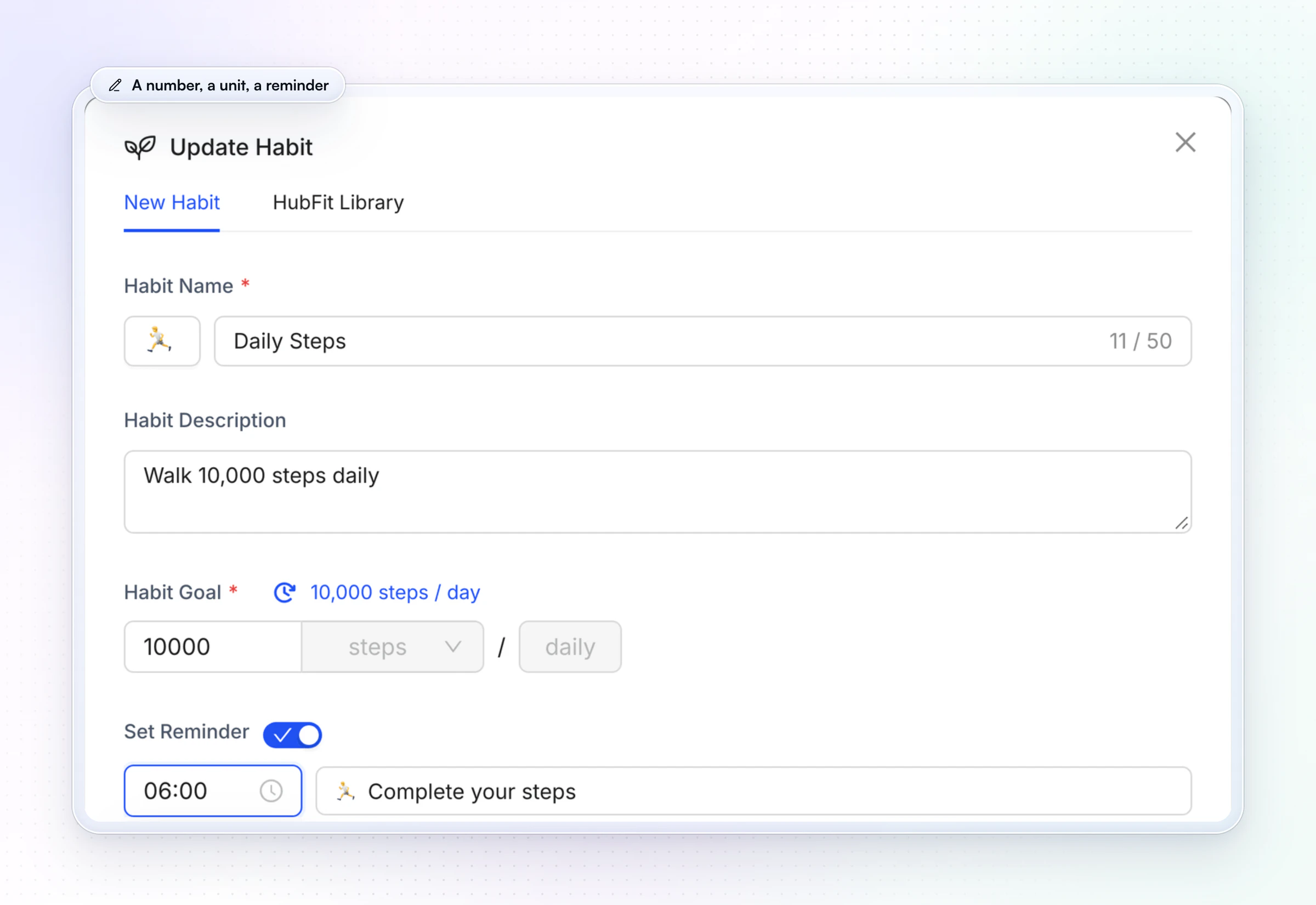
Then anchor it to something the client already does: "After my morning coffee, I stretch for two minutes." Add a backup plan for bad days: "If I miss my morning walk, I walk after dinner."
| What the client says | Habit to assign | Track it in |
|---|---|---|
| "I sit all day" | Walk 8,000 steps | Steps |
| "I'm always tired" | Lights out by 10:30 pm | Yes / no |
| "I forget to drink" | Drink 8 cups of water | Cups |
| "My eating is all over" | Protein at every meal | Yes / no |
| "I skip my sessions" | 3 workouts a week | Weekly target |
| "I'm stressed" | 10 minutes of walking or breathing | Minutes |
3. Track it every day
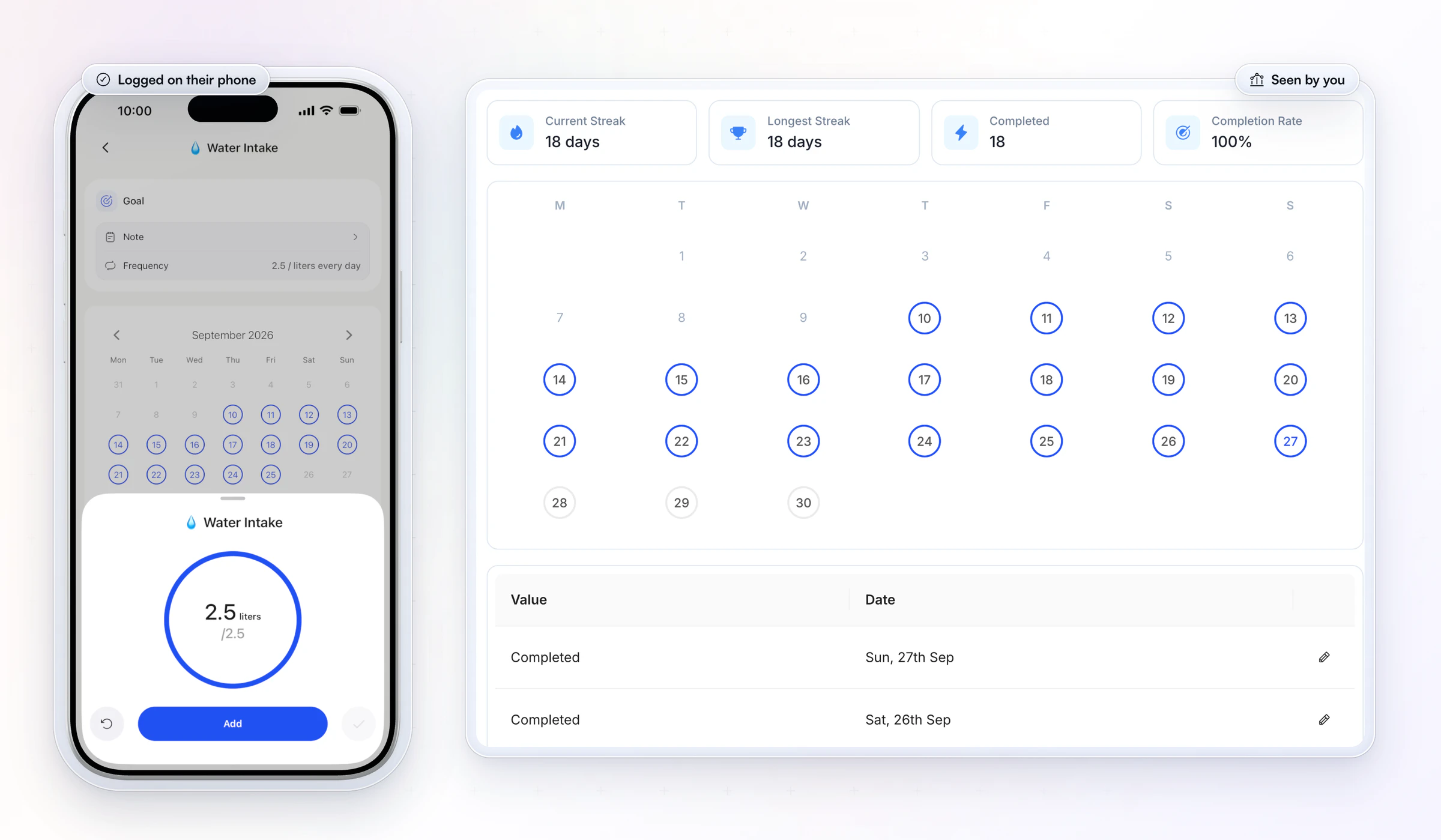
Daily tracking is what makes a habit coachable. The client checks it off on their phone, a daily reminder nudges them, and you see the streak without asking. If steps are the first habit for several clients, run them as a group step challenge for a month.
4. Review it in the weekly check-in
Once a week, look at the completion rate and ask about it. Habit data makes check-ins specific: "What got in the way on Thursday?" beats "How was your week?" (here are more client check-in questions to use). Then make one call per habit:
- Steady (most days done): keep it and praise the process, not just the outcome.
- Patchy: shrink it. Five minutes of walking beats a skipped workout.
- Stuck: swap it for a habit that fits their life better.
A weekly habit review script you can copy into your check-in:
- Your [habit] was done on [X] of 7 days. How does that feel?
- Which day was hardest, and what got in the way?
- What would make it easier next week: a different time, a smaller target or a backup plan?
- On a scale of 1 to 10, how automatic does it feel now?
- Keep, shrink or swap: which one for next week?
5. Add the next habit when the first is steady
When a habit is steady for a couple of weeks, add the next one. Schedule it ahead with a start date so it appears on its own, and coach no more than two or three habits at a time.
A 12-week habit coaching plan
Here is a 12-week plan you can copy for a general fitness client: one new habit every two weeks, each with a unit and a question for the weekly review.
| Weeks | Habit to add | Unit | What to review |
|---|---|---|---|
| 1 to 2 | Walk 7,000 steps a day | Steps | Days hit out of 7 |
| 3 to 4 | Drink 8 cups of water | Cups | Which days slip |
| 5 to 6 | Protein at every meal | Yes / no | Which meal misses |
| 7 to 8 | Lights out by 10:30 pm | Yes / no | Weekend bedtimes |
| 9 to 10 | 3 workouts a week | Weekly target | Sessions done vs planned |
| 11 to 12 | 10 minutes of breathing | Minutes | How the hard days went |
By week 5, the first habits should feel close to automatic. Leave them on if the client likes the streak, but coach actively on two or three at a time. In HubFit, you can set the whole plan up on day one: give each habit a future start date, and it shows the client as Upcoming until its week arrives. A habit from your library can carry a duration, so its end date fills itself in.
How do you help a client break a bad habit?
You help a client break a bad habit by replacing it, not by banning it: keep the cue, swap the routine and track the new action.
Health psychologists put it plainly in a guide to habit formation for clinicians (Gardner, Lally and Wardle, British Journal of General Practice, 2012): "it is not possible to form a habit for not doing something," and breaking an existing habit takes more effort than making a new one. So coach the swap:
- Name the cue. When does it happen, where, and how do they feel? The 9 pm snack usually starts on the sofa, tired, phone in hand.
- Swap the routine. Same cue, new action: tea and a 10-minute walk instead of the snack.
- Keep a reward. Something they enjoy after the new action, so the swap doesn't feel like a punishment.
- Add friction to the old habit. Snacks out of sight, the phone charging outside the bedroom, the takeout app off the home screen.
- Track the replacement as a yes/no habit. "Walk after dinner: yes or no" can be checked off; "don't snack" can't.
How does HubFit run habit coaching for you?
HubFit runs the tracking side of every step above, so your time goes on the conversations. Habits are included in every subscription, and they live in the app your clients already open for workouts, meals and check-ins. It's the #1 coaching app, rated 4.9 on the App Store and Google Play, and it's free for your clients, so a new habit never asks them to download or pay for anything else.
- Assign in seconds, reuse forever. Pick from 40+ ready-made habits across 5 categories, or save your own to your Habits Library and reuse them for every new client.
- A number, a unit, a reminder. Daily or weekly targets in 15+ units (steps, minutes, cups, kilometers, grams) or a simple yes/no, with daily push reminders in each client's own timezone.
- One tap for the client, the whole week for you. Clients log with one-tap Quick Log and see their own Weekly Progress. Your Weekly Summary tab shows every habit for a client, day by day, with streaks and completion rates worked out for you. You can view or log entries for any client.
- Habits from day one. Onboarding flows assign your starter habits, programs and check-ins the moment a client joins, and future start dates release the next habit on schedule.
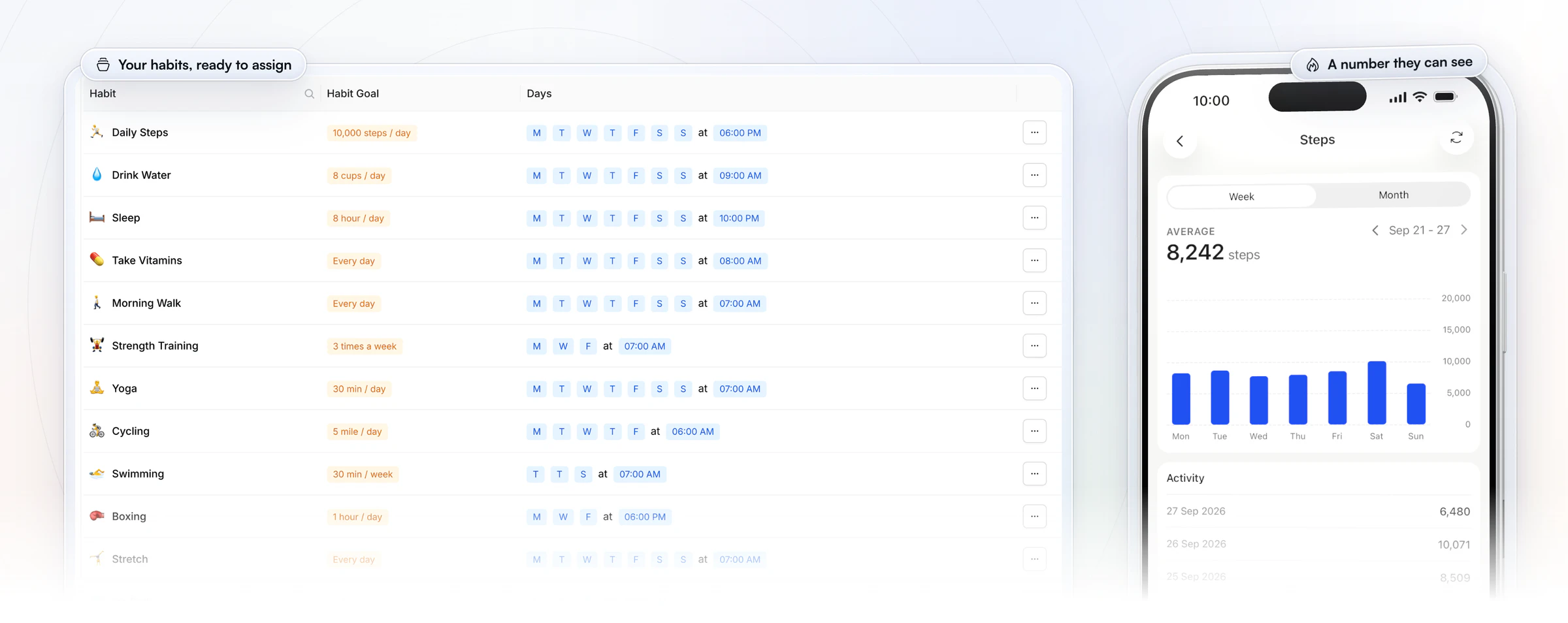
Vegard Mikalsen of VM Coaching uses HubFit's habits to give his clients sleep, water and step tracking they didn't have before, in the same app as their training, so nobody has to download anything extra.
“The habits function… is really nice to track sleep and water and steps.”

Start your free trial and assign yourself a habit to see exactly what your clients will see.
Why does habit coaching work?
Habit coaching works because repeating a small action in the same situation makes it automatic, and a coach keeps the repeats going long enough for that to happen. Every habit runs on a loop: a cue (shoes by the door), the routine (the walk) and a reward (the check mark, the streak, your comment).
Gardner, Lally and Wardle describe three phases: you choose the action and the moment it belongs to, the client repeats it in that moment until it gets easier, and then it holds with little effort. Your weekly review is what carries a client through the middle phase.
In a well-known study of how habits form, new daily habits took a median of 66 days to become automatic, with a range of 18 to 254 days. Missing a single day didn't materially set people back. That gives you two coaching rules: expect about two months, not 21 days, and treat a missed day as normal, not a failure.
Identity seals it. When a client hears "That's what someone who trains does," the habit becomes part of who they are, not a chore on a list.
How do you become a habit coach?
You become a habit coach by learning to turn goals into small, trackable behaviors and following up on them every week. For a personal trainer or online coach, it's an extension of what you already do, not a new profession.
- Learn the core skills. Motivational interviewing (asking, not telling), behavior design (small actions tied to a cue), tracking and a steady weekly follow-up.
- Stay in your scope. Coach everyday behaviors like movement, sleep, water and eating patterns. Refer anything medical, mental health or eating disorder related to a licensed professional.
- Consider a course, if it helps. Behavior change and health coaching courses can sharpen your questions and give clients a credential to see. They're optional for coaching habits inside your scope.
- Add it to your offer. Put habits into every package, or sell a 12-week habits program on its own. See how to price online coaching packages for the structure.
- Practice on yourself. Run the 12-week plan above for a month before you sell it.
7 habit coaching mistakes to avoid
Most habit coaching fails for the same few reasons, and each has a simple fix.
- Too many habits at once. Start with one or two.
- The same habits for everyone. Match each habit to the client's day.
- Vague goals. Give every habit a number and a unit.
- No follow-up. Review habits in every weekly check-in.
- Ignoring small wins. Call out a 7-day streak like a PR.
- Treating a miss as failure. Plan the comeback and shrink the habit.
- Not tracking. Without data you're guessing, and so is the client.
FAQ
Here are the questions coaches ask most about habit coaching.
What is the difference between a habit coach and a life coach?
A habit coach works on small daily behaviors, tracks them every day and reviews them every week. A life coach works on bigger goals such as career and relationships, mostly through regular calls. In fitness, a habit coach handles steps, sleep, water, protein and training consistency between sessions.
Do you need a certification to be a habit coach?
No separate license is needed to coach everyday habits inside your scope as a trainer or coach. A behavior change or health coaching course can help you coach better and reassure clients. Refer anything medical, mental health or eating disorder related to a licensed professional.
Can habit coaching work online?
Yes, and it suits online coaching well, because habits happen in the client's own day, not in a session. The client logs each habit on their phone, reminders arrive in their timezone, and you review the week in a check-in. An online habit coach needs an app that does the tracking, not more calls.
How many habits should a client work on at once?
One or two to start, and no more than three active habits at a time. Add a new habit only when the current ones are steady for a couple of weeks. Too many habits at once is a common reason clients stop logging everything.
How long does it take a client to build a habit?
About two months for a typical person, and it varies a lot from person to person. In the study above, simple daily habits took anywhere from 18 to 254 days to become automatic. Keep a habit on the plan until it feels effortless for that client, not for a fixed number of days.
Is habit coaching worth adding to personal training?
Yes. Your program covers a few hours a week, and habits cover the rest, so results depend less on willpower. Habit data gives your weekly check-ins something concrete to talk about, helps with accountability between check-ins and helps you retain online coaching clients. If you coach health and wellness clients, habits can be the core of your offer.
What is the best app for habit coaching?
Our pick is HubFit, the #1 coaching app (we make it), because habits, workouts, nutrition and check-ins live in one client app, and streaks and reminders run themselves. You can assign starter habits automatically with onboarding automation. See how it compares in our guide to habit tracking apps for coaches, or explore HubFit's coaching tools.
Give your clients one habit this week
Pick one habit for each client, give it a number and a reminder, and look at it in your next check-in. Next month, add the second.