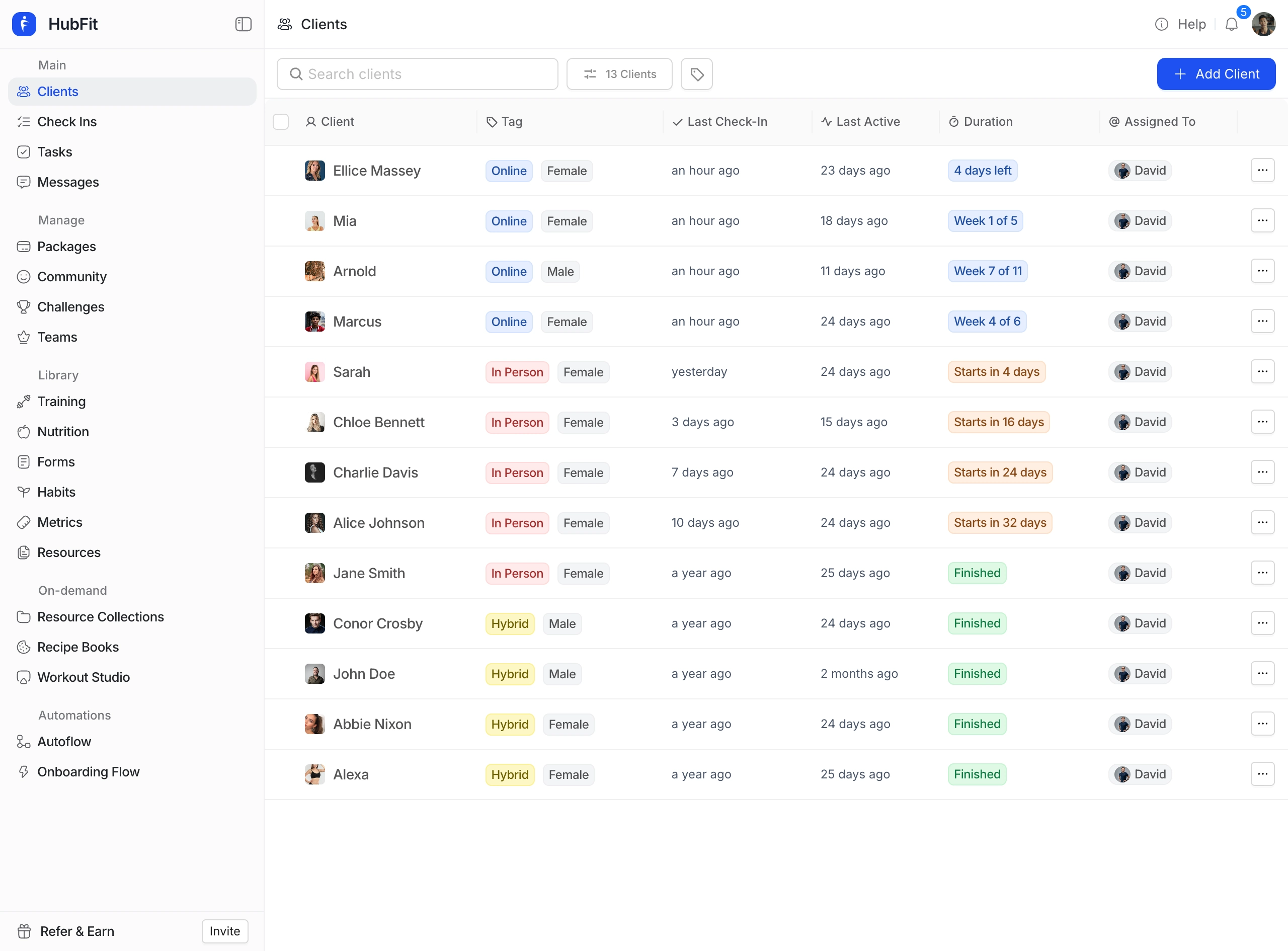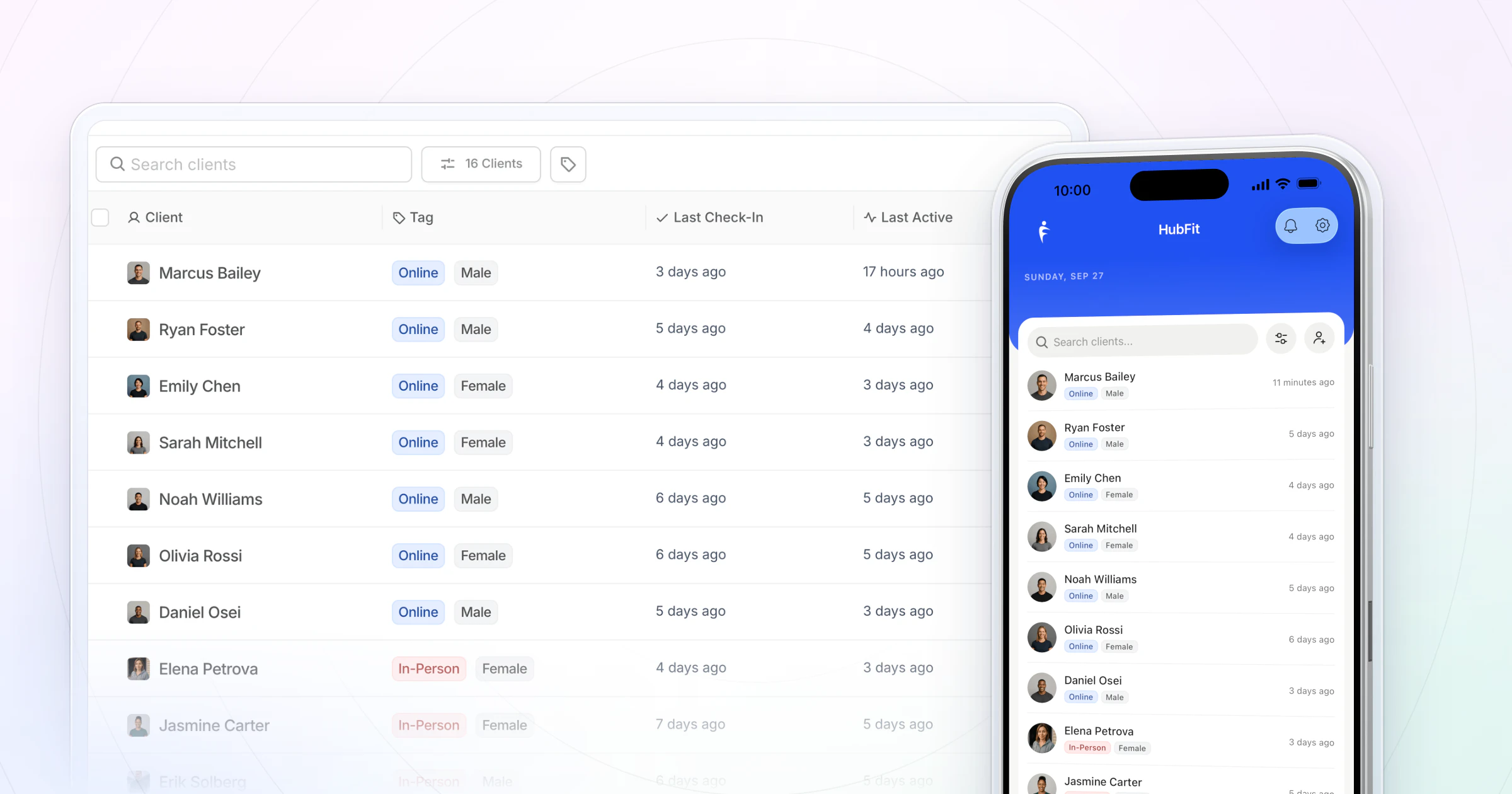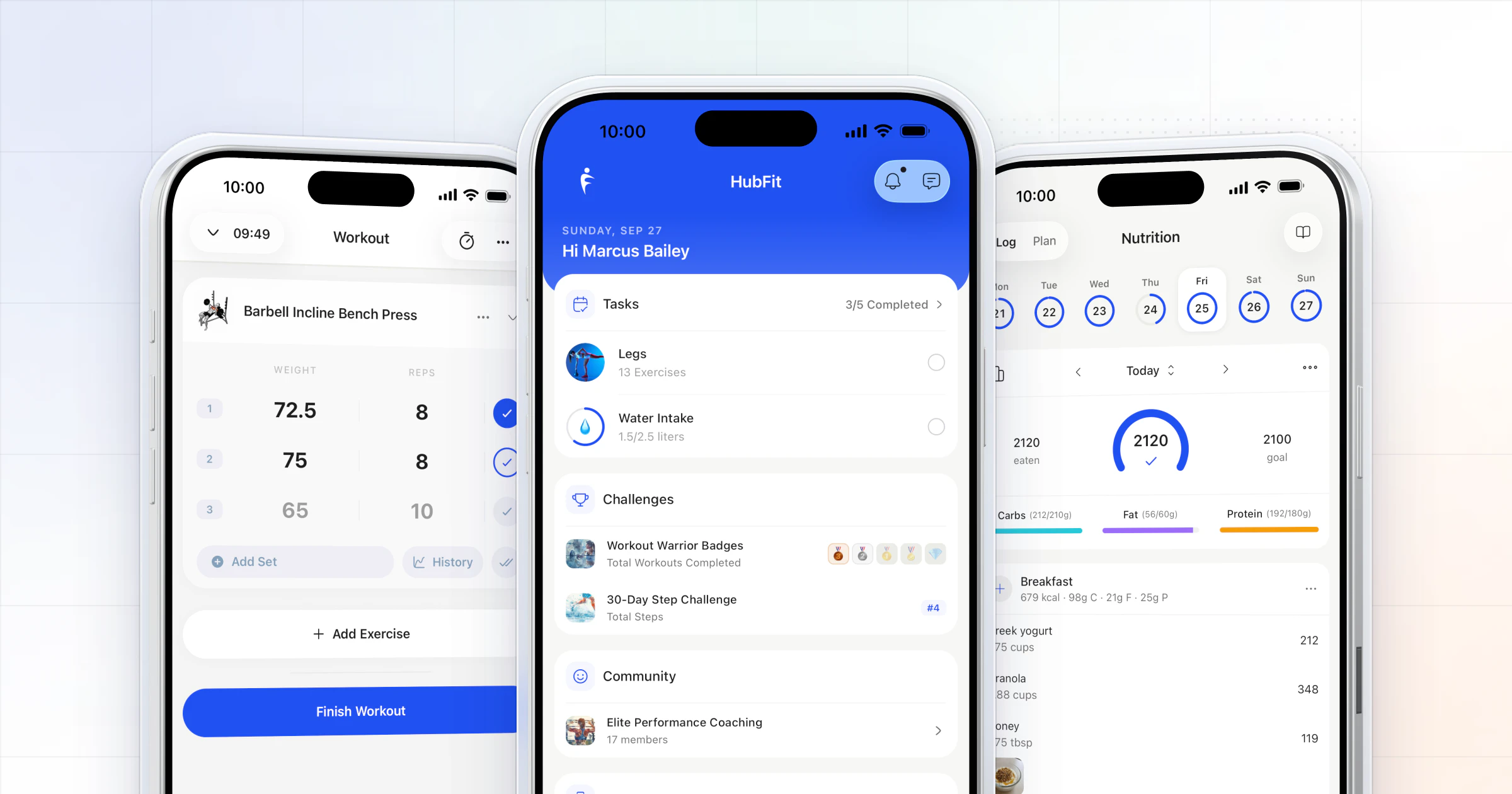
The PAR-Q (Physical Activity Readiness Questionnaire) is a short yes-or-no health screen a person fills out before becoming more active, to see whether they should get advice from a doctor or a qualified exercise professional first. The current version is the 2025 PAR-Q+. In HubFit, the #1 coaching app, an Onboarding Flow can collect every new client's result on day one.
Key takeaways
- The PAR-Q screens for health risks before more activity. It doesn't diagnose anything, and neither should you.
- Use the current PAR-Q+ from the PAR-Q+ Collaboration, not the old 2002 "PAR-Q & You" sheet.
- All NO: the client is cleared. Any YES: they complete the follow-up pages, and may be referred to a doctor.
- The official form stays unaltered and is valid for up to 12 months. Collect the result in your own questionnaire.
Get the PAR-Q+ form. Use the online PAR-Q+ or print the official 2025 PAR-Q+ PDF, both from the PAR-Q+ Collaboration. The 2025 version is the current one. A signed form is valid for up to 12 months, or until a health change would turn any answer to YES.
What is the PAR-Q?
The PAR-Q is a self-screening questionnaire that tells a person whether they can become more active now or should check with a professional first. PAR-Q stands for Physical Activity Readiness Questionnaire; the current version, the PAR-Q+, is the Physical Activity Readiness Questionnaire for Everyone.
The purpose of the PAR-Q is to find the small group of people who need advice before they exercise more, without putting a barrier in front of everyone else. The PAR-Q+ Collaboration says it decides whether someone needs further advice "before becoming more physically active OR engaging in a fitness appraisal." That second part matters to coaches: a fitness test counts too.
It is not a medical history, a diagnosis or a liability waiver. It is a first filter. For most people the answer is "go ahead," and page 1 is just seven yes-or-no questions.
What questions are on the PAR-Q+?
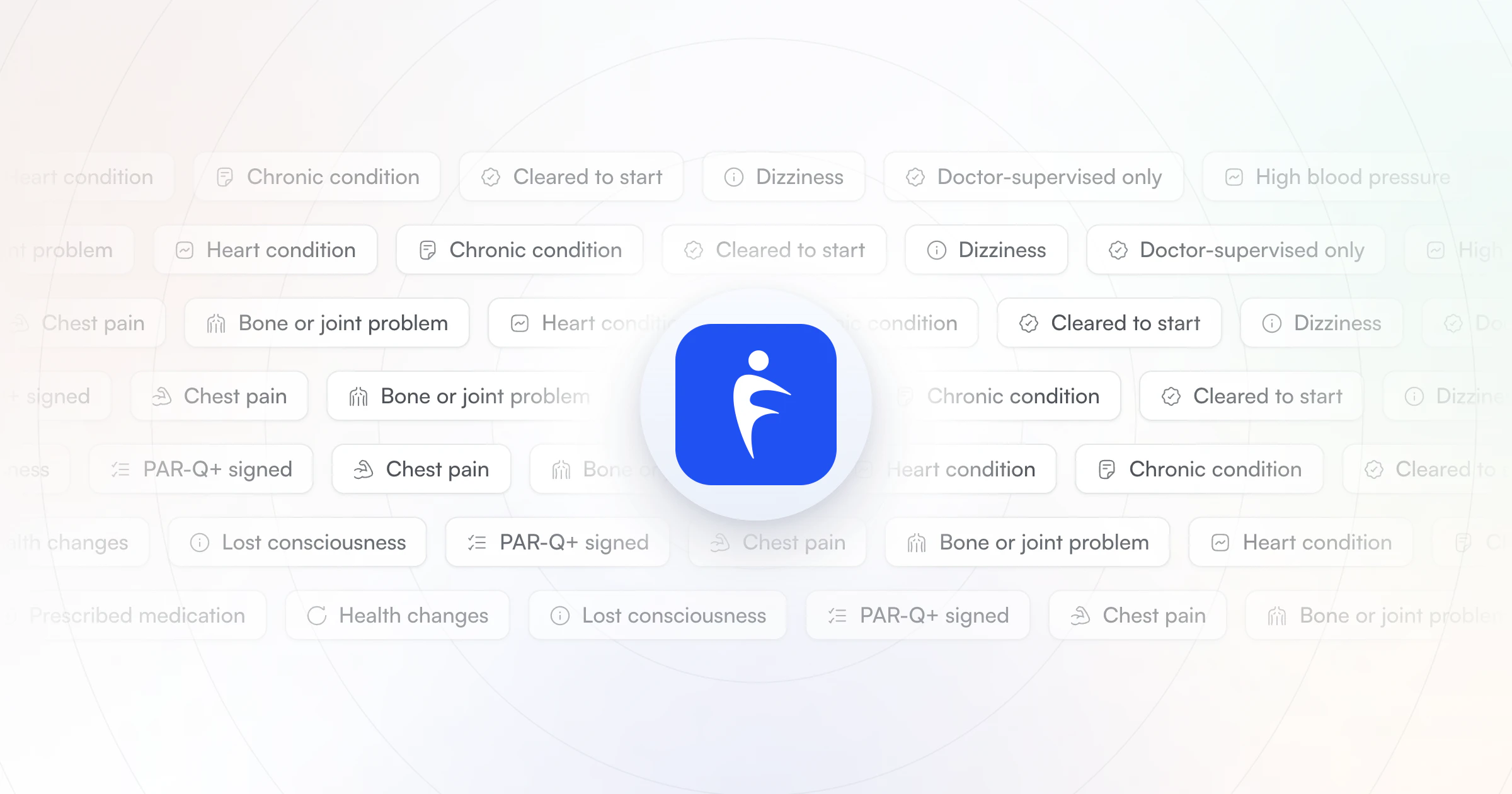
Page 1 of the 2025 PAR-Q+ has seven general health questions, each answered YES or NO. In plain words, they ask whether the person:
- Has been told by a doctor they have a heart condition or high blood pressure.
- Feels chest pain at rest, during daily activities, or when they're physically active.
- Loses balance because of dizziness, or has lost consciousness in the last 12 months.
- Has been diagnosed with another chronic medical condition.
- Takes prescribed medication for a chronic medical condition.
- Has, or has had in the last 12 months, a bone, joint or soft-tissue (muscle, ligament or tendon) problem that more activity could make worse.
- Has been told by a doctor to do only medically supervised physical activity.
That is a summary, not the form. Give clients the official 2025 PAR-Q+ PDF or the online version, because the exact wording, the follow-up pages and the declaration all count.
What happens when a client answers YES?
A YES doesn't mean no training. It means the client answers the follow-up questions on pages 2 and 3, which then say whether they can go ahead or should get advice first.
The follow-up pages are grouped by condition: arthritis, osteoporosis or back problems; cancer; heart or cardiovascular conditions; high blood pressure; metabolic conditions; mental health or learning difficulties; respiratory disease; spinal cord injury; stroke; and other or multiple conditions. If the follow-ups still flag a risk, the next step is the ePARmed-X+, an online tool with more detailed medical questions, or a doctor's advice.
Here is what each result means for you as the coach:
| PAR-Q+ result | What it means | What you do |
|---|---|---|
| NO to all seven | Cleared to become more active | Start gradually; keep the form on file |
| YES to one or more | Client completes pages 2 and 3 | Wait before programming anything new |
| Cleared after pages 2 and 3 | Go ahead, with the form's guidance | Program within that guidance |
| Referred on | Advice needed first | Pause the start until they have it |
| Temporary illness | Delay becoming more active | Move the start date back |
| Pregnant | Advice needed first | Wait for it, then plan around it |
| Health changes later | The signed form may no longer apply | Ask them to complete it again |
A referral sends the client to a doctor or a qualified exercise professional, or to the ePARmed-X+. For a pregnant client, the form points to a health care practitioner or a qualified exercise professional, or the ePARmed-X+, before more activity; our guide to coaching pregnant clients covers the nutrition side once they are cleared. Note any condition the client shares in their profile, with their consent.
One line in the PAR-Q+ FAQ is worth reading twice: "A personal trainer may not necessarily be considered a qualified exercise professional" in the referrals the forms give. That depends on your education and certification. If a client is referred on and you aren't that professional, the referral goes to someone who is. Your part is collecting the screen and acting on it.
PAR-Q vs PAR-Q+: which version should you use?
Use the PAR-Q+, the current form. The original PAR-Q is the older seven-question screen; the PAR-Q+ that succeeded it adds broader questions and follow-up pages, and a revised version is released each year.
The original PAR-Q was developed to standardize activity screening for people aged 15 to 69 (Chisholm et al., 1975, summarized by the APTA). Its 2002 revision, "PAR-Q & You", is still posted online. Its questions were mostly about the heart: a heart condition, chest pain, dizziness, a bone or joint problem, blood pressure or heart medication, and "any other reason" not to be active (Verywell Fit lists them).
The PAR-Q+ and the ePARmed-X+ were introduced in May 2010 at the International Society for Physical Activity and Health congress in Toronto (PAR-Q+ Collaboration). The main differences:
| Original PAR-Q (2002) | PAR-Q+ (2025) | |
|---|---|---|
| Who it's for | Ages 15 to 69 | Everyone, of any age |
| Questions | Seven, mostly about the heart | Seven broader ones |
| After a YES | See a doctor first | Follow-up pages, then ePARmed-X+ |
| Updates | Revised 2002, replaced 2010 | A revised version each year |
| Format | A paper form | Online form or printable PDF |
The PAR-Q+'s broader questions cover any chronic condition, prescribed medication for one, and soft-tissue problems. The difference matters in practice. Under the old form, any YES meant a conversation with a doctor first. With the PAR-Q+, the Collaboration says the majority of people are cleared by the PAR-Q+ alone and never need the ePARmed-X+, which removes a barrier for a client who is ready to start.
How does the PAR-Q compare with other screening forms?
The PAR-Q+ is one of several forms a coach might use before training, and each answers a different question. Here is how they fit together:
| Tool | What it is | Who fills it in | Use it for |
|---|---|---|---|
| Original PAR-Q | The older seven-question screen | The client | Nothing new; use the PAR-Q+ |
| PAR-Q+ | The current screen, with follow-ups | The client | Every new client |
| ePARmed-X+ | Detailed online follow-up | The client, when sent there | Clients the follow-ups flag |
| ACSM screening | A professional's decision model | The exercise professional | Whether clearance is needed |
| Health history form | Medical history and lifestyle | The client | Detail to program from |
| Client intake form | Goals, schedule, screen, consent | The client | The first program |
ACSM's model is worth knowing if you hold an ACSM certification. Its 2015 update screens on three things: the client's current physical activity, any signs or symptoms or known cardiovascular, metabolic or renal disease, and the intensity they want to train at. It also no longer includes risk-factor profiling; the authors note that the earlier guidelines could lead to excessive physician referrals (Riebe et al., 2015).
A health history questionnaire is a longer form that collects a client's medical history, medications, past injuries and surgeries, and lifestyle. Many coaches use the PAR-Q+ as the screen and a health history questionnaire, or the health section of a client intake form, for the detail they program from.
What PAR-Q+ rules do trainers often miss?
Most mistakes with the PAR-Q+ come from treating it like any other form you can edit, reuse or keep forever. These are the rules the PAR-Q+ Collaboration sets:
- Keep it unaltered. The forms "must remain unaltered and may not be incorporated into electronic surveys, research tools, or any derivative materials without the express written consent of the PAR-Q+ Collaboration" (print versions page). Retyping it into Google Forms or a coaching app counts as that.
- It expires. A signed PAR-Q+ is valid for a maximum of 12 months from the date it's completed.
- A health change voids it. If the client's condition changes so they would answer YES to any question, the form no longer applies.
- Minors need a second signature. Under the legal age of consent, a parent, guardian or care provider signs too.
- You can witness it. The PAR-Q+ FAQ lists qualified exercise or fitness professionals, including personal trainers, among the people who can witness the declaration.
- Tell clients how you store it. If you keep completed forms, the Collaboration says to include a collection notice and privacy statement: why you collect the information, what you collect, how it's used and shared, and how you keep it safe, with access limited to the people who need it.
Your gym, insurer or certifying body may have its own rules on top. Check them, and follow the stricter one.
What are the limitations of the PAR-Q?
The PAR-Q only knows what the client tells it. It relies on self-report, so it can't catch a condition the client doesn't know about or chooses not to mention.
It also isn't built for every situation. If a condition isn't listed, the form gives a general recommendation to see a doctor or a qualified exercise professional, which the FAQ says does not necessarily mean the person is at higher risk. And it says nothing about goals, schedule, training history or preferences, which is why coaches pair it with an intake form.
Treat the PAR-Q+ as a floor. A good coach still asks how a client feels, watches how they move and adjusts as they go.
The PAR-Q outcome questionnaire (copy it)
The outcome questionnaire is a short form of your own that records what the official PAR-Q+ said, without retyping the PAR-Q+ itself. Copy these five questions into Google Forms, Typeform or your coaching app.
| Question | Answer type |
|---|---|
| Any YES on page 1 of the PAR-Q+? | Yes/No |
| Did it advise you to get advice first? | Yes/No |
| Date you completed the PAR-Q+ | Date |
| Photo of your signed declaration page | Media |
| Your signature | Signature |
Put one line above the questions: "Please complete the official PAR-Q+ first (link), then answer these five questions." A YES to the second question pauses new programming until the referral is done; a YES to the first means checking that pages 2 and 3 were completed.
How does HubFit run the PAR-Q for you?
HubFit runs the screen around the official form: the client completes the PAR-Q+ from your link, answers your outcome questionnaire in their app, and an Onboarding Flow sends it on day one. Here is how each step works.
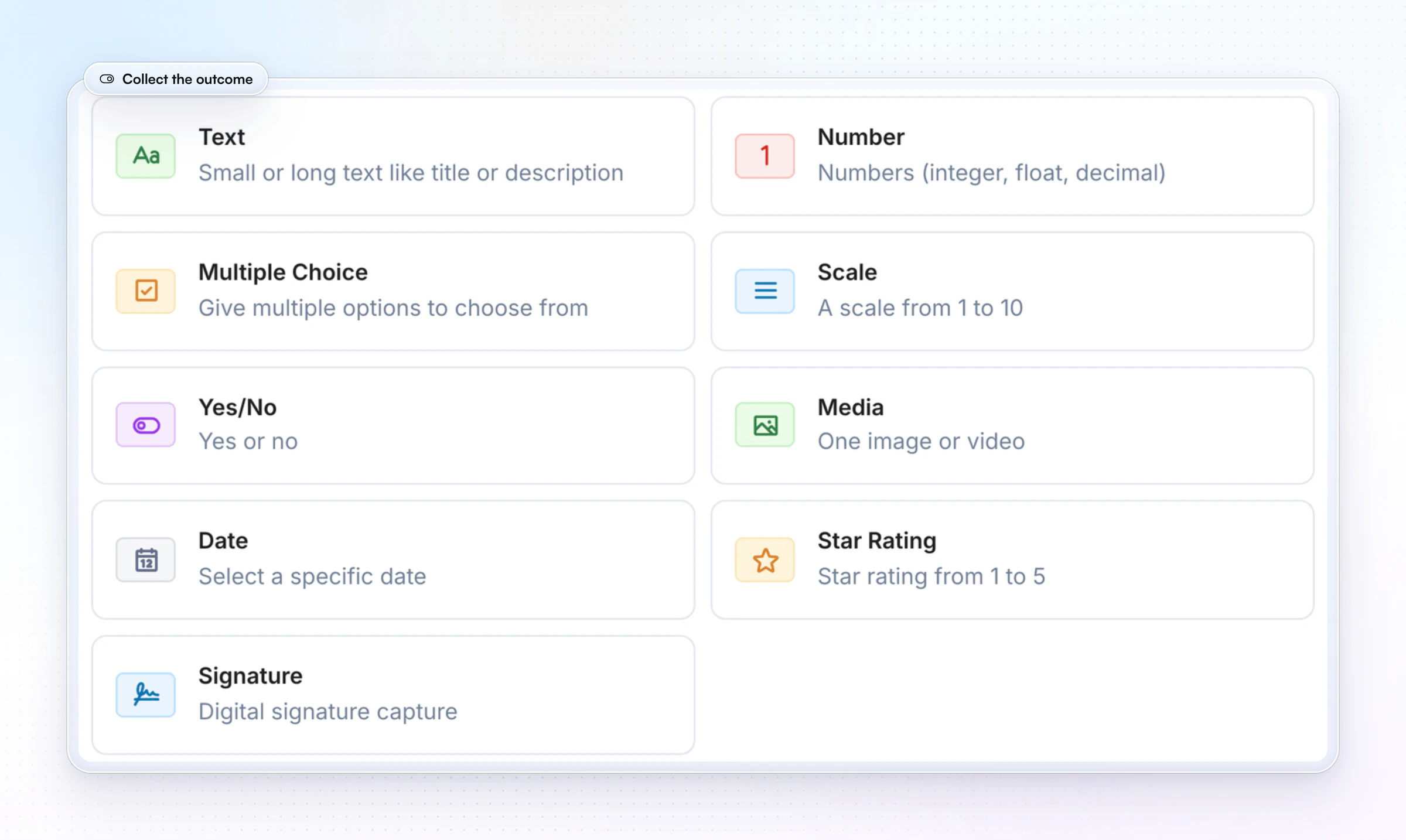
1. The outcome questionnaire is one Questionnaire. HubFit has two form types: a Questionnaire, a one-off form stored in your library, and a Check-In, which recurs on a schedule.The builder has every answer type the table above needs: Yes/No, Date, Media for an image or video, and Signature for a digital signature.
2. An Onboarding Flow sends it on day one. An Onboarding Flow runs when you add a client, or, on Premium and above, when a client buys one of your packages, and assigns their programs, nutrition plans, habits, check-ins and questionnaires.Pick your outcome questionnaire in the flow's Questionnaires field, and every client who joins through it gets the screen with their first program.
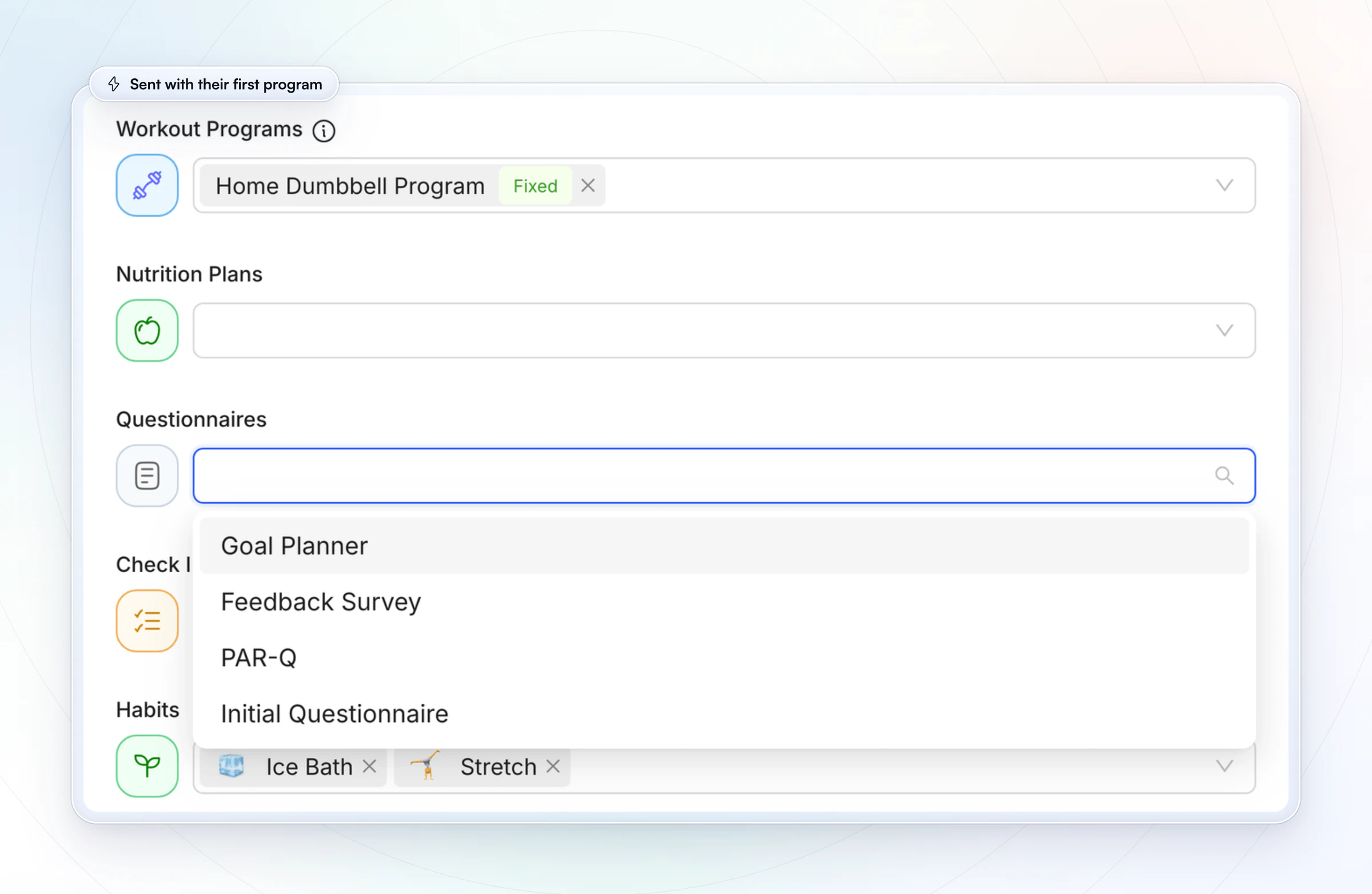
Questionnaires and Onboarding Flows are on every HubFit plan.HubFit's questionnaire templates include one named PAR-Q, an editable readiness questionnaire. It is not the official PAR-Q+, so turn it into the outcome questions above and keep linking the official form.
3. The re-screen goes in your check-ins. Add one question to your weekly check-in: "Has anything changed in your health since last week?" A YES is your cue to ask for a new PAR-Q+. Our check-in questions and weekly check-in form template have the rest of the set.
To see how screening fits the rest of a client's first week, read our guide to client onboarding. You can set all of this up on a 14-day free trial.
FAQ
These are the questions coaches and clients ask most about the PAR-Q.
What does PAR-Q stand for?
PAR-Q stands for Physical Activity Readiness Questionnaire. The current version is the PAR-Q+, short for the Physical Activity Readiness Questionnaire for Everyone. It is published by the PAR-Q+ Collaboration on eparmedx.com and revised each year. If someone asks for a "PAR-Q form" today, the one to use is the 2025 PAR-Q+.
What is the purpose of the PAR-Q?
The purpose of the PAR-Q is to find out whether a person should get advice from a doctor or a qualified exercise professional before becoming more physically active or taking a fitness test. Most people are cleared by the PAR-Q+ and never need the ePARmed-X+. The form exists to catch the few who need advice, without stopping everyone else.
Is the PAR-Q free to use?
The PAR-Q+ Collaboration posts the official PAR-Q+ on eparmedx.com for anyone to complete online or download and print. The condition is that you use it as published: the forms must remain unaltered and may not be built into electronic surveys or other materials without the Collaboration's written consent.
Can I change the PAR-Q questions?
No. The PAR-Q+ has to stay unaltered, so you can't reword, remove or add questions. Ask anything else you need in a separate form, such as a client intake form or a health history questionnaire, and keep the official PAR-Q+ as the screen.
Can I complete a PAR-Q form online?
Yes. The PAR-Q+ Collaboration has an official online PAR-Q+ on eparmedx.com. At the end, you print the clearance recommendation and sign it, or sign it electronically. Coaches should link that official version rather than building their own copy.
How long is a PAR-Q valid for?
A signed PAR-Q+ is valid for a maximum of 12 months from the date it is completed. It stops applying sooner if the person's health changes so that they would answer YES to any of the seven questions. Ask clients to complete it again every year, and whenever a check-in shows a health change.
Do online coaches and personal trainers need a PAR-Q?
Yes, as good practice. The PAR-Q+ applies before someone becomes more active or does a fitness appraisal, and that is true whether you train them in person or send a program to their phone. Your gym, insurer or certifying body may also require it, so check their rules and follow the stricter one.
What if a client won't complete the PAR-Q?
Don't start their program until they do. Explain that the screen protects them as much as you, that it takes a few minutes, and that most people are cleared by page 1. If they still refuse, you can decline to train them; a client who skips the screen is a risk you don't need to take.
Make the screen the first thing every new client does: link the official PAR-Q+, add your outcome questionnaire to an Onboarding Flow, and read the result before the first session.