Personal trainer insurance is liability cover that helps pay your legal defense and covered damages if a client says your training hurt them. Most trainers need general and professional liability, commonly at $1 million per occurrence. A year of $1 million cover is listed from $172 for ACE Certified pros (about $14 a month), and your own quote may be higher.
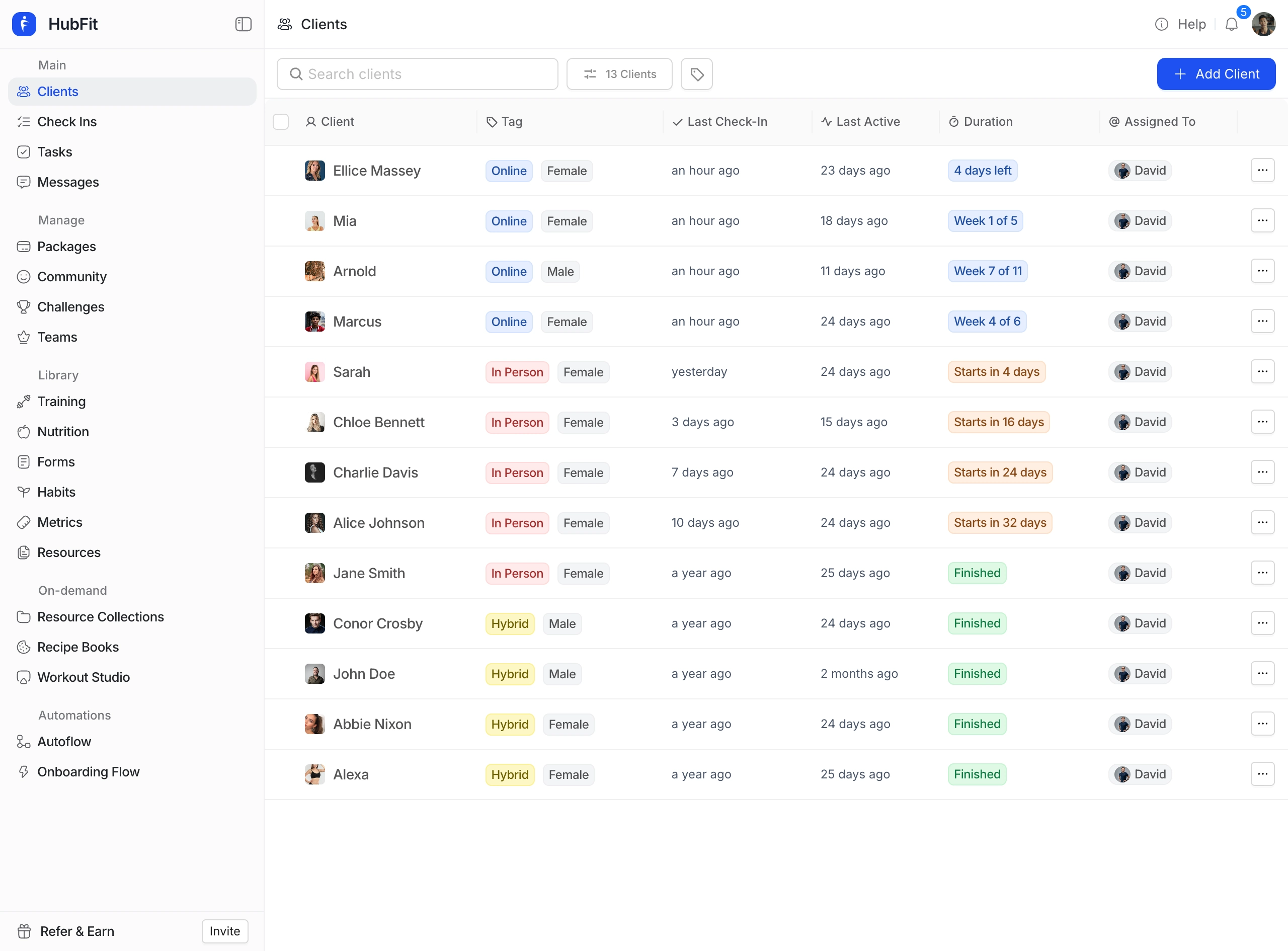
Buy it before your first paid session, then keep a signed health screen and a session log for every client: HubFit keeps both on each client's profile.
Key takeaways
- Buy two covers: general liability (a client trips on your kettlebell) and professional liability (a client says your program injured them). Programs such as K&K's, ACE's and Insure Fitness Group's bundle both.
- Your gym's policy is the gym's. It is written to protect the facility and may not name you, so contractors, independents and online coaches need their own.
- New and working at a gym? Start with the program tied to your certification (NASM's partner, ACE's or ISSA's) or K&K's (from $172 a year, prices below), at $1 million per occurrence. Ask the gym for its minimum limits and add it as an additional insured.
- Insurance pays a claim; records help you defend one. Keep a health screen, a signed agreement and a log of every session on file for each client.
General information, not legal or insurance advice: your state's rules and your policy wording decide what's covered.
What is personal trainer insurance?
Personal trainer insurance is a business policy that covers claims arising from your training work. It usually combines two parts, general liability (GL) and professional liability (PL). General liability covers bodily injury and property damage to other people, such as a client who slips on a mat. Professional liability covers claims that your instruction, programming or advice was negligent and caused harm.
Claims come in both forms. K&K Insurance names "negligent instruction, improper spotting, or failure to modify an exercise" as allegations a waiver can't prevent. Those are professional claims, and a general liability policy alone may not answer them.
Liability policies also help pay your legal defense. On GEICO's fitness insurance page, defense costs sit outside the policy limits, so a $1 million limit stays available for damages. Ask whether your policy works the same way.
Do personal trainers need insurance?
Most personal trainers need insurance in practice, because gyms ask for proof of it and a claim without it is paid from your own pocket. ERGO NEXT says most gyms and studios require a certificate of insurance first, and ACE says many clubs won't let independent contractors on site without one.
Per the SBA, federally required insurance starts once you have employees: workers' comp, unemployment and disability, with more in some states. Solo, the ask comes from gyms, landlords and corporate wellness clients, as K&K notes.
Waivers aren't a shield either. Clients can still file a claim after signing one, and a court may find a waiver unclear or unenforceable under local law.
What insurance do I need as a personal trainer?
Every trainer needs general and professional liability; the rest depends on your setup. Use this table to see which of the other covers apply to you.
| Coverage | What it pays for | Who needs it |
|---|---|---|
| General liability | Injury or damage to others | Every trainer |
| Professional liability | Claims your training caused harm | Every trainer |
| Workers' compensation | Your employees' work injuries | Anyone with staff |
| Commercial property | Your gear and training space | Own equipment or a studio |
| Product liability | Harm from a product you sell | Selling supplements or gear |
| Abuse and molestation | Defense against misconduct claims | Anyone training one-on-one |
| Cyber liability | Costs of a data breach | Online coaches holding data |
| Commercial auto | Accidents while driving for work | Driving to client sessions |
| Business owner's policy | GL and property in one package | Most small businesses |
Start with general and professional liability. Add property cover if you own gear you'd need to replace, cyber cover if you hold client data online, and workers' compensation when you hire.
Which coverage fits how you train?
The right policy follows where and how you coach, because insurers price and limit cover by setting. Find your row, then check the last column before you sign.
| How you train | What to buy | What to check |
|---|---|---|
| Employed by a gym | Ask first; your own for side work | Whether the gym's policy names you |
| Contractor at a gym | GL + PL, gym as additional insured | The gym's minimum limits |
| Renting studio space | GL + PL, plus property for gear | Damage to premises rented to you |
| In homes, parks or outdoors | GL + PL that follows you | Cover wherever you train |
| Group classes | GL + PL for group instruction | Your class formats are listed |
| Online coaching | PL that covers online, plus cyber | Private clients vs public videos |
- Contractors. An additional insured is a person or business added to your policy at your request, such as the gym, which then gets defense under your policy. ERGO NEXT and K&K both issue certificates at no extra charge.
- Homes and outdoors. ACE's program says it "protects you wherever you train," even outdoors, and warns that policies without general and premises liability can leave you uncovered in clients' homes.
- Group classes. ERGO NEXT's price depends on whether you run group sessions, so declare your classes. K&K's eligible list includes bootcamp, Spinning, Zumba and Pilates.
- Occasional sessions. Some insurers sell cover by the hour, day or year; NerdWallet names Thimble as one.
- Online. K&K's brochure covers incidental virtual training, only for your own clients on a private platform, such as a password-protected site, and not material the public can see.
If you're building an online side of your business, our guide to start an online coaching business covers the setup around it.
How much does personal trainer insurance cost?
General liability alone starts at about $12.50 a month (ERGO NEXT's Texas minimum), and a year of $1 million general and professional cover is listed at $172 to $250. Every price below comes from the insurer's or program's page, with the limits it buys.
| Insurer or program | Published starting price | Limits it buys |
|---|---|---|
| ERGO NEXT (NASM's partner) | From $12.50 a month | $500K to $2M per occurrence |
| GEICO, with Berxi | From $169 a year | Limits vary, up to $2M per claim |
| ACE program (ACE Certified) | $172 a year | $1M / $3M |
| Insure Fitness Group | $189 a year | $1M / $3M |
| K&K, certified instructor | $199 a year | $1M / $5M aggregate |
| K&K, not certified | $250 a year | $1M / $5M aggregate |
| ISSA grads, year 1 (PL only) | $60 | Limits not published |
- K&K's prices include its $20 purchasing group fee.
- ERGO NEXT says most of its customers pay about $15 a month for general liability.
- ISSA's $60 is professional liability only, through API Fitness.
- ACE's rates are higher in New York.
Sources: NASM, ERGO NEXT's cost page, GEICO, ACE, Insure Fitness Group, K&K's 2026 brochure and ISSA.
Those are starting prices for individual programs. Your quote can be higher: NerdWallet cites broker data from Coverdash with median annual costs of $600 for general liability and $900 for professional liability. Get one quote from a trainer program and one from a business insurer, and compare the limits as well as the price.
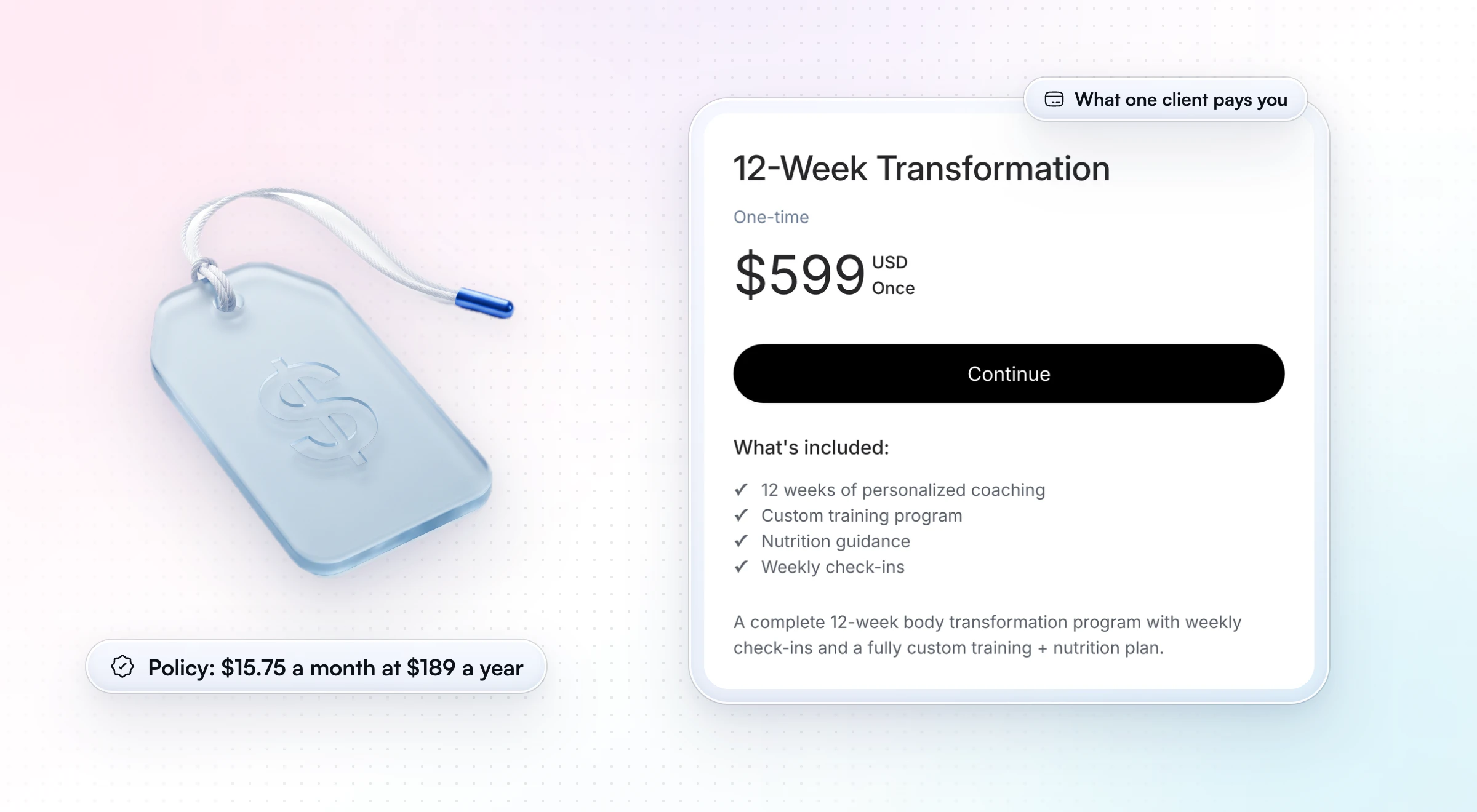
Our own example: at $189 a year, a policy costs $15.75 a month. If you charge $60 a session (an example price), it costs a little over three sessions a year. If you're still working out what you earn per session, our personal trainer salary guide does that math by pay model.
What moves your price, per ERGO NEXT:
- where you train (a gym, clients' homes, outdoors or online)
- one-on-one sessions or group classes
- whether you employ other trainers or staff
- your annual revenue
- the limits and deductible you choose
- your claims history
Being certified can lower it too: in K&K's two rows above, certification saves $51 for the same limits, and NASM lists a 6% discount on its partner's policies, 10% for NASM One members, where available.
What do the limits on a policy mean?
A limit is the most the policy pays. Trainer policies quote two numbers, written like "$1M / $3M". The first is the per-occurrence (or per-claim) limit, the most paid for any one claim. The second is the aggregate, the most paid for all claims in one policy period, which K&K defines as "the maximum amount to be paid out in any policy period."
$1 million per occurrence with $3 million aggregate is a common choice. ISSA calls limits "commonly around $1 million per occurrence and $3 million aggregate," and ACE, Insure Fitness Group and HPSO all offer that level. Ask any gym, landlord or client what limits they require before you buy.
Two more terms decide whether an old claim is covered:
- Occurrence vs claims-made. An occurrence policy covers incidents that happened while it was active, whenever the claim arrives. A claims-made policy covers claims made while it is active. Berxi says most professional liability policies are claims-made. Insure Fitness Group lists occurrence form as a perk.
- Tail coverage. Also called an extended reporting period, tail coverage lets you report a claim after a claims-made policy ends. Ask about it if you switch insurers or stop training.
What can personal trainer policies leave out?
Exclusions are the claims a policy won't pay, and a few matter to trainers. K&K's 2026 fitness instructor program is a useful example, because its brochure prints them. It excludes:
- Abuse, molestation or exploitation claims, with only a defense reimbursement of up to $100,000. HPSO's policy includes up to $25,000 for these claims, as a sublimit.
- Cyber incidents and personal data. If client payment or personal data you collect online is compromised, the brochure says the general liability policy won't cover it.
- The sale or distribution of herbal medicinal and/or nutritional products, which matters if you sell supplements.
- Physicals and stress testing, and medical, therapy or health care services.
Other policies differ, so read the exclusions page of any quote. The brochure itself says it is "for illustrative purposes only and is not a contract of insurance," so the policy wording is what counts.
How do you choose personal trainer insurance? A checklist
Choose the policy that covers how you actually train, then compare price. Run every quote through this checklist:
- General and professional liability, in one policy or two.
- Limits of at least $1M per occurrence, or your gym's minimum if it's higher.
- Occurrence or claims-made, and the cost of tail coverage on a claims-made policy.
- Every place you train is covered: gym, client homes, outdoors and online.
- Every format you teach is listed: one-on-one, group, bootcamp, yoga.
- The exclusions page, checked for abuse, cyber, supplements and public videos.
- Free certificates and additional insureds for every gym you work at.
- Your certification discount, asked for by name.
- Defense costs inside or outside the limits.
Then buy before your first paid session, not after it.
What do you need to get a quote?
An online quote takes about 10 minutes at ERGO NEXT, which asks what you do, where you're based, how many people you employ and the vehicles you use for work. Have these ready:
- your business location
- your annual revenue
- your certification, for programs that price it in
- where and how you train: gym, homes, outdoors, online, one-on-one or groups
- any gym that needs to be named as an additional insured
How do you lower your risk as a personal trainer?
Insurance pays for a claim. Screening lowers the risk, and records help you defend a claim. K&K asks the trainers it covers online to take "reasonable precautions" with new clients, "including but not limited to: health assessments, waivers/release forms, and interviews prior to instruction or training." Those habits are worth keeping for every client.
- Screen every client before the first session. Have them complete the official PAR-Q+, used as published, and act on any YES before you train them.
- Take a full intake. Injuries, medications, past surgeries and goals belong in a client intake form you keep on file.
- Have a lawyer write your waiver or agreement. For online clients, K&K encourages trainers to consult an attorney about waivers written for virtual training. A template from the internet may not hold up in your state.
- Stay in scope. Coach exercise; refer medical questions and conditions to a doctor or a qualified professional, and write down that you did.
- Log every session. What you programmed, what the client did and how it felt. A dated record beats memory if a claim arrives a year later.
- Re-screen when health changes. A new injury, a pregnancy or new medication is a reason to screen again.
- Keep client records secure. Health details are personal data, and some liability policies exclude cyber incidents.
The same habits make onboarding smoother. Our guide to onboard online coaching clients shows how to fit screening into the first week without slowing anyone down.
How HubFit keeps your screening and records in one place
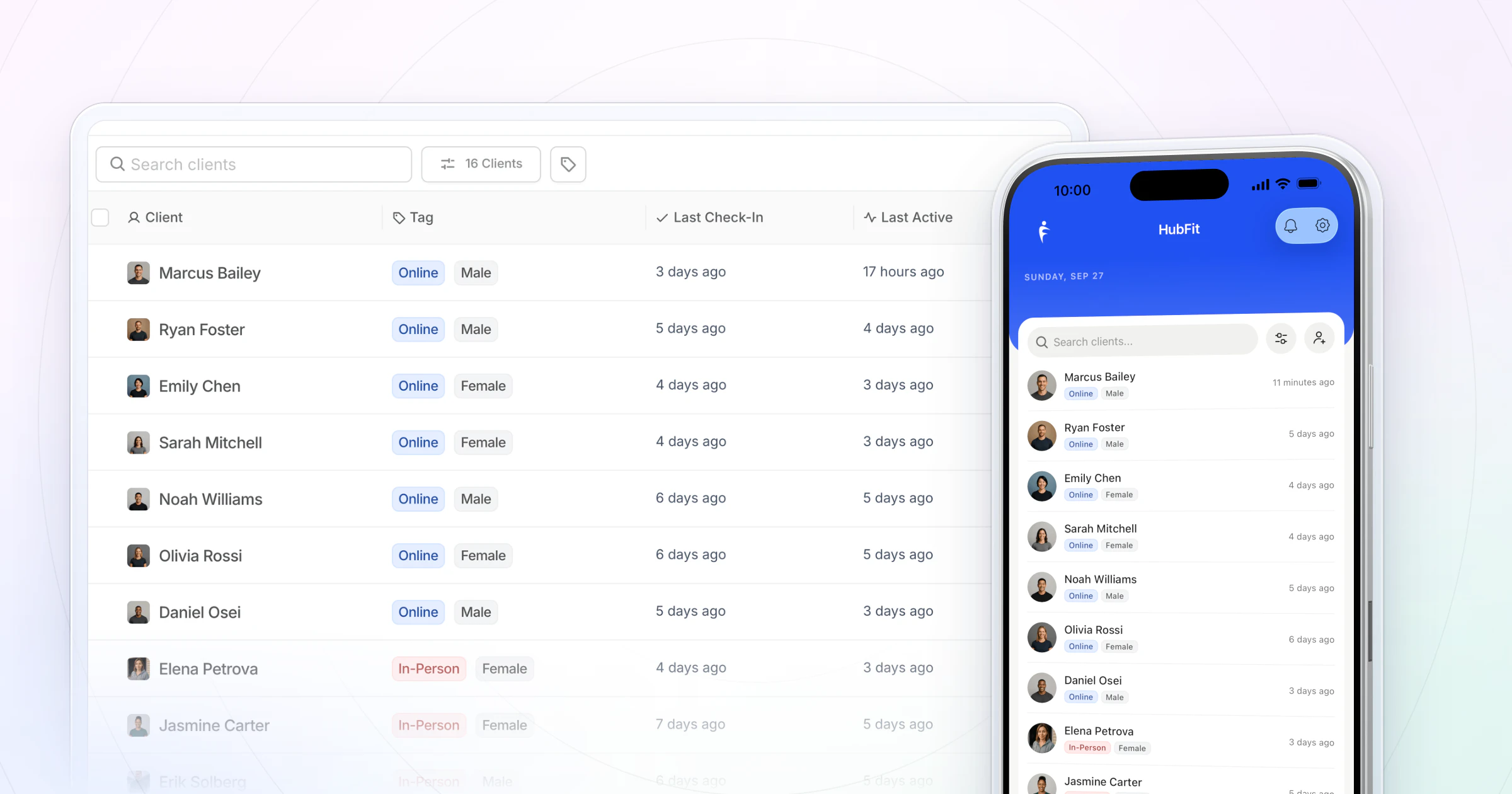
HubFit puts the health screen, the signed agreement and the session log on each client's profile, so those records live in one place instead of across email and paper.
1. Start from the intake and PAR-Q templates. HubFit's questionnaire templates include an Initial Questionnaire for intake and a PAR-Q form "to assess the user's physical activity readiness." Pick one and edit it to fit.
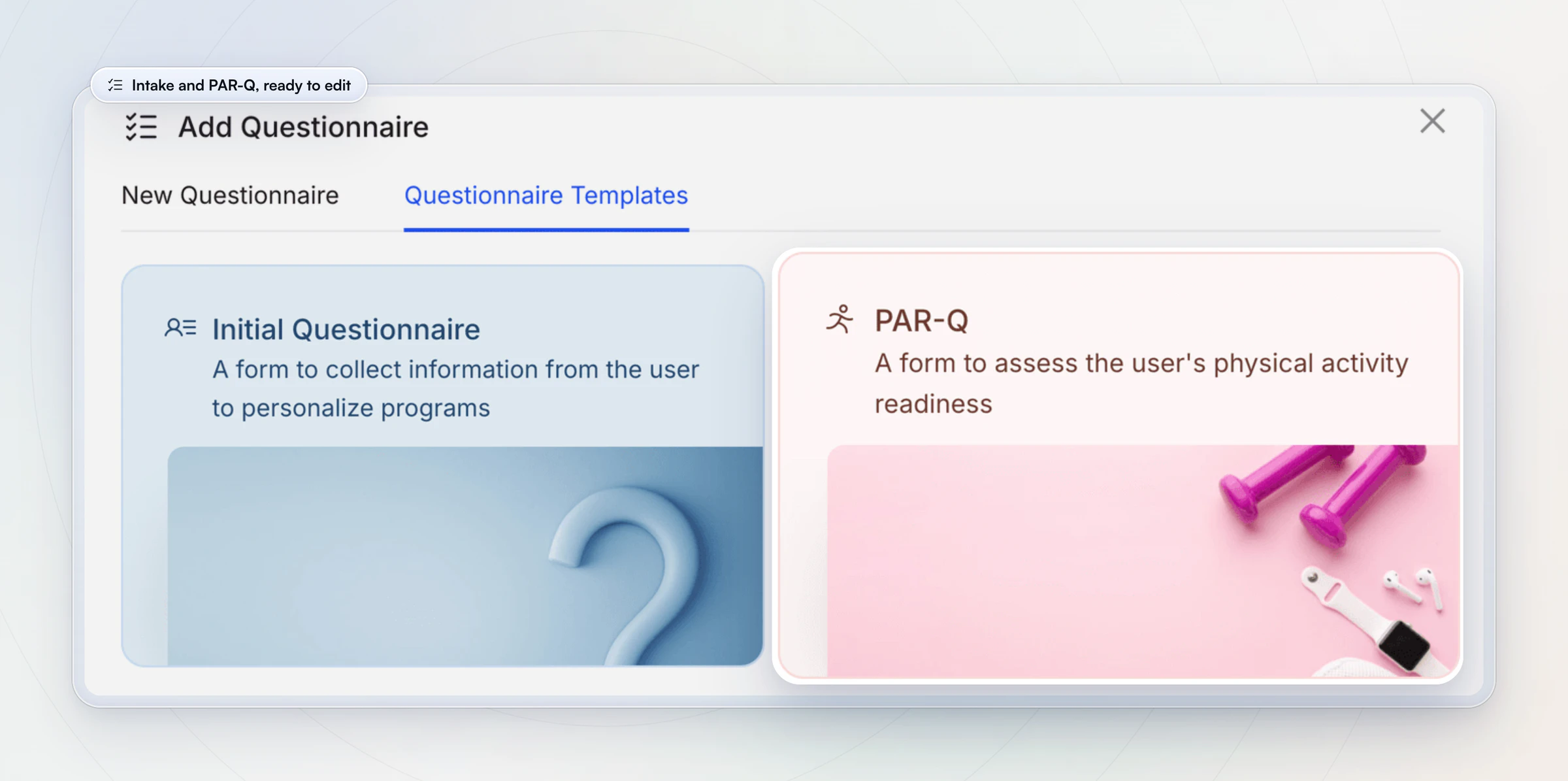
For the health screen itself, link the official PAR-Q+ as published and use the PAR-Q questionnaire to record the client's answers and any YES.
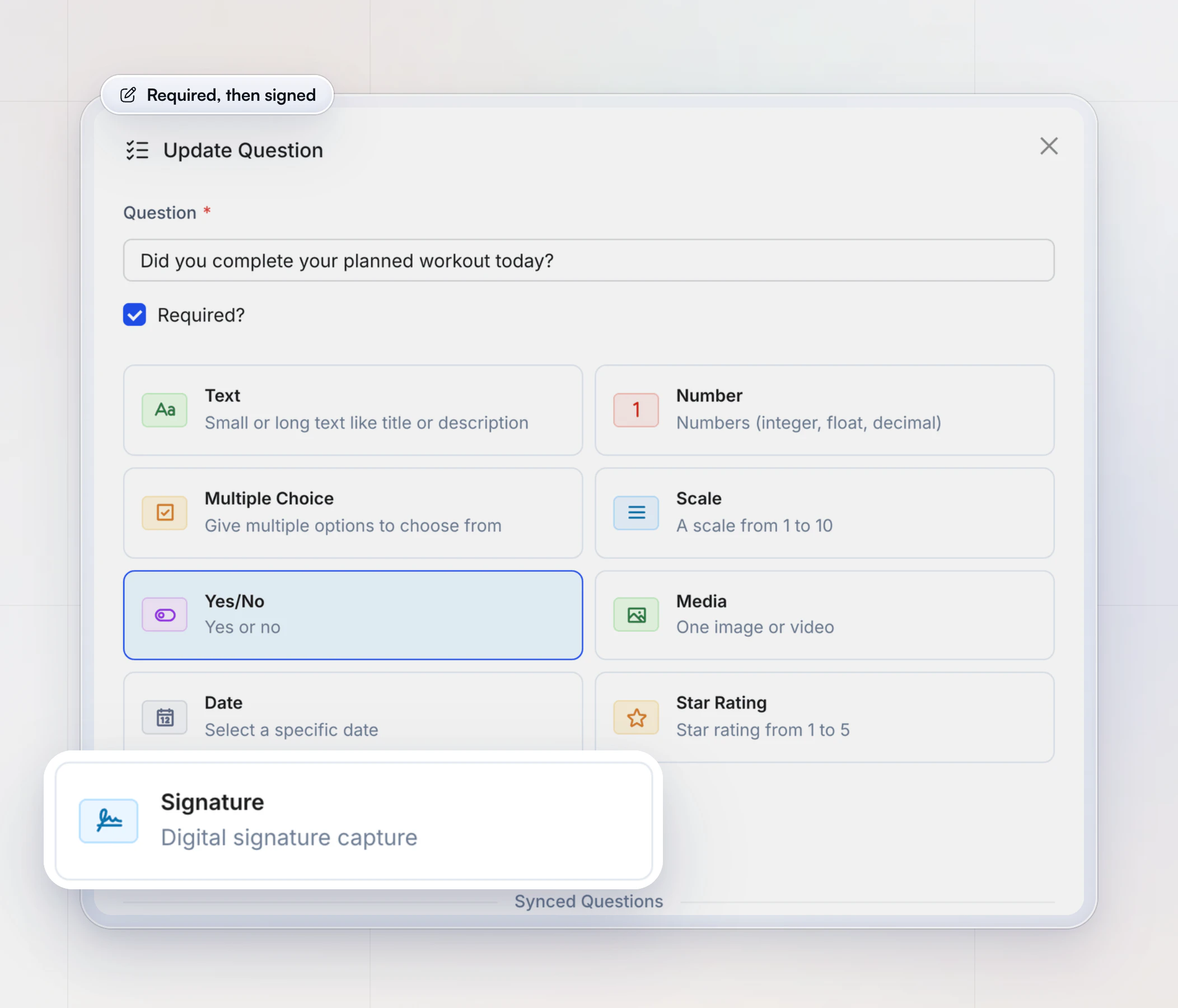
2. Make it required and signed. Any question can be set as required, so a client can't skip the health questions. The builder includes Yes/No, Date, Media for a photo of a signed page, and Signature for a digital signature. An Onboarding Flow then sends your questionnaires automatically when you add a client, or, on Premium and up, when a client buys one of your packages. Check-ins, questionnaires and Onboarding Flows are on every HubFit plan.
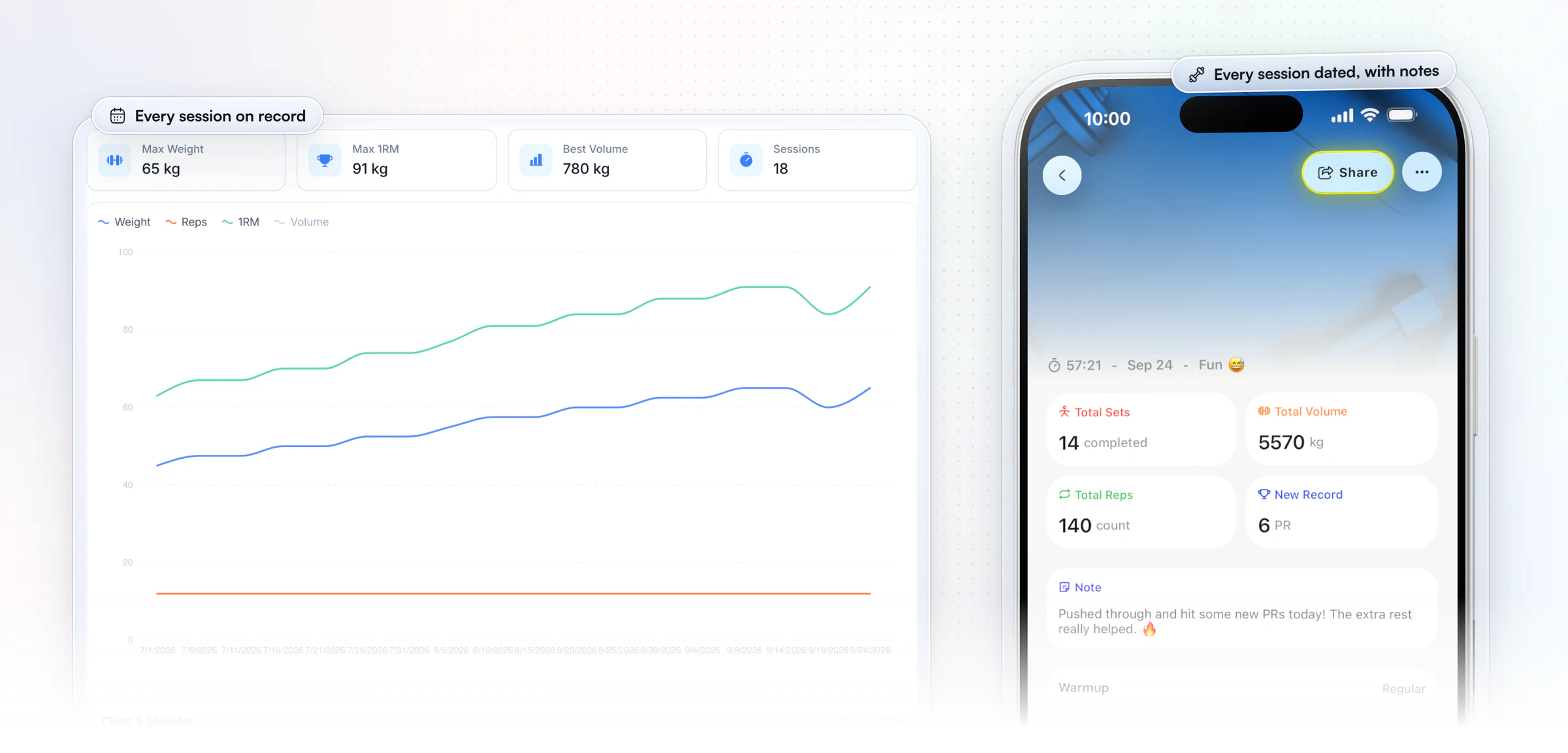
3. Keep every session on record. Every workout a client logs is saved to their training history with its date and any note they left, and HubFit tracks every set, rep and PR. Each exercise keeps its own history: the sessions, the best weight and estimated 1RM, and a chart of both over time.
For in-person sessions, you can log the workout on the client's behalf in the coach app. Their check-in history shows every check-in by date, each marked Reviewed or Not Reviewed.
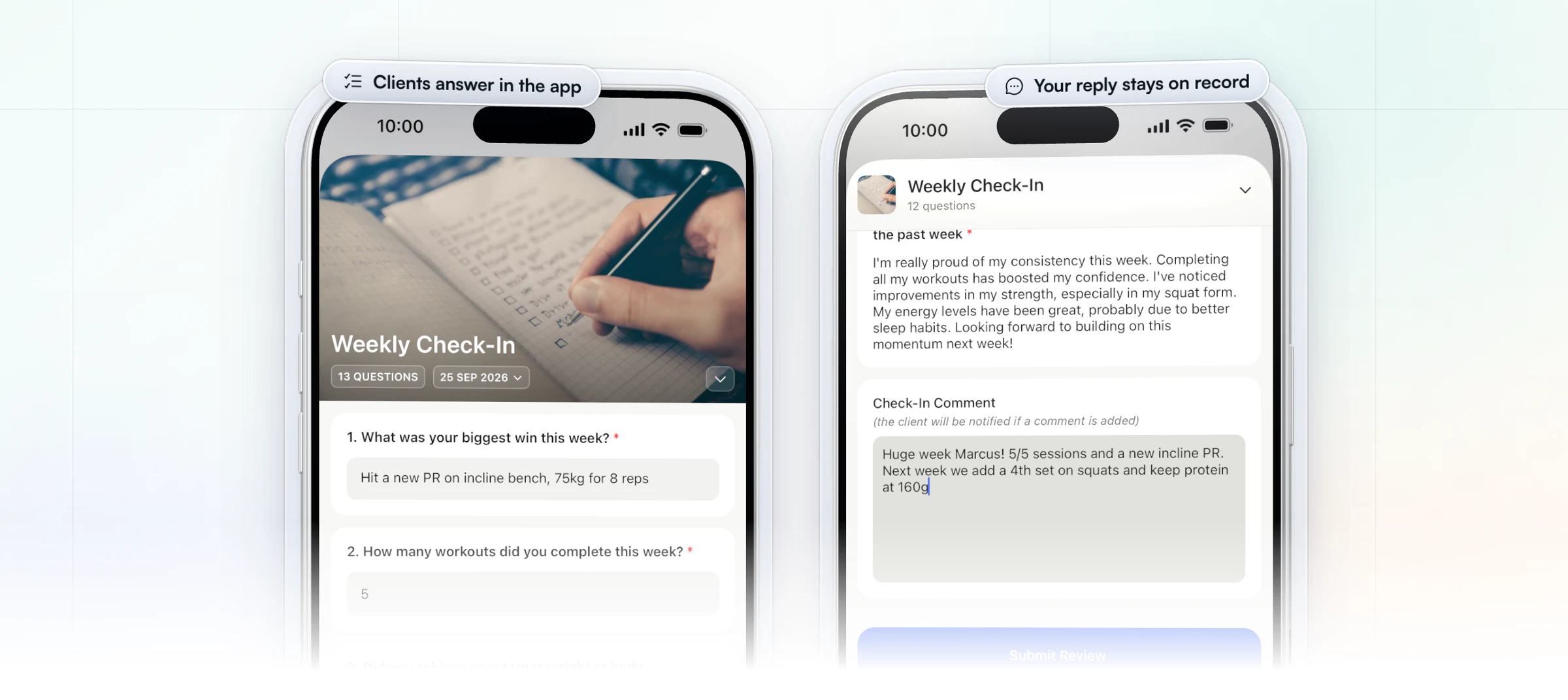
4. Re-screen inside your weekly check-in. Add one Yes/No question to your recurring check-in: "Has anything changed in your health since last week?" A YES is your cue to pause new programming and screen again. Each submission stays marked as unreviewed until you review it.
None of this replaces a policy. It keeps the screening and records above on one profile per client. See HubFit for personal trainers for the rest of the coaching side, or start your free trial and build your health questionnaire today.
FAQ
Quick answers on cost, gyms, online work, LLCs and group classes.
How much is $1,000,000 liability insurance a month?
On published prices, a $1 million per-occurrence policy costs about $14 to $21 a month paid yearly. ACE's $172 for ACE Certified pros is about $14.33, Insure Fitness Group's $189 is $15.75, and K&K's $199 and $250 are $16.58 and $20.83 (our division). Broker data cited by NerdWallet puts the median for general liability at $600 a year, about $50 a month.
Does my gym's insurance cover me?
Maybe, but don't assume it. K&K's FAQ says a gym's policy is written primarily to protect the facility, may not include you as an insured and might not follow you to other locations. If you're a contractor or train clients anywhere else, carry your own policy and add the gym as an additional insured if it asks.
Do online personal trainers need insurance?
Yes. A client can claim your program injured them even if you never met in person. Check that the policy names online training: ERGO NEXT says its policy covers most forms of online training, Insure Fitness Group lists online cover, and K&K covers incidental virtual training for private clients only, not public videos. GEICO also suggests cyber liability for online coaches who hold client data.
Should I get an LLC as a personal trainer?
An LLC can protect your personal assets, but it doesn't replace insurance. The SBA says an LLC protects you from personal liability "in most instances" and calls it a good choice for medium- or higher-risk businesses, while noting that this protection has limits that business insurance fills. Ask an accountant which structure fits you, and set up how you'll get paid at the same time with our guide to payment solutions for personal trainers.
Do group fitness instructors need different insurance?
Group fitness instructors need the same general and professional liability, written for group instruction. For group fitness instructor insurance, list every format (bootcamp, cycling, dance, yoga) when you get a quote, and check each one is named on the policy.
Get your policy in place, then set up your screening once. Build your health questionnaire in HubFit this week, make the key questions required, and every new client is screened and signed before their first session.