
You can write the best training program in the world and still lose clients. You can nail your nutrition protocols, respond to every message within the hour, and deliver check-in feedback that would make a university professor jealous. And clients will still leave.
Not because your coaching is bad. Because their experience of your coaching doesn't feel like it's going anywhere.
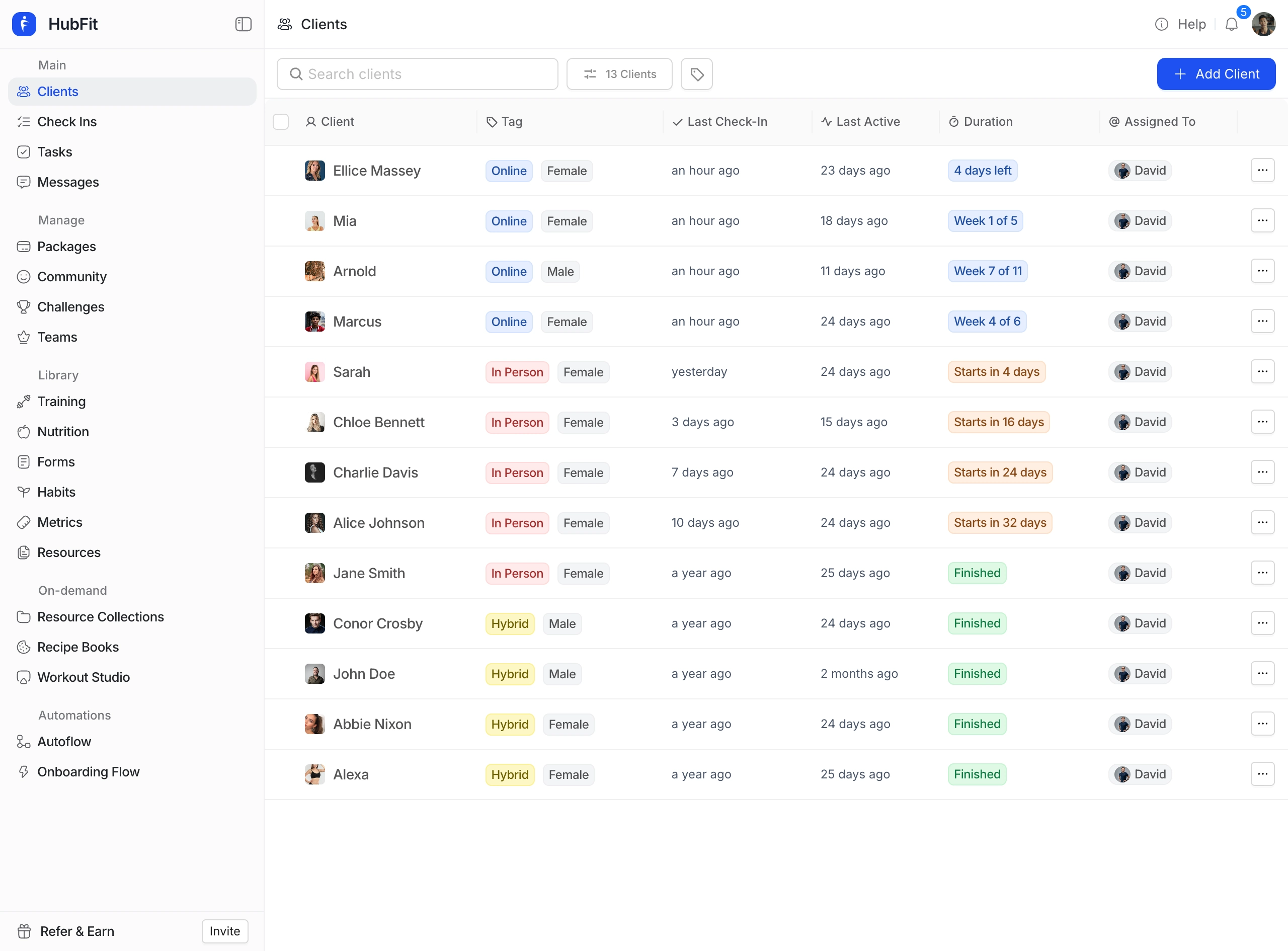
That's the retention problem most online coaches face. The coaching is solid. The client experience is flat. There's no sense of forward motion between check-ins, no visible proof that effort is compounding, no psychological hooks that make quitting feel like a loss.
Gamification fixes this. Not with gimmicks or cartoon confetti. With real, psychology-backed design principles that make the invisible parts of coaching - consistency, effort, progress - visible and rewarding.
This guide breaks down what gamification actually means for online coaches and personal trainers, why it's one of the most effective retention tools available, and exactly how to implement it. If you want the broader picture of how challenges fit into all of this, start with The Ultimate Guide to Client Challenges for Online Coaches.
What Gamification Actually Means for Coaches
Let's clear something up. Gamification is not about turning your coaching into a game. The definition is straightforward: it's the application of game-design elements to non-game contexts.
For online coaches, this means taking the mechanics that make games compelling - progression, competition, achievement, streaks, visible status - and layering them onto the coaching experience your clients already have.
Think about what makes a good game hard to put down. There's always a clear next goal. There's always feedback on whether you're getting closer or further away. There's a social element. And there's a sense that quitting now would mean losing everything you've built.
Now think about what most online coaching experiences look like. The client gets a program. They follow it. They check in once a week. They get feedback. Repeat. No clear milestones beyond "keep going." No visible scoreboard. No sense that stopping would cost them anything beyond a monthly subscription.
The gap between those two experiences is the retention gap. Gamification closes it.
The Retention Problem in Online Coaching
Before diving into strategies, it helps to understand why clients actually leave. Most coaches assume it's about results. Sometimes that's true. But more often, clients leave for subtler reasons.
Boredom. The initial excitement of starting a new program wears off within 2-3 weeks. Without something to break the monotony, coaching starts to feel like a chore.
Lack of progress visibility. Clients are getting stronger and eating better, but they can't see it. The numbers are buried in logs. Without a system that surfaces progress visibly, clients feel stuck even when they're not.
Feeling unsupported between touchpoints. Weekly check-ins are great, but there are 6 days between each one. If the only time a client feels coached is during their check-in, you're leaving 85% of the week unaddressed.
No cost to quitting. When a client has nothing invested beyond their monthly fee, canceling is frictionless. No progress to lose, no streak to break, no badge collection left incomplete.
Gamification addresses every one of these problems. It breaks monotony through new challenges. It makes progress visible through badges and leaderboards. It fills the gaps between touchpoints with automated recognition. And it creates psychological switching costs that make quitting feel like a real loss.
For more on maintaining engagement in those between-check-in gaps, 5 Effective Ways to Keep Clients Accountable Between Check-Ins covers that in detail.
Strategy 1: Challenges and Competitions
Challenges are the most direct form of gamification available to coaches. A well-designed challenge takes a behavior you want to reinforce - completing workouts, hitting protein targets, walking more - and wraps it in a time-bound structure with stakes.
The time-bound element is crucial. Open-ended goals are easy to procrastinate on. A 30-day challenge with a start and end date creates urgency. Every day the client skips is a day they can't get back.
Leaderboard challenges rank participants against each other. Everyone sees where they stand, who's ahead, and who's behind. This creates social proof and competitive urgency. When a client sees someone just one spot above them, the instinct to close that gap is powerful.
Milestone challenges replace competition with progression. Instead of ranking against others, clients work toward a series of badge tiers. This approach works better for mixed-ability groups where nobody feels demoralized by being in last place. There is no last place - only your progress toward the next tier.
Both approaches work. Competitive athletes thrive on leaderboards. Clients newer to fitness respond better to milestones. Many coaches run both simultaneously for different segments. For specific challenge ideas you can launch this week, check out 7 Client Challenges That Boost Retention and Engagement.
Strategy 2: Progressive Badges and Milestones
There's a reason every successful game has an achievement system. Humans are collectors. We're wired to complete sets, fill progress bars, and unlock the next level. It's called collection psychology, and it's one of the most reliable engagement drivers in behavioral design.
Progressive badges tap into this directly. Instead of a single pass-or-fail outcome, clients work through a tiered system where each badge represents a higher level of achievement. The first badge comes quickly - an early win that proves the system works. By the time a client has earned three out of five badges, the psychological pull to complete the set is enormous.
The 5-tier badge system is the sweet spot. Fewer than five and the progression feels too simple. More than five and the upper tiers feel unreachable. Tier 1 should be achievable within the first few days. Tier 3 is the midpoint for anyone genuinely participating. Tier 5 is ambitious but not impossible - reserved for clients who go all in.
The theme of the badges matters more than most coaches realize. A badge labeled "Tier 3" means nothing. A badge called "Gladiator" tells a story. HubFit offers 8 distinct badge themes for exactly this reason: Medals (Bronze through Diamond), Iron (Lifter through Olympian), Journey (Explorer through Pioneer), Summit (Hiker through Summiteer), Warriors (Warrior through Legend), Animals (Fox through Dragon), Elements (Ember through Cataclysm), and Ranks (Cadet through Elite). Each theme creates an identity that clients connect with.
When a client earns a badge, the platform sends a notification instantly - immediate positive reinforcement that turns a quiet achievement into a celebrated moment. When a client completes all five tiers, a special notification fires to mark the occasion. These are the micro-celebrations that stick.
Strategy 3: Streaks and Consistency Tracking
Streaks are deceptively simple. Log a workout today, your streak is 1. Log again tomorrow, it's 2. Miss a day, it resets to zero. And yet streaks are one of the most powerful engagement tools in gamification.
The psychology is loss aversion - people feel the pain of losing something roughly twice as intensely as the pleasure of gaining it. A client with a 14-day workout streak isn't motivated by reaching 15. They're motivated by the fear of losing 14.
This creates a daily engagement loop. The client wakes up, sees their streak, and feels a pull to maintain it. The longer the streak runs, the stronger the pull becomes. Breaking a 3-day streak is no big deal. Breaking a 30-day streak feels devastating. That escalating emotional investment transforms a casual habit into an ingrained behavior.
Streaks work especially well for the foundational habits coaches most want to reinforce: workout consistency, daily nutrition logging, and daily step goals. The key is making them visible. A streak displayed prominently every time the client opens the app creates accountability. Pair streaks with milestone markers - celebrate 7 days, 30 days, 60 days - and you've layered two gamification strategies on top of each other.
Strategy 4: Personal Records and Progress Markers
Every coach knows PRs matter. When a client deadlifts 100kg for the first time, it's worth celebrating. But in most coaching setups, PRs happen silently. The number sits in a training log, and nobody says anything until the weekly check-in - if it gets mentioned at all.
Gamifying personal records means making them visible, automatic, and celebrated in real time. This extends beyond traditional gym PRs. Progress markers can include first-time achievements (first workout completed, first week of consistent logging), cumulative milestones (100th workout, 10,000 total reps), and improvement metrics (highest weekly step count).
The principle is the same across every gamification strategy: make invisible progress visible. Most clients are making more progress than they realize. The problem is that the data is trapped in logs they never review. Gamification pulls it out and presents it as an achievement.
This matters most for clients in the "middle" of their journey - past the initial excitement, not yet at their goal. These are the clients most at risk of churning because they feel like nothing is happening. Automated progress markers remind them that everything is happening, even when it doesn't feel like it.
Strategy 5: Social Proof and Community Visibility
Gamification's power multiplies when other people can see it.
Leaderboards are the most obvious form of social proof. When a client sees that 15 other people logged workouts today, skipping their own session feels harder. The leaderboard doesn't nag. It simply shows what everyone else is doing, and that visibility alone changes behavior.
Community visibility also means making badges and achievements visible to the group. When a client earns a badge and everyone can see it, that badge becomes social currency - proof of work, status. Other clients, seeing those badges being earned, feel the pull to earn their own.
This is the normalization effect. When effort is visible and celebrated publicly, it becomes the group norm. The client tempted to skip a workout sees an entire community of people who didn't skip. That shifts the internal narrative from "I don't feel like it" to "everyone else did it, so I should too."
How to Implement Gamification Without Extra Work
Here's the objection most coaches raise: "I barely have time for check-ins. I can't add gamification management to my plate."
Fair. And you shouldn't have to.
The difference between gamification that lasts and gamification that gets abandoned after a week comes down to automation. If you have to manually track streaks, update leaderboards, and send congratulations messages, you'll stop doing it.
The right approach is choosing tools that handle tracking and recognition automatically. Auto-tracking means when a client completes a workout, their challenge progress updates without anyone pressing a button. When a client logs nutrition, the system checks targets and updates accordingly. When a client walks around with their phone, step data syncs from Apple Health or Health Connect into the challenge without the client even opening the app.
HubFit's challenge feature was built on this principle. It supports 7 challenge types across workout, nutrition, and health categories - all auto-tracked from actions clients are already taking. The system handles leaderboard rankings, badge awards, and every notification: badge earned, all badges completed, entered top 3, new leader, plus lifecycle notifications for when challenges start, are ending soon, and have ended.
You spend under 5 minutes setting up a challenge - pick the type, choose leaderboard or milestone mode, set your duration and thresholds, select a badge theme, add your clients - and the system takes over.
What to Look for in a Coaching Platform With Gamification
Not every coaching platform treats gamification seriously. If you're an online coach or personal trainer evaluating platforms for gamification capabilities, here's what separates a real system from a checkbox feature.
Challenge variety. You need the ability to gamify different behaviors - workout completion, nutrition adherence, daily movement - not just one metric.
Dual modes. A platform that only offers leaderboards is missing half the picture. You need both competitive modes (leaderboards) and progressive modes (milestones with tiered badges).
A real badge system. A single "challenge completed" badge is not a badge system. Look for multi-tier progressions with meaningful theming that sustains motivation across the full challenge duration.
Automatic tracking. Non-negotiable. If the platform requires manual progress reporting, the gamification will fail.
Intelligent notifications. The platform should send real-time notifications for achievements and lifecycle events. These are the coaching touchpoints that make gamification feel alive.
HubFit checks every box: 7 challenge types, 2 modes, a 5-tier badge system with 8 themes (40 unique badges), full auto-tracking from workouts, nutrition logs, and Apple Health/Health Connect, and comprehensive notifications. It's the platform built for coaches who want gamification that works without the overhead. For a broader look at how all of this fits together, the Ultimate Guide to Client Challenges walks through every feature in detail.